Modern Victorian Kitchen: 9 Design Ideas You’ll Love
Okay so I fell down a rabbit hole last month looking at Victorian kitchens and I honestly couldn’t stop. There’s something about that mix of ornate detailing and moody colour that just hits different. But here’s the thing the full Victorian look can easily tip into “haunted manor” territory if you’re not careful. That’s where the modern Victorian kitchen comes in. It’s that sweet spot where you get all the drama and character of the Victorian era without sacrificing the clean, functional kitchen you actually need to live in.
Whether you’re planning a full renovation or just want to inject some Victorian soul into what you’ve got, these ideas will give you a solid starting point.
What Is a Modern Victorian Kitchen, Exactly?
Think of it as Victorian architecture meeting contemporary living. You’re keeping the ornate mouldings, rich tones and decorative hardware that defined the Victorian era but pairing them with modern appliances, cleaner layouts and updated materials. The goal is a kitchen that feels layered and considered, not cluttered or costume-y.
The Victorian era (roughly 1837–1901) was known for its love of pattern, craftsmanship and rich colour. A modern take strips away the excess while keeping the essence the curves, the detail, the warmth.
1. Dark Cabinetry with Period-Inspired Hardware
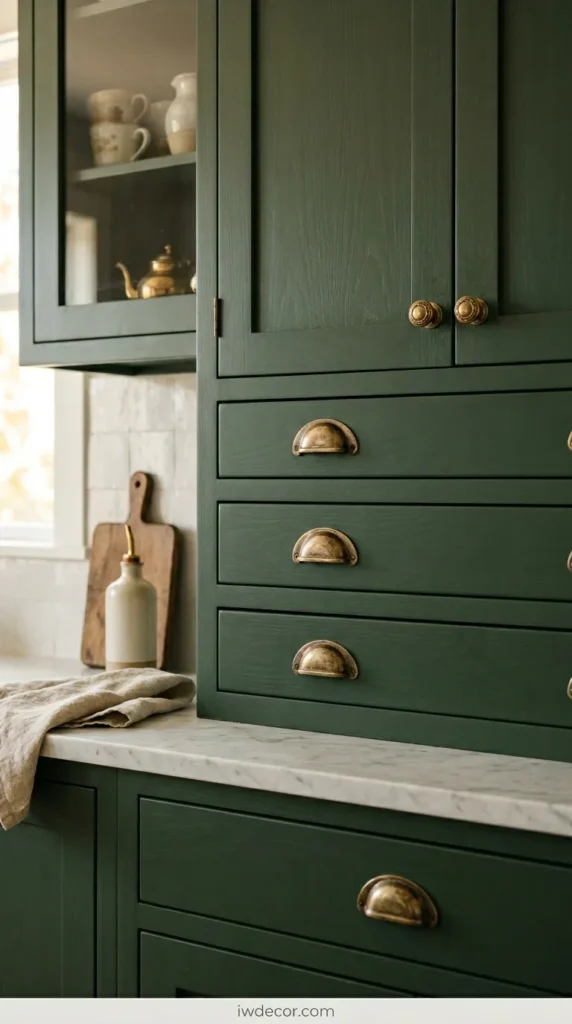
This is the single biggest move you can make. Deep navy, forest green, charcoal or even inky black cabinets immediately read as Victorian-influenced. Keep the door profiles shaker or raised-panel flat-front cabinetry is too minimal for this style.
Then load up on the hardware. Aged brass, unlacquered brass or antique bronze cup pulls and knobs are your best friends here. They add that patina and detail that makes the whole kitchen feel like it was built with intention. House Beautiful has some brilliant examples of this done really well in real homes.
2. Encaustic or Geometric Floor Tiles
Victorian homes were obsessed with patterned floor tiles and honestly, rightfully so. In a modern Victorian kitchen, a geometric encaustic tile floor (think black and white, terracotta and cream or deep jewel tones) grounds the whole space and does a lot of the decorative heavy lifting.
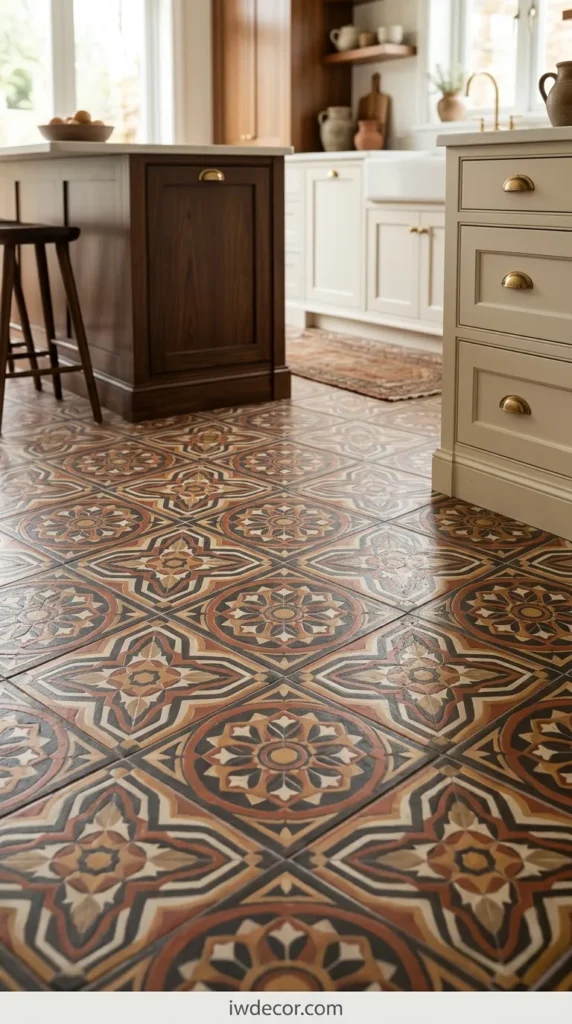
The trick is to keep the rest of the room relatively calm so the floor can breathe. You don’t need pattern everywhere just in the right place.
3. Shiplap or Tongue-and-Groove Panelling
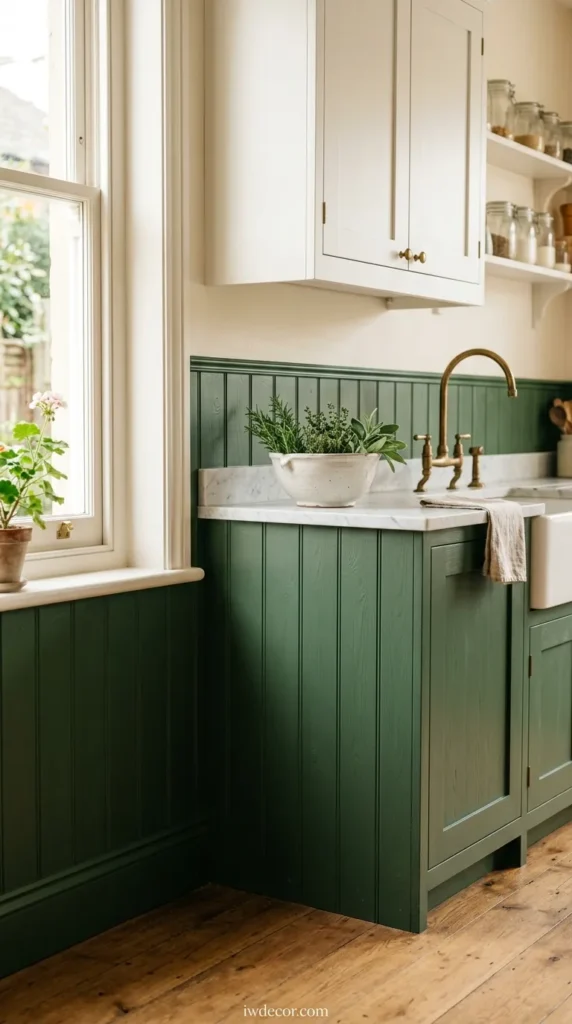
Wall panelling is such a quick way to add Victorian texture to a plain kitchen. Run it to dado height and paint it a contrasting shade to the upper walls deep green below, off-white above, for example. It’s a classic Victorian combination that still looks sharp in a modern setting.
This works especially well if your kitchen connects to a dining area. Consistent panelling across both spaces ties everything together.
My Take
Panelling painted in Farrow & Ball’s Brassica or Calke Green is genuinely one of the best value moves in a modern Victorian kitchen it costs far less than custom cabinetry but adds the same level of character. If you’re renting and can’t paint, removable panel mouldings are a thing and they actually work surprisingly well.
4. A Belfast or Butler Sink
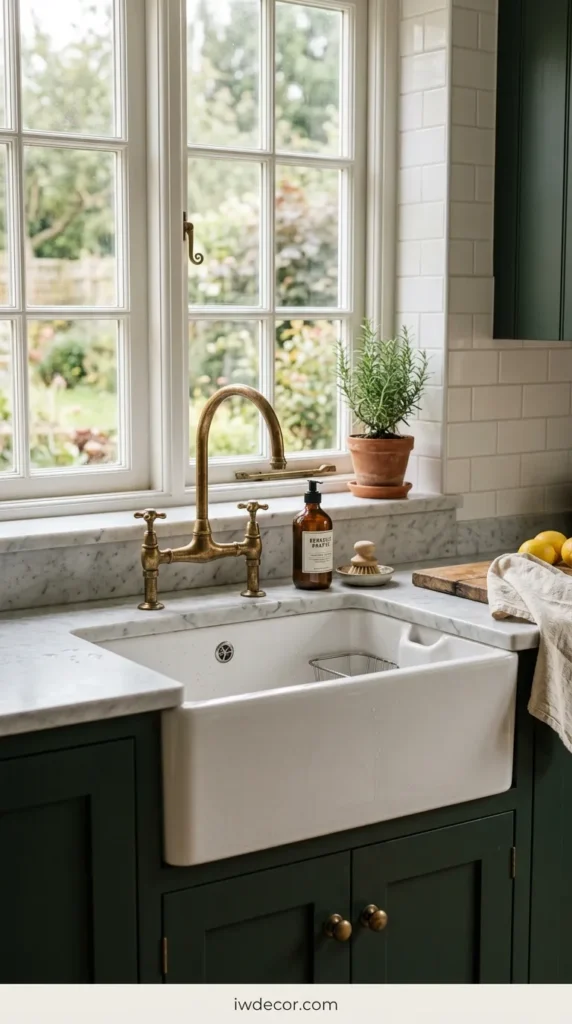
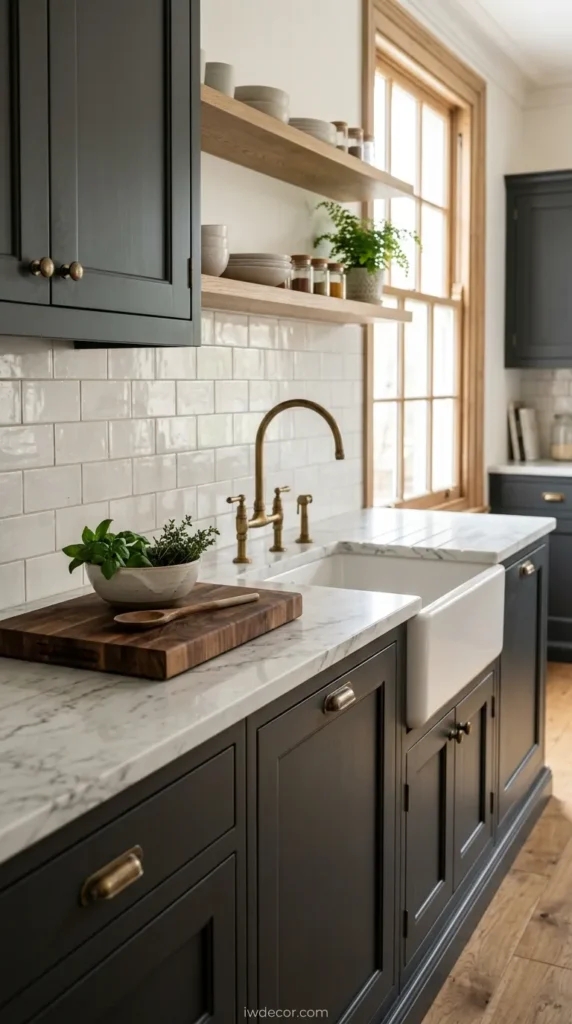
Nothing says Victorian kitchen quite like a big, deep Belfast sink. They’re practical, they look incredible and they’re a focal point that does the styling work for you. Pair with a bridge-style mixer tap in aged brass or matte black for a really polished finish.
If a full Belfast isn’t in the budget, a farmhouse-style basin with period-correct tapware gets you a lot of the same effect at a fraction of the cost.
5. Open Shelving with Curated Display
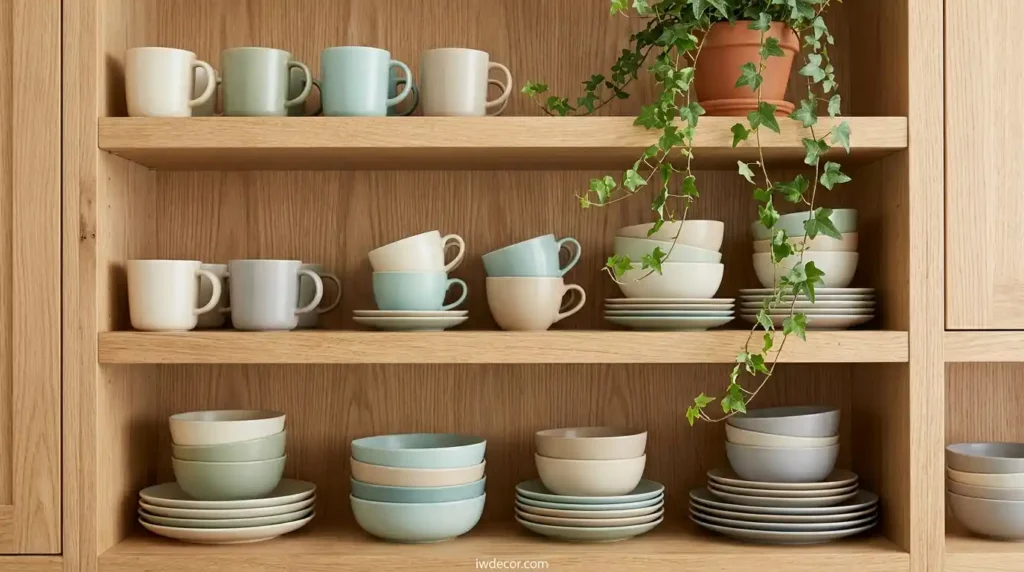
Victorian kitchens featured open dressers displaying their best china and glassware. You can recreate that feeling with a couple of floating shelves in a contrasting wood tone walnut works beautifully against dark cabinetry styled with a mix of ceramics, copper pots and glass jars.
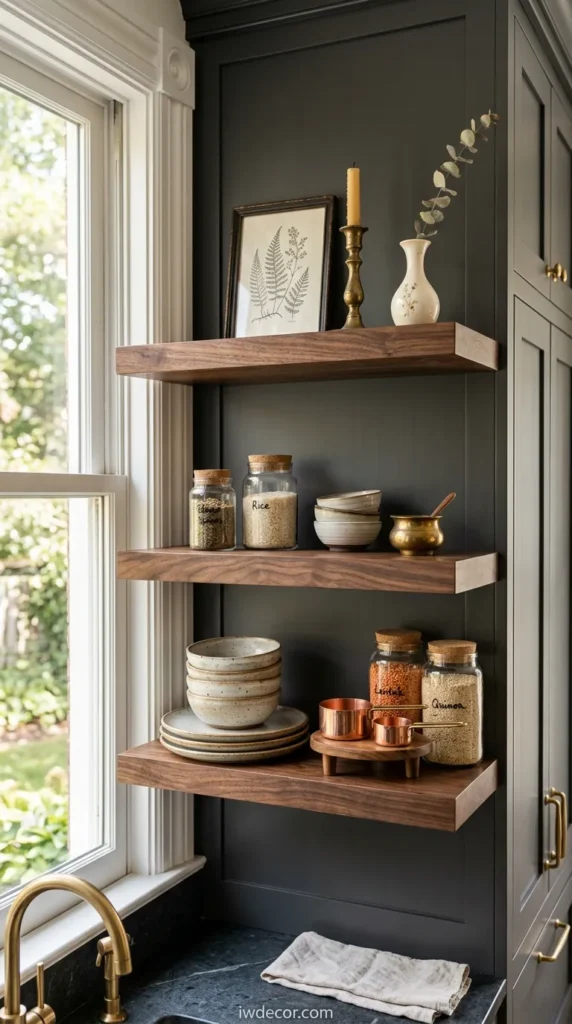
Don’t go overboard. Two or three shelves, styled with about 70% “useful things” and 30% purely decorative pieces, hits the right balance. If you’re working on refreshing your home’s look more broadly, our guide to common home decor clutter items to avoid is worth a read before you start styling those shelves.
6. Ornate Range Cooker as the Centrepiece
If your budget allows one splurge, make it the range cooker. Brands like Rangemaster, Lacanche or Aga do models in deep colours British Racing Green, Claret, Midnight Blue that look like they were born in a Victorian kitchen. They’re functional and they anchor the whole room.
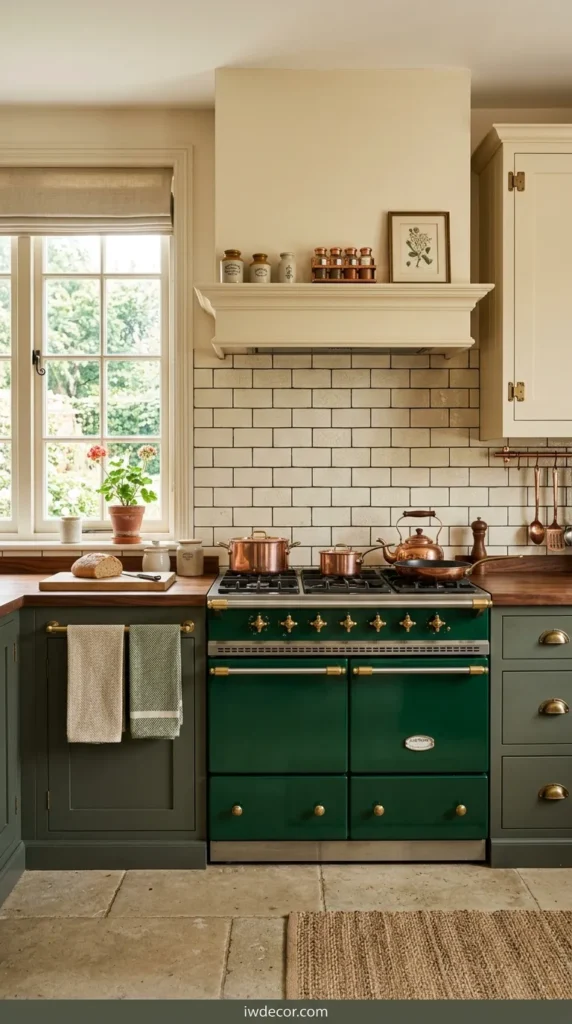
Frame it with a statement hood (painted to match or contrast the cabinetry) and you’ve got an instant focal wall.
7. Ceiling Details and Statement Lighting
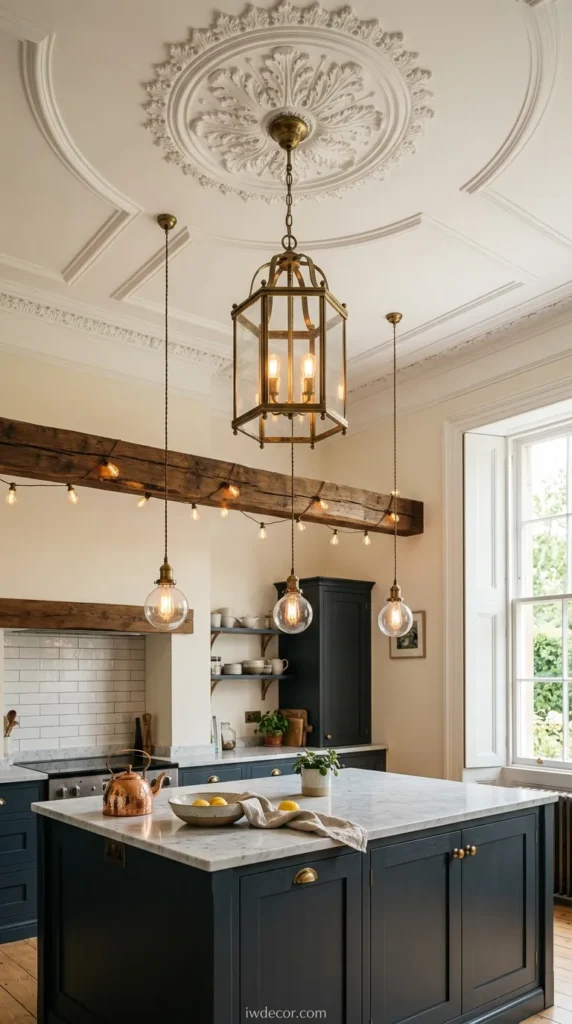
Victorian homes had high ceilings and they used them well cornicing, ceiling roses, decorative plasterwork. In a modern Victorian kitchen, you don’t need to go full restoration, but adding a ceiling rose with a pendant light in aged brass or a lantern style goes a long way.
For task lighting, try bare bulb pendants over an island or a row of small filament bulbs along a beam. The warm glow suits the aesthetic perfectly. Victoria Plum’s kitchen inspiration guide covers lighting choices in this style in more detail.
8. Marble or Marble-Effect Worktops
White Carrara marble or a good quality quartz that mimics it sits beautifully against dark Victorian-style cabinetry. The contrast is classic and timeless. If you’re worried about maintenance (real marble does stain), a honed quartz in a similar vein gives you the look without the anxiety.
Alternatively, thick wooden worktops in oak or walnut add warmth and a more rustic Victorian kitchen-garden feel. Both work it just depends on the overall direction you want to take.
9. Colour: Don’t Be Afraid of It
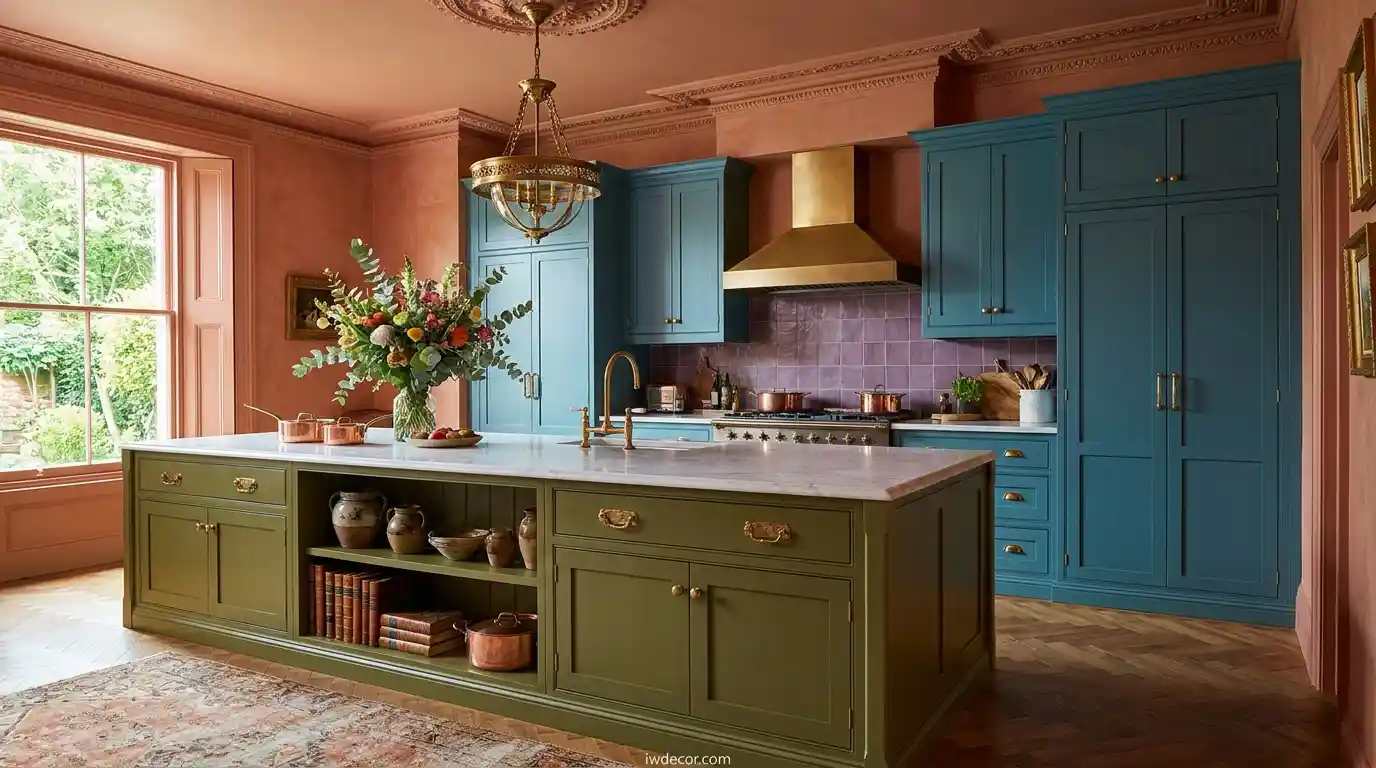
The Victorians were not shy about colour and neither should you be. Deep teal, olive green, warm terracotta, dusty plum all of these work in a modern Victorian kitchen. The key is committing. Half-hearted colour reads as beige with good intentions.
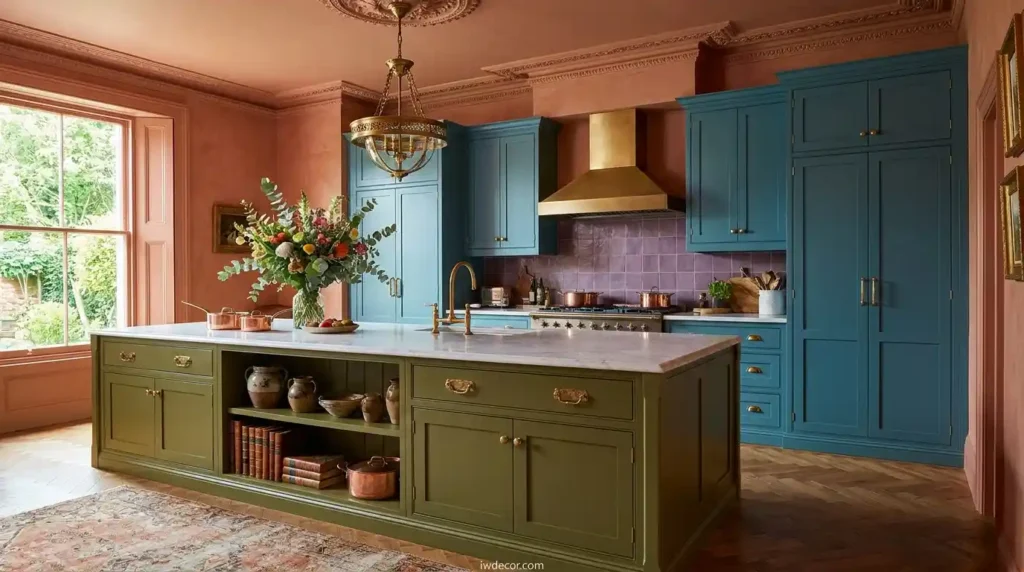
If you’re updating your whole home’s look for the season as well, check out these top home decor trends for 2026 several of them align really well with the modern Victorian palette.
Pulling It All Together
A modern Victorian kitchen works because it’s built on contrast old and new, ornate and restrained, dark and light. You don’t need every element on this list. Pick three or four that suit your space and budget, do them properly and the aesthetic will follow. Start with the cabinetry colour and hardware and build out from there.
Tried any of these in your own home? Drop a comment below I’d love to see what you’ve done with yours. And if this gave you some ideas, share it with a friend who’s been staring at their sad beige kitchen for too long.
FAQs About the Modern Victorian Kitchen
What colours work best in a modern Victorian kitchen?
Deep, saturated tones are your best bet forest green, navy, charcoal, teal and warm terracotta all feel true to the Victorian palette. Pair them with aged brass hardware and warm white walls or ceiling to stop the room feeling too heavy. Off-white or cream trims also help balance the depth of darker cabinetry.
Can I create a modern Victorian kitchen on a budget?
Yes and it’s more achievable than you’d think. Focus on paint (cabinet paint is relatively affordable), new hardware (cup pulls and knobs are cheap but high impact) and one or two styling elements like a patterned rug or open shelf display. You don’t need a full renovation to shift the feel of a space significantly.
Is the modern Victorian kitchen style just for older homes?
Not at all. The style actually works really well in newer builds because it adds the character and warmth that modern construction often lacks. In a newer, box-like kitchen, Victorian-influenced detailing panelling, patterned tiles, dark cabinetry creates instant depth and personality that the architecture itself doesn’t provide.
What flooring suits a modern Victorian kitchen?
Geometric encaustic tiles are the most authentic choice, especially black-and-white or terracotta-and-cream combinations. Herringbone wood flooring in a darker stain also works well. If you’re going for a lighter feel, large-format stone tiles in a warm grey or off-white can read as Victorian-adjacent without being too literal.