12 Best Scandinavian Indoor Plants Decor: Nordic Greenery Trends 2026
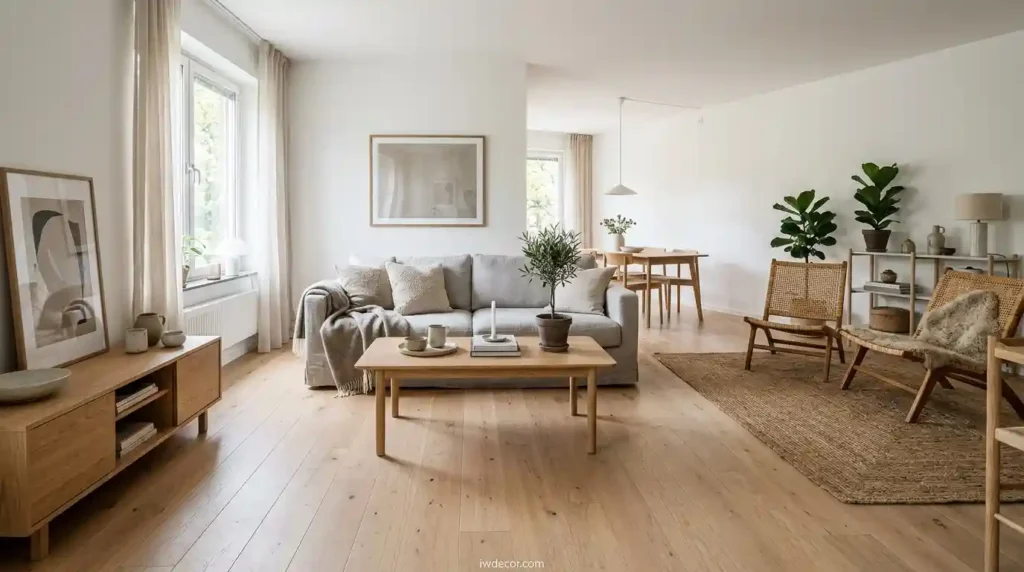
If you’ve been scrolling through Scandinavian design feeds lately, you’ve probably noticed something that wasn’t always there: actual living plants, everywhere. Scandinavian indoor plants decor has quietly become the missing piece that separates an empty minimalist room from a lived-in Nordic home. This isn’t about turning your living room into a jungle. It’s about choosing the right greenery hardy, slow-growing, sculptural and letting it breathe within a calm, light-filled space. The trend makes sense: plants add life to pale walls and wood tones without breaking the minimalist code, they improve air quality (a very Scandinavian concern), and they cost far less than statement art. After researching what’s actually working in Nordic homes right now and testing these ideas in compact spaces, here are twelve proven approaches to bring scandinavian indoor plants decor into your own home.
Why Scandinavian Indoor Plants Decor Works Right Now
Biophilic design the human instinct to connect with nature indoors sits at the core of why Scandinavian indoor plants decor resonates so deeply with the minimalist aesthetic that defines Nordic style. According to research from the University of Exeter, people who are around plants show measurably lower stress levels and improved focus. In Scandinavian culture, where hygge and functional beauty go hand in hand, plants serve dual purpose: they’re living design elements and wellness tools.
What separates Scandinavian plant styling from other green-forward trends is restraint. Rather than filling every corner with botanical variety, Nordic plant decor employs just three to five plants per room, each one chosen for architectural form or sculptural leaf shape rather than flower color. A single tall snake plant or a pair of matching pothos in ceramic vessels accomplishes far more than a scattered collection of different species. This is the core philosophy you’ll see repeated across successful scandinavian interior decor spaces.
1. The Fiddle Leaf Fig: Scandinavian Focal Point
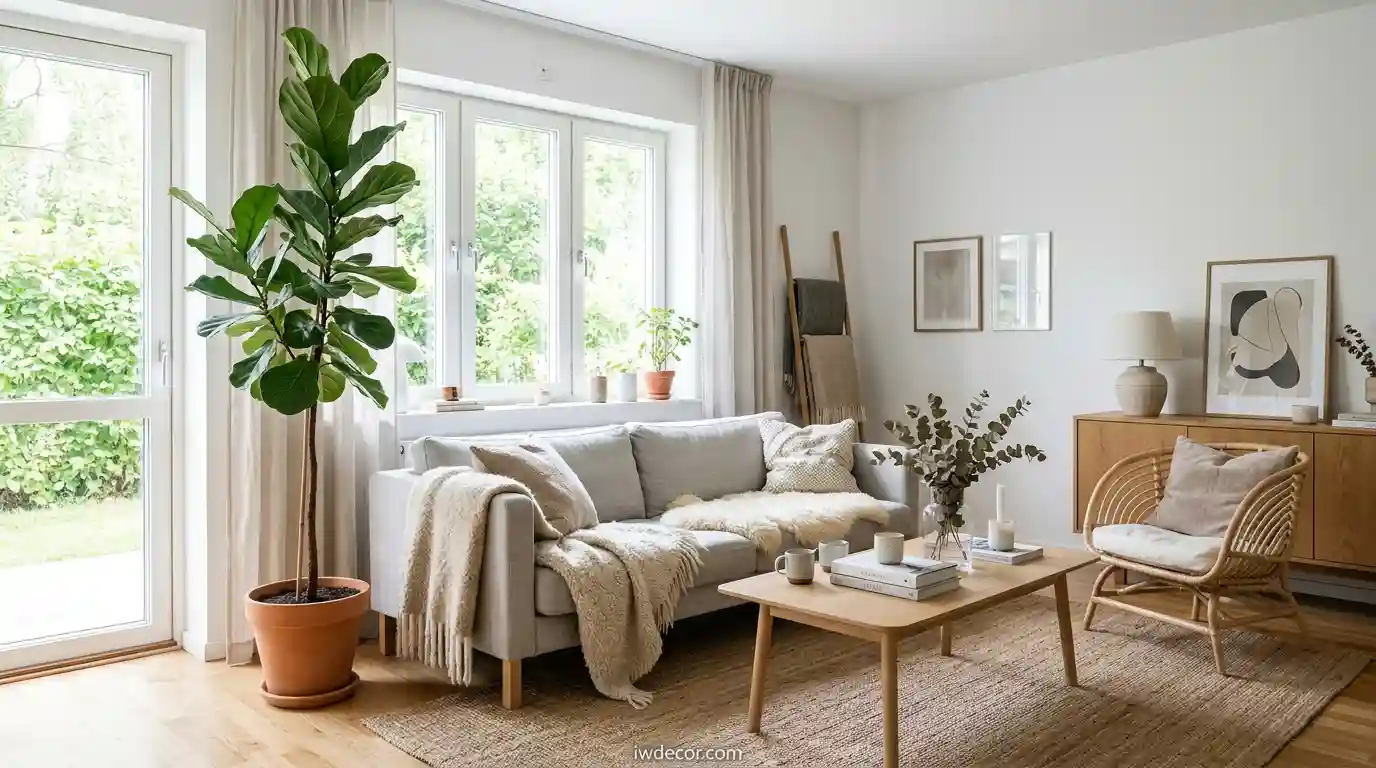
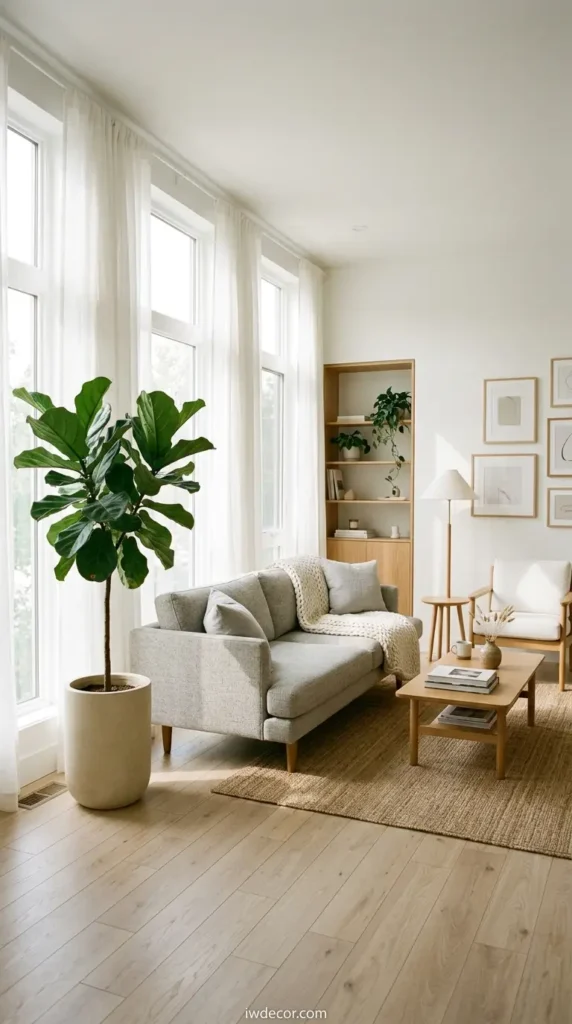
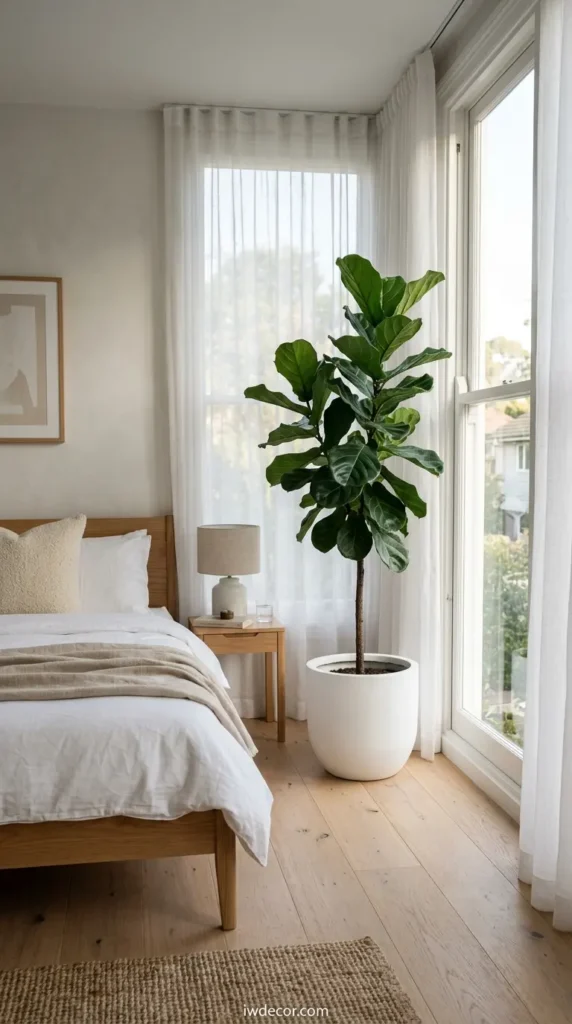
The fiddle leaf fig (Ficus lyrata) has dominated minimalist interiors for five years straight, and for good reason. Its large, violin-shaped leaves and sculptural trunk create visual weight without clutter, and it grows slowly, so you’re not constantly pruning or reshaping. In scandinavian indoor plants decor, a single fiddle leaf fig positioned beside a window or in a corner becomes a living piece of wall art.
Why it works: The architectural form fills vertical space without consuming floor real estate. Its neutral green integrates seamlessly with pale walls and natural wood.
Pot styling: Use a tall, cylindrical pot in matte white or soft grey ceramic. Avoid decorative patterns et the plant’s natural shape be the statement.
Care notes: Fiddle leaf figs need bright, indirect light and slightly moist (not soggy) soil. They resent frequent moving, so position yours intentionally before watering for the first time.
Styling tip: Pair with a minimal black metal plant stand or suspend from a simple macramé hanger in natural cotton for a touch of texture that reads “intentional” rather than “folksy.”
2. Monstera Deliciosa: The Oversized Statement
Monstera’s split leaves have become iconic in minimalist design, representing the intersection of natural wonder and geometric simplicity. Its climbing, vining growth pattern makes it ideal for floor-to-ceiling styling or trained onto a simple wooden pole. For those committed to scandinavian indoor plants decor on a larger scale, Monstera fills space gracefully without the heaviness of a large furniture piece.
Why it works: The perforated leaves are visually interesting but not busy. The plant grows tall and narrow, fitting snugly into corners or beside bookcases without demanding much floor space.
Pot styling: A low, wide pot (wider than it is tall) balances the climbing growth. Choose terracotta, light concrete, or matte ceramic in cream or pale grey.
Care notes: Monstera adapts to medium light but thrives near bright, filtered windows. Water when the top inch of soil is dry. It’s one of the most forgiving plants available.
Styling tip: Train the vine upward using a moss pole or simple wooden trellis. This keeps the plant upright and creates a vertical focal point that feels like intentional design rather than accident.
3. Pothos: The Trailing Minimalist Companion
Pothos (Epipremnum aureum), also called Devil’s Ivy, is the quiet workhorse of scandinavian indoor plants decor. Its heart-shaped leaves are understated, and it trails gently from shelves or hangs in simple macramé without demanding attention. It’s nearly impossible to kill, making it ideal for renters or anyone new to plant styling.
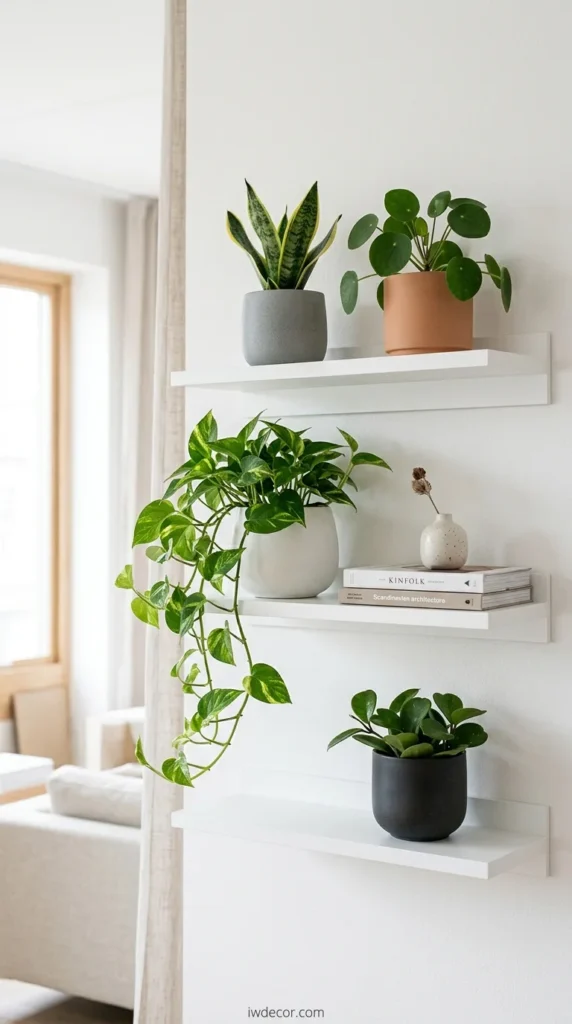
Why it works: Trailing plants soften hard architectural lines. A single strand of pothos cascading from a floating shelf adds organic movement without visual chaos.
Pot styling: A small cylindrical pot in white, pale grey, or natural ceramic. Alternatively, let it grow in a glass water vessel for a “hydroponic” look that feels intentional and modern.
Care notes: Pothos tolerates low light, which is rare. Water when soil is dry. Trim trailing stems monthly to maintain shape and encourage fuller growth.
Styling tip: Group two or three small pothos at varying heights on a shelf rather than one large hanging basket. It feels more controlled and Scandinavian.
4. Snake Plant (Sansevieria): The Sculptural Minimalist
The snake plant’s geometric, upright growth and mottled grey-green or chartreuse striping make it the plant equivalent of minimalist sculpture. It thrives in low light, requires minimal water, and grows slowly, meaning once positioned, it stays put. For scandinavian indoor plants decor in dimly lit bedrooms or corner spaces, snake plant is the practical choice.
Why it works: Its architectural form creates visual rhythm without pattern. A grouping of three snake plants in staggered heights occupies a corner without looking cluttered.
Pot styling: Tall, narrow pots amplify the plant’s vertical emphasis. Use matte white, soft grey, or natural concrete. Avoid terracotta it reads too earthy for Scandinavian spaces.
Care notes: Snake plant prefers to dry out completely between waterings. Overwatering is its only real killer. It’s the ideal plant for forgetful caretakers.
Styling tip: Place in threes at varying heights on a long console or shelf for a minimalist gallery effect. The repetition feels Nordic without being obvious.
5. Rubber Plant: Muted Tones and Sculptural Growth
The rubber plant (Ficus elastica) has undergone a styling renaissance thanks to newer cultivars with muted, burgundy-tinged foliage. The ‘Tineke’ or ‘Robusta’ varieties offer warm, earthy tones that feel less neon than the classic bright green. Its large, glossy oval leaves create a clean botanical silhouette perfect for scandinavian indoor plants decor.
Why it works: The sophisticated leaf color bridges the gap between pure greenery and warm wood tones. A mature rubber plant fills a tall corner beautifully while remaining architectural.
Pot styling: A wide, sturdy ceramic pot in warm white, cream, or pale terracotta. As the plant grows, size up gradually to avoid root rot.
Care notes: Rubber plants need bright, filtered light. They dislike being moved. Let the top inch of soil dry between waterings. Wipe leaves monthly with a soft, damp cloth to maintain shine.
Styling tip: Position beside a large window to backlight the leaves. The light catching on glossy foliage creates a glowing, living art effect that costs nothing extra.
6. ZZ Plant: The Glossy Low-Light Winner
The ZZ plant (Zamioculcas zamiifolia) is gaining traction in Scandinavian design specifically because it tolerates neglect and low light while remaining visually clean. Its compound, feathery fronds have an almost fern-like delicacy that softens spaces without introducing fussy, high-maintenance plants. For scandinavian indoor plants decor in shadier rooms, it’s the answer.
Why it works: ZZ plant’s glossy leaflets catch available light and reflect it back, making dim spaces feel brighter without needing a brighter plant. Its slow growth means it stays in proportion to its pot for years.
Pot styling: A modest white or grey ceramic pot, smaller than you’d think. ZZ plants are slow and compact; oversizing the pot leads to overwatering.
Care notes: Water only when soil is completely dry. ZZ plants store water in underground rhizomes, so they forgive neglect. They’re nearly impossible to kill through underwatering.
Styling tip: Place singly on a shelf or console rather than grouped. Its delicate form reads better alone, without competing plants nearby.
7. Pilea Peperomioides: The Trending Conversation Piece
The Chinese money plant (Pilea peperomioides) has become a social media darling, but it earns its place in scandinavian indoor plants decor through genuinely appealing form. Its coin-shaped leaves radiate from a central stem in an almost geometric spiral, creating a compact, sculptural plant that doesn’t sprawl or demand much space.
Why it works: Pilea offers the trendiness factor (people do recognize it) while maintaining restraint and compact form. It grows slowly and stays neat without constant pruning.
Pot styling: A small-to-medium ceramic pot in warm white, soft grey, or pale terracotta. Pilea looks especially good in cylindrical pots that allow its circular form to be the focal point.
Care notes: Pilea prefers bright, indirect light near a window. Keep soil consistently moist but not soggy. The plant sometimes rotates toward light; rotate the pot weekly for even growth.
Styling tip: Pair with a simple wooden side table and a single ceramic vessel containing a small candle. The minimalist composition feels intentional and magazine-ready.
8. Calathea Orbifolia: Patterned Without Clutter
For those wanting to introduce subtle pattern into scandinavian indoor plants decor, Calathea orbifolia’s silver-striped leaves offer visual interest without color. The geometric striping feels modern and graphic, while the overall form remains compact and tidy. Its slightly higher care requirements reward dedicated plant parents with distinctive, design-forward styling.
Why it works: The fine striping on deep green is the botanical equivalent of a subtle pattern; it reads sophisticated rather than busy. Its upright, contained growth fits seamlessly into space-conscious rooms.
Pot styling: A sleek ceramic pot in warm white or soft grey, slightly wider than typical to account for its shallow root system. Calathea has a reputation as “fussy,” but proper pot size solves most problems.
Care notes: Calathea prefers high humidity and consistent (not soggy) soil. Mist leaves twice weekly or place on a pebble tray filled with water. Filter chlorine from tap water; it causes brown leaf edges.
Styling tip: Position where you’ll see it up close on a console table near a reading chair, not across the room. The striping is subtle and meant for near viewing.
9. Alocasia: The Bold Sculptural Statement
If scandinavian indoor plants decor has room for one bolder, more architectural plant, Alocasia (Elephant Ear plant) is it. Its large, arrow-shaped or heart-shaped leaves in burgundy-tinged or blue-green varieties make a subdued but undeniable statement. It’s for the confident minimalist willing to let one plant carry visual weight.
Why it works: Alocasia’s sculptural form and unusual leaf shape feel like intentional decor, not accidental greenery. One specimen fills an empty corner or beside-window space with presence.
Pot styling: A tall, generous pot (wider than for most plants) in matte white or soft concrete grey. Alocasia is larger, so it needs a pot that honors that scale without looking fussy.
Care notes: Alocasia needs bright, indirect light and consistent warmth. It’s sensitive to cold and can drop leaves if moved or exposed to drafts. Once positioned, leave it alone.
Styling tip: Pair with a minimalist plant stand in natural wood or black metal. The frame becomes part of the composition, creating a unified sculptural effect.
10. Dracaena Marginata: Delicate Height Without Bulk
The dracaena (Dracaena marginata) offers architectural height in a deceptively slim profile, making it ideal for scandinavian indoor plants decor in tight corners or beside furniture. Its thin, spiky leaves create a nearly tree-like silhouette without the floor-footprint of a real tree.
Why it works: Dracaena grows tall while occupying minimal floor space. Its sparse, geometric leaf arrangement feels intentional and Nordic rather than randomly green.
Pot styling: A narrow, tall ceramic pot in matte white or soft grey. Keep the pot small to emphasize the plant’s upright, elegant form.
Care notes: Dracaena is forgiving of low light and irregular watering. It prefers to dry out between waters. Its only true requirement is warmth; it dislikes cold rooms.
Styling tip: Group a tall dracaena with a snake plant and a small pothos for a mixed-height arrangement that feels collected without cluttered.
11. Parlor Palm: Tropical Grace with Restraint
For scandinavian indoor plants decor that wants to feel slightly luxe without shouting, the parlor palm (Chamaedorea elegans) delivers understated tropical grace. Its feathery fronds are finer than most palm varieties, creating a delicate visual presence that softens rooms without overwhelming them.
Why it works: Palms introduce a subtle hint of vacation feeling without the visual heaviness of statement plants. The fern-like fronds feel organic and light.
Pot styling: A tall ceramic pot in cream, white, or warm taupe. Palms appreciate slightly larger pots than other plants; they root slowly and benefit from stable soil.
Care notes: Parlor palms tolerate lower light but prefer bright, filtered exposure. Water when the top inch of soil dries. They’re relatively low-maintenance and pest-resistant.
Styling tip: Position in a corner near a bookshelf to create a reading nook within scandinavian interior decor. The fronds become a natural privacy screen and backdrop.
12. Hoya Carnosa: Sculptural, Slow, and Nearly Invisible
The hoya plant (Hoya carnosa) deserves a place in scandinavian indoor plants decor specifically because it stays small, grows slowly, and adds character without demanding attention. Its waxy, heart-shaped leaves are subtly attractive; once mature, it produces fragrant clusters of pink or white flowers in spring.
Why it works: Hoya is the definition of a low-commitment, high-reward plant. It tolerates neglect, stays compact, and rewards patience with occasional blooms that feel like a private gift.
Pot styling: A small ceramic pot in white, pale grey, or warm cream. Hoya appreciates snug pots; oversizing leads to root rot. You can also train it onto a small wooden trellis for a climbing effect.
Care notes: Hoya prefers bright light and dislikes frequent watering. It’s a succulent at heart; let it dry out between waters. Flowering requires a cooler winter period.
Styling tip: Train onto a simple wooden frame and place on a narrow shelf. As it matures and flowers, it becomes a living piece of functional art.
Pot Choices: The Often-Overlooked Detail That Defines Scandinavian Indoor Plants Decor
The plant container matters as much as the plant itself in scandinavian indoor plants decor. A beautiful specimen in the wrong pot undermines the whole effect. Successful Nordic plant styling follows these container principles:
Ceramic and Matte Finishes
Matte ceramic pots in white, soft grey, cream, or warm terracotta let the plant become the focal point rather than competing for attention. Glossy, shiny pots feel out of place in minimalist interiors. Avoid patterned or brightly colored pots; they break the calm.
Proportional Sizing
A pot should be only slightly larger than the plant’s root ball. Oversized pots trap excess water and cause root rot. Undersized pots dry too quickly and stress the plant. The general rule: pot diameter should be 1–2 inches larger than the plant’s current width.
Cylinder Over Basin
Tall, cylindrical pots are more Scandinavian than squat, bowl-shaped ones. They echo the minimalist principle of vertical space use and create visual lightness. A tall cylinder containing a small plant feels intentional; a wide bowl containing the same plant feels accidental.
Drainage Holes Are Non-Negotiable
Every pot must have drainage. A pot without drainage is not a plant vessel; it’s a decorative trap that kills plants. If you love a pot without drainage, use it as a cachepot (outer container) and place a draining pot inside.
Styling Scandinavian Indoor Plants Decor by Room
Living Room
The living room is where scandinavian indoor plants decor makes its loudest statement. Choose one tall focal plant (fiddle leaf fig, Monstera, or rubber plant) paired with a mid-height plant (snake plant or Alocasia) and a trailing option (pothos) on a shelf. This trio creates visual rhythm without chaos.
Bedroom
Bedrooms call for gentler, lower-maintenance plants. Snake plant, ZZ plant, and small pothos tolerate lower light and don’t trigger allergies or sensitivities. Scandinavian bedroom ideas pair best with plants that feel calm and don’t demand attention no high-humidity divas like Calathea.
Entryway
An entryway is where you welcome guests, so choose a plant that’s immediately visible and striking: a tall snake plant, an Alocasia, or a trained hoya. Small groupings of matching pots with the same plant species create intentional entry moments.
Home Office
Studies confirm that plants improve focus and reduce mental fatigue. Position a mid-height plant (pilea, rubber plant, or small dracaena) in your direct line of sight from your desk. This isn’t design; it’s productivity.
For workspace styling that complements plant placement, revisit your Scandinavian interior decor fundamentals: light walls, natural wood, minimal accessories. Plants integrate seamlessly when the surrounding space follows these rules.
Common Mistakes in Scandinavian Indoor Plants Decor (And How to Fix Them)
Too Many Plants, Too Many Varieties
If a room contains eight different plant species in different pot colors and styles, it stops being Nordic and starts being chaotic. Limit yourself to three to five plants per room, preferably using two to three pot types (repeated for visual rhythm).
Overwatering
The 1 plant killer in minimalist homes is overwatering, driven by guilt and good intentions. Most Scandinavian-style plants prefer slightly dry conditions. Let soil dry between waterings. When in doubt, wait another day.
Wrong Light Placement
Placing a light-hungry plant in a dim corner looks nice for a month, then the plant suffers. Match plants to light before styling. A bright window is non-negotiable for fiddle leaf fig, rubber plant, and Alocasia. ZZ plant and pothos tolerate lower light.
Pot Size Mismatches
Planting a small specimen in a massive pot “for growth” creates a visual mismatch and invites root rot. Size the pot to the current plant; repot incrementally as it grows. A small pilea in a giant white pot looks like a styling mistake, not intention.
Scandinavian Indoor Plants Decor FAQ
What’s the best plant for Scandinavian interior decor if I have low light?
ZZ plant, pothos, and snake plant all tolerate low light and low-water routines. ZZ plant is the most forgiving; it can survive weeks of neglect and still look fine. Avoid fiddle leaf fig, rubber plant, and Alocasia in dim rooms they’ll slowly decline.
Can I use colorful plants in scandinavian indoor plants decor, or must everything be green?
The color rule is subtle. Muted, deep greens with burgundy or blue undertones (like rubber plant ‘Tineke’ or Alocasia) fit perfectly. Bright lime green, vibrant purple, or pink-tinged foliage feels too playful for Nordic spaces. If you want non-green, choose one accent plant in muted tone, not multiple.
How often should I water plants in scandinavian indoor plants decor?
There’s no fixed schedule. Instead, check soil moisture with your finger: if the top inch is dry, water thoroughly until it drains. If it’s still moist, wait. Most Scandinavian-style plants prefer occasional deep watering over frequent shallow watering. In winter, water less frequently.
What’s the difference between decorative and functional pots?
A functional pot has drainage holes; a decorative pot usually doesn’t. Always use a functional pot for the plant itself. If you love a pot without drainage, place the functional pot inside it (cachepot method). This keeps roots healthy while letting you use any pot you like.
Should I group plants together or spread them out?
Both work, depending on space. A single tall plant in a corner creates a focal point. A small grouping on a console or shelf (three pots of varying heights, same or similar plants) creates intentional rhythm. Scattered random plants throughout a room feel less designed. Choose a strategy and commit to it.
How do I keep Scandinavian indoor plants decor from looking cluttered?
Limit pots to two or three consistent styles and colors (white, grey, cream). Use matching or harmonious pots rather than a variety. Display plants at different heights (shelf, floor, stand) rather than all at the same level. Fewer plants, better chosen, always reads cleaner than many plants scattered around.
Can I use living moss poles or moss sticks with Scandinavian plants?
Yes, but choose natural, undyed moss or simple wooden poles. Moss poles train climbing plants (Monstera, philodendron, hoya) upward, creating vertical interest. Keep the pole simple and let the plant dominate visually. A moss pole wrapped in bright green moss feels too tropical; natural or bleached moss reads more Scandinavian.
What about flowering plants in scandinavian indoor plants decor?
Flowering plants can work if the blooms are subtle and short-lived. Hoya’s delicate pink clusters, orchid’s understated flowers, or the rare pothos bloom all feel refined. Avoid plants with showy, bright, long-lasting flowers (like poinsettias or flowering amaryllis); they feel festive rather than Scandinavian.