Best Scandinavian Dining Chairs Wood: Skips the Fluff ?
Most furniture guides tell you Scandinavian design is about “simplicity” and leave it there, which is a bit like describing a good soup as “warm.” I’ve sat in enough badly-built dining chairs to know the description doesn’t hold up. What actually separates a chair worth keeping for twenty years from one you’ll be replacing in three usually comes down to the wood itself, how it’s joined, and whether the shape was drawn by someone who ever sat in it. If you’re shopping for scandinavian dining chairs wood is the part of the decision that matters most and gets talked about the least.
The shapes that define the style
The bentwood-back chair
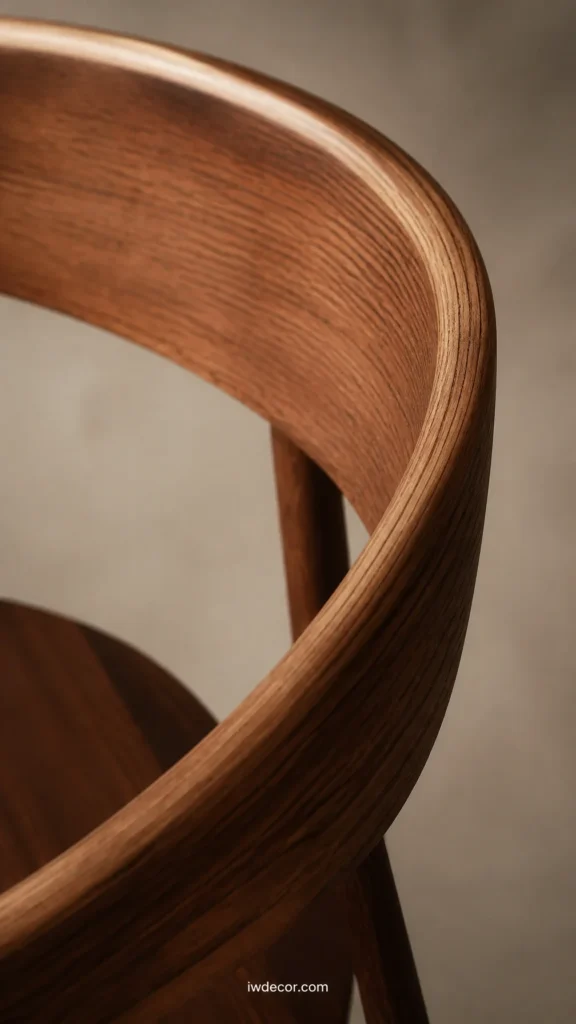
Instead of a flat backrest bolted onto a frame, the classic Scandinavian dining chair often bends a single strip of wood into a continuous curve that follows your spine, a technique borrowed from steam-bending traditions that Nordic workshops picked up and refined through the mid-20th century. The appeal isn’t just visual: a properly steamed and bent back holds its shape under years of leaning back mid-conversation, where a chair with a bolted-on flat panel eventually loosens at the joint. Pair one with a light-toned wood and a table with equally simple legs, and the chair reads as the star of the room rather than a supporting player. Pro-tip: run your hand along the curve before buying if you can; a rough or uneven bend usually means the wood wasn’t conditioned properly before shaping.
The spindle-back chair
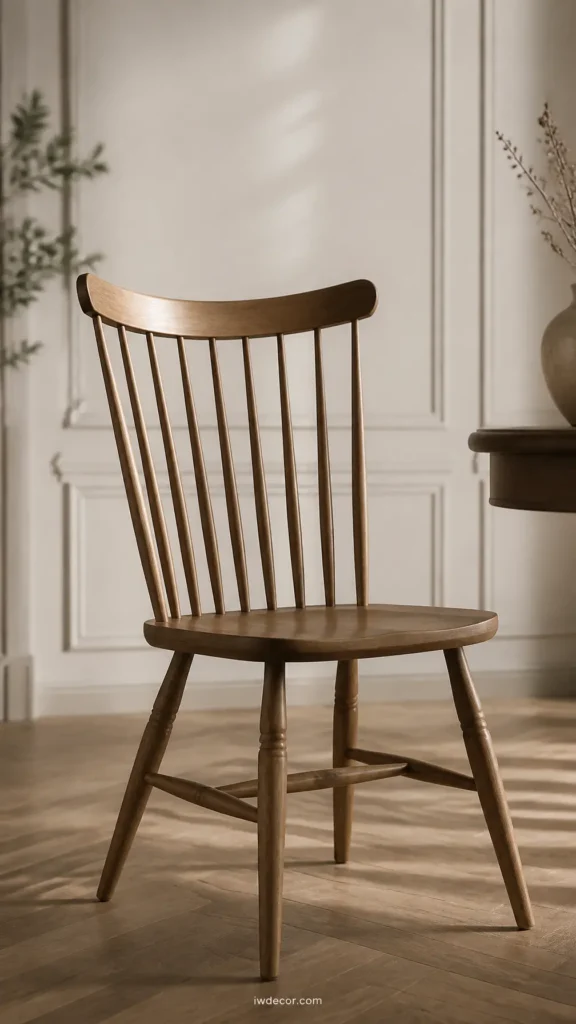
Instead of a solid panel, a spindle-back chair uses a row of thin, turned wooden rods running vertically between the seat and the top rail, which lightens the visual weight of the chair without actually reducing its strength. The trick is spacing: too few spindles and the chair looks unfinished, too many and it starts to look fussy, so most well-designed versions land somewhere around seven to nine evenly spaced rods. These work especially well in smaller dining rooms where a solid-backed chair would visually crowd the space. Pro-tip: check that each spindle is individually socketed into the seat and top rail rather than glued to a backing strip, since the latter tends to crack along the glue line within a few years of daily use.
The wishbone-style chair
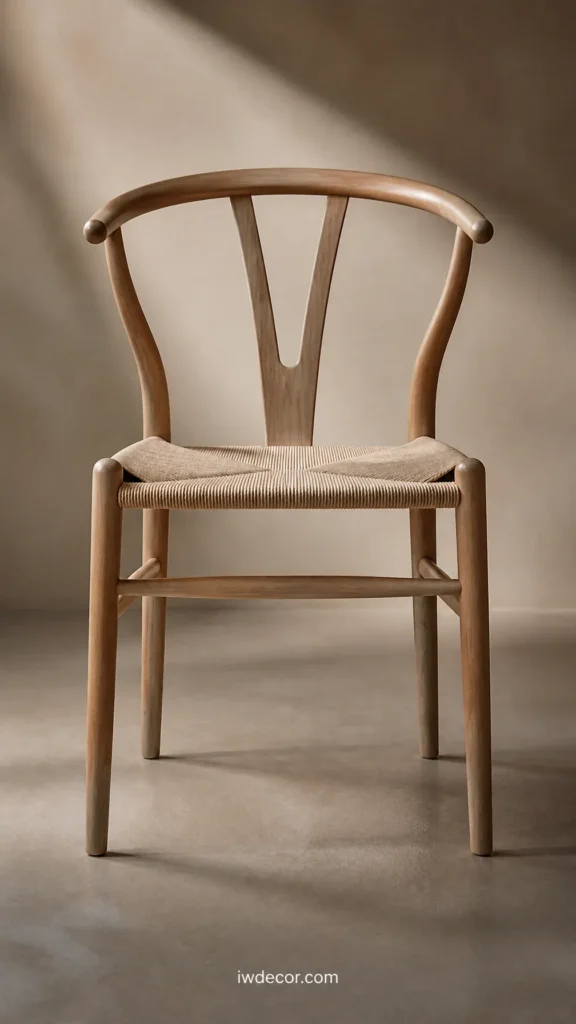
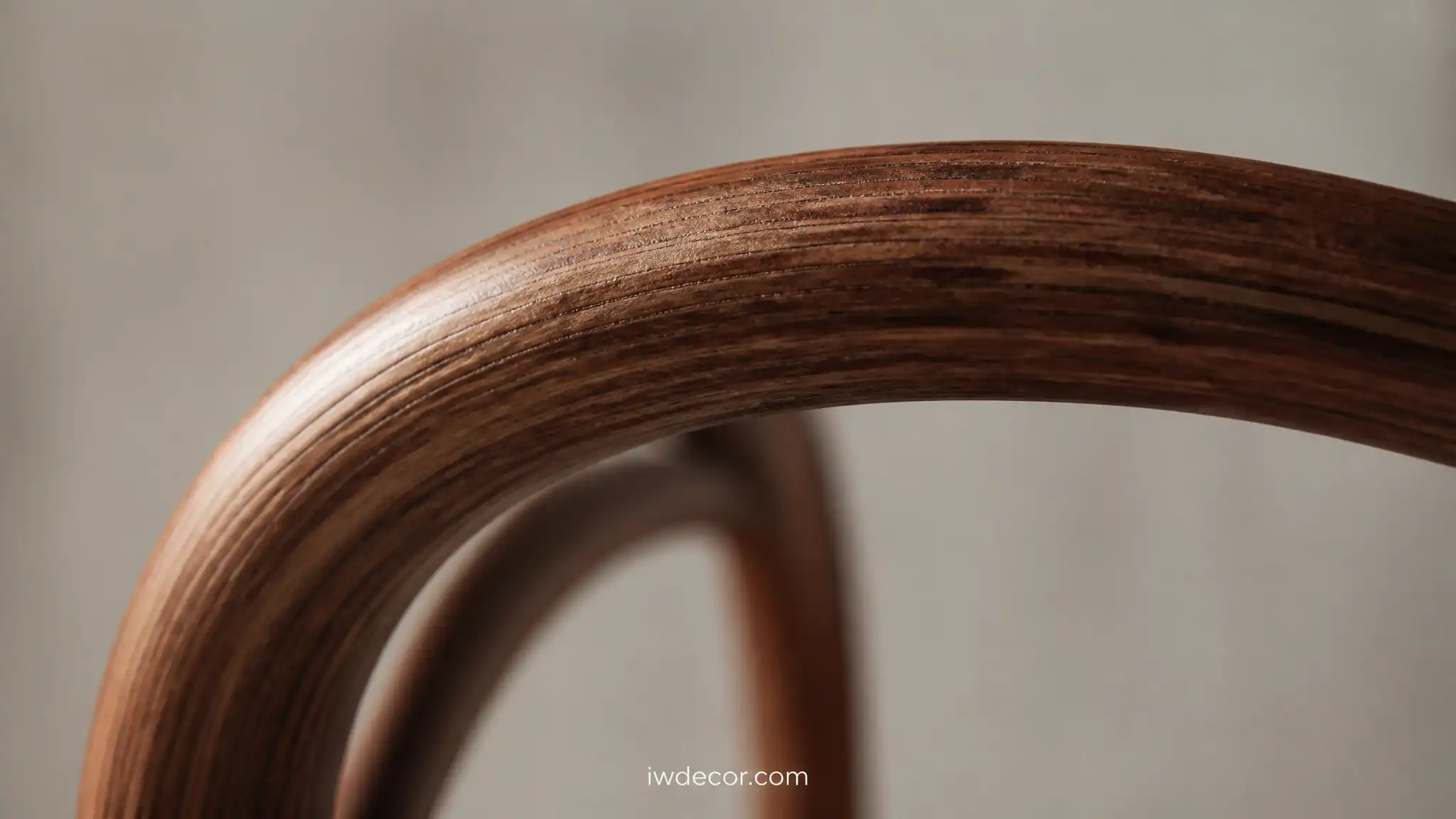
Instead of separate arm supports and a back rail, this design merges both into one Y-shaped piece that splits at the back and wraps forward into the armrests, a solution that looks decorative but is really a structural shortcut solving two problems with one bent piece of wood. It’s one of the harder shapes to execute well because the wood has to bend in two directions at once without splitting at the fork, which is why cheaper reproductions often use a molded veneer instead of solid timber at that joint. If you want the look without the fragility, ask specifically whether the Y-junction is steam-bent solid wood or a laminated bend, since the two age very differently. Pro-tip: solid-wood versions will show a continuous grain line running through the curve; laminated versions show faint parallel lines where the layers were pressed together.
The stackable school-style chair
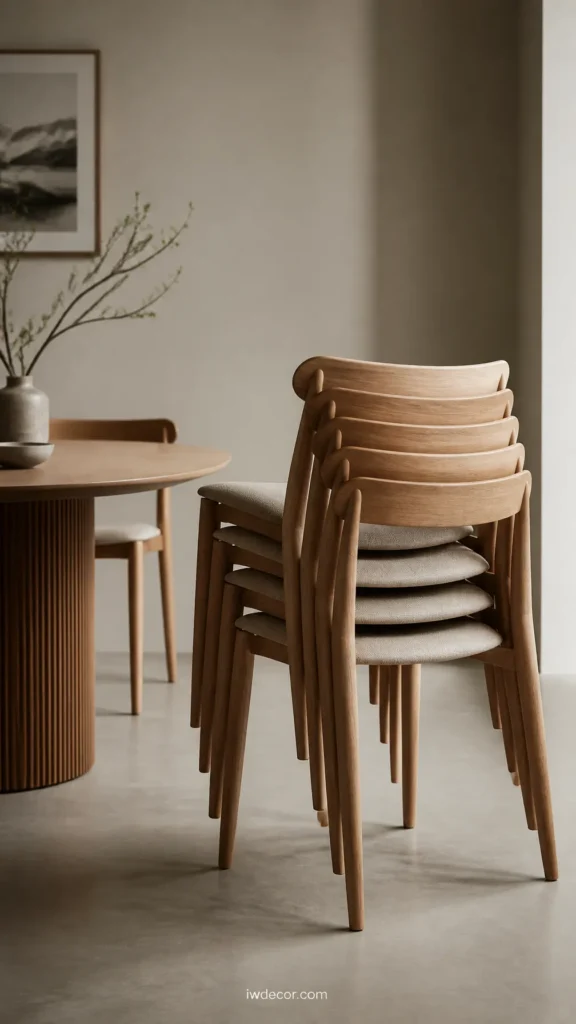
Instead of a fixed four-leg frame, some Scandinavian dining chairs use a splayed leg angle and a slightly narrower seat specifically so a stack of six or eight can nest without scratching each other, a design choice that started in Nordic schools and cafeterias before moving into homes with smaller dining spaces. The trade-off is a slightly less substantial feel when you sit down, since the legs are thinner to allow the nesting angle. For a household that hosts occasionally but doesn’t have room to store extra chairs, this is often the more practical pick than committing to bulkier fixed chairs you’ll never fully use. Pro-tip: test the stack yourself in the store; a good design lets you lift four chairs at once by the top rail without the stack wobbling.
Making the wood work with your table
Matching tone, not matching wood
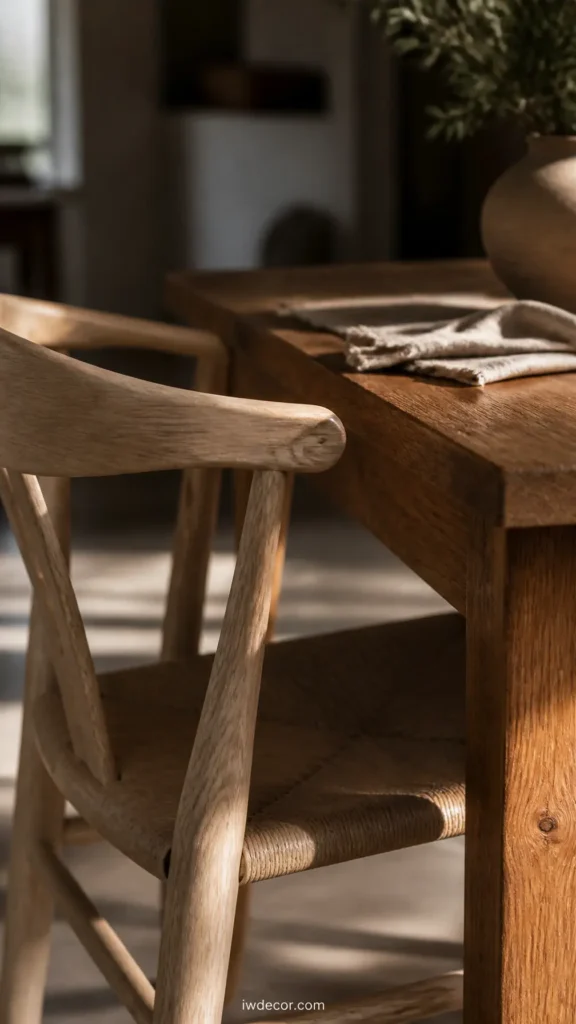
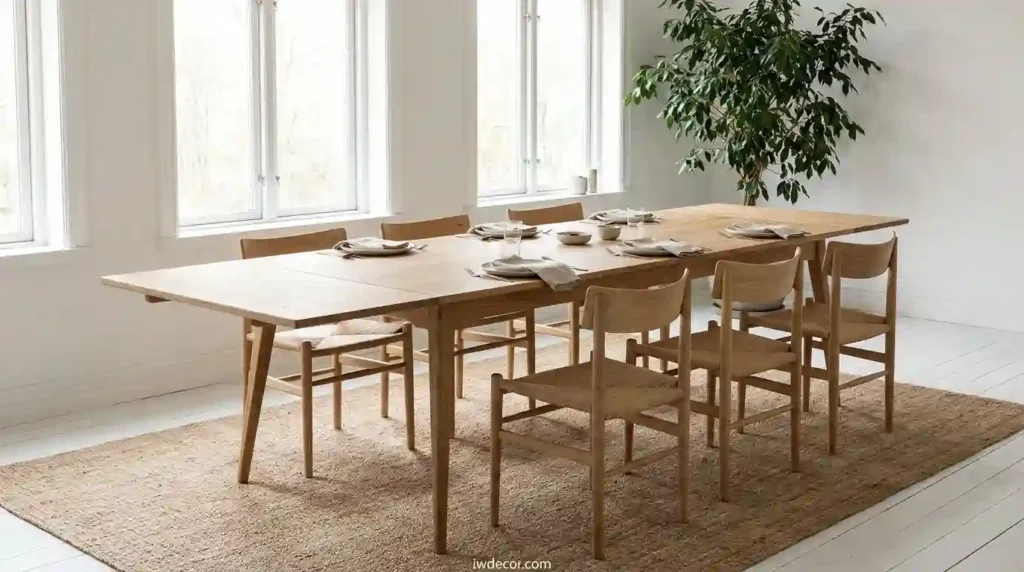
Instead of buying a table and chairs from the same set just because they were sold together, it’s worth separating the two decisions: what actually matters is that the warmth or coolness of the wood tones agree, not that the species is identical. A pale, warm-toned wood chair next to a slightly darker table of a similar undertone reads as intentional, while two different pale woods with clashing undertones, one pink-ish and one yellow-ish, will look like a mismatch even if both are technically “light wood.” Pro-tip: hold a chair sample next to the table in daylight, not under warm indoor bulbs, since artificial light flattens the undertone differences that will bother you later.
Getting the seat height right
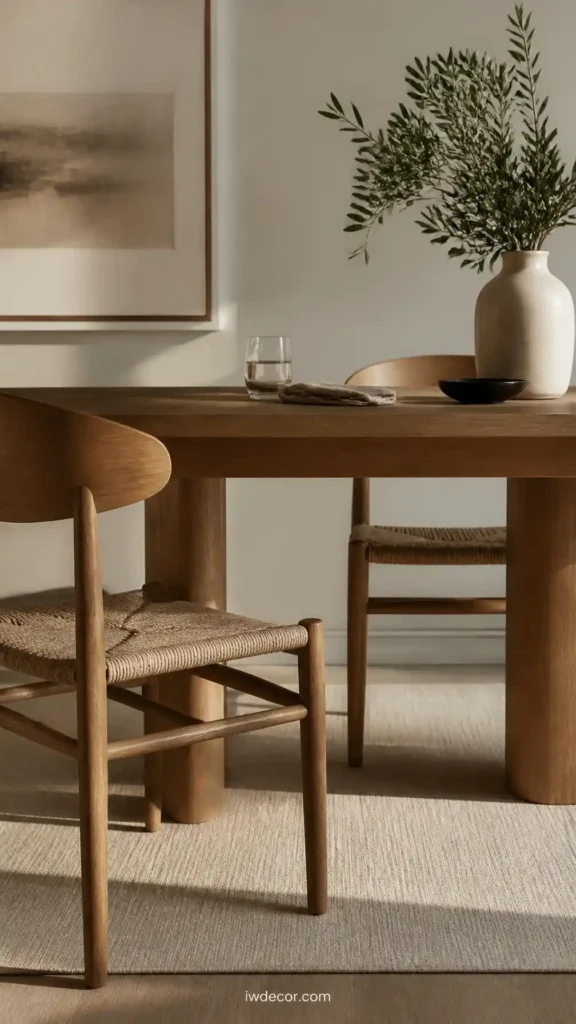
Instead of trusting the listed dimensions alone, actually measure the gap between your table’s underside and the floor before ordering, since most dining tables need somewhere around 11 to 12 inches of clearance between the seat and the tabletop for knees to fit comfortably. Scandinavian chairs often run a touch lower than average American dining chairs, a holdover from tables that were themselves built lower, so a chair that looks proportionally right in a showroom photo can still feel slightly short at your own table. This matters more with wood chairs than upholstered ones because there’s no cushion compression to quietly adjust the actual sitting height. Pro-tip: if you’re between two chair heights, size up rather than down; a chair that’s slightly too tall is a minor annoyance, one that’s too short makes eating uncomfortable every single meal.
Mixing in one upholstered end chair
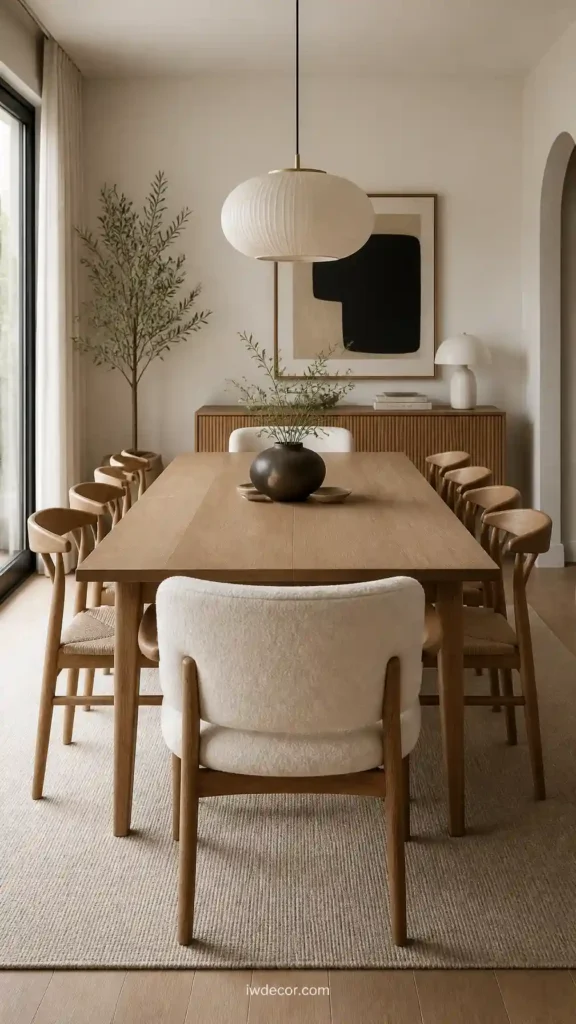
Instead of surrounding a table with six identical wood chairs, some of the more interesting Scandinavian-inspired dining rooms use wood chairs down the sides and swap in one or two upholstered wood-framed chairs at the ends, usually in a wool or boucle-type fabric that keeps the wood tone visible in the frame. This isn’t just decorative variety; the head-of-table seats get used the longest during dinners and gatherings, so a bit of padding there earns its keep. The wood frame peeking through the upholstery keeps the whole set feeling connected instead of like two unrelated purchases. Pro-tip: choose the upholstered fabric in a neutral that’s slightly warmer or cooler than the wood tone, not an exact match, since an exact match can flatten the visual interest you’re trying to add.
Living with wood chairs long-term
Oiled finishes versus lacquered ones
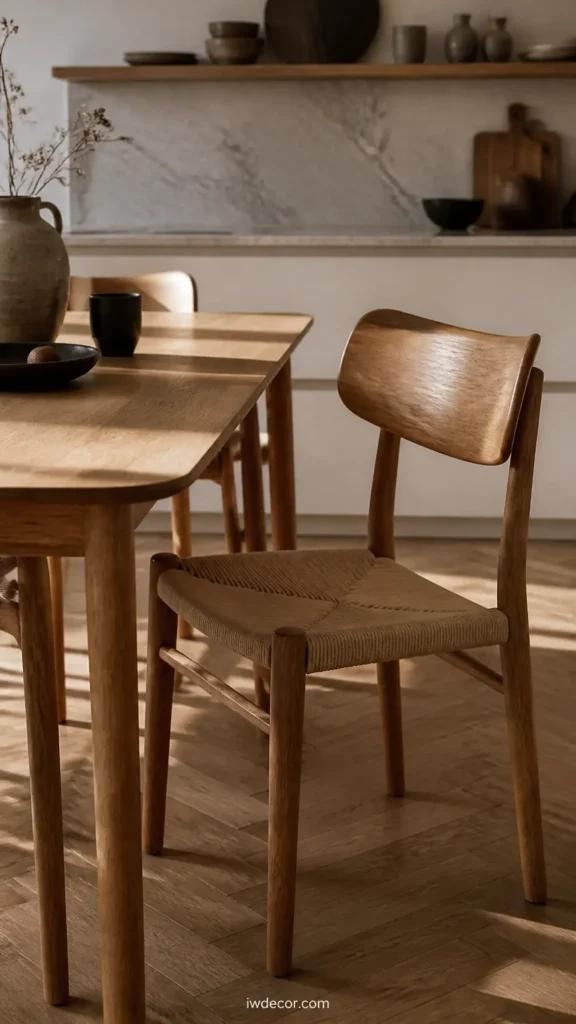
Instead of a hard lacquer that sits on top of the wood like a shell, many Scandinavian chairs use an oiled finish that soaks into the grain, which lets the wood breathe and age with visible character but also means it needs the occasional re-oiling, maybe once a year in a busy dining room, to stay protected from spills and drying out. Lacquered chairs need almost no maintenance and resist water rings better, but they can look plasticky next to natural materials, and once the lacquer chips it’s a much bigger repair job than refreshing an oil finish. If you actually cook and eat at the table daily rather than using it for occasional dinner parties, oil is the more forgiving long-term choice despite the extra upkeep. Pro-tip: keep a small tin of matching furniture oil in a kitchen drawer; wiping down one chair takes about the same effort as wiping down a countertop.
Checking joinery before you check the finish
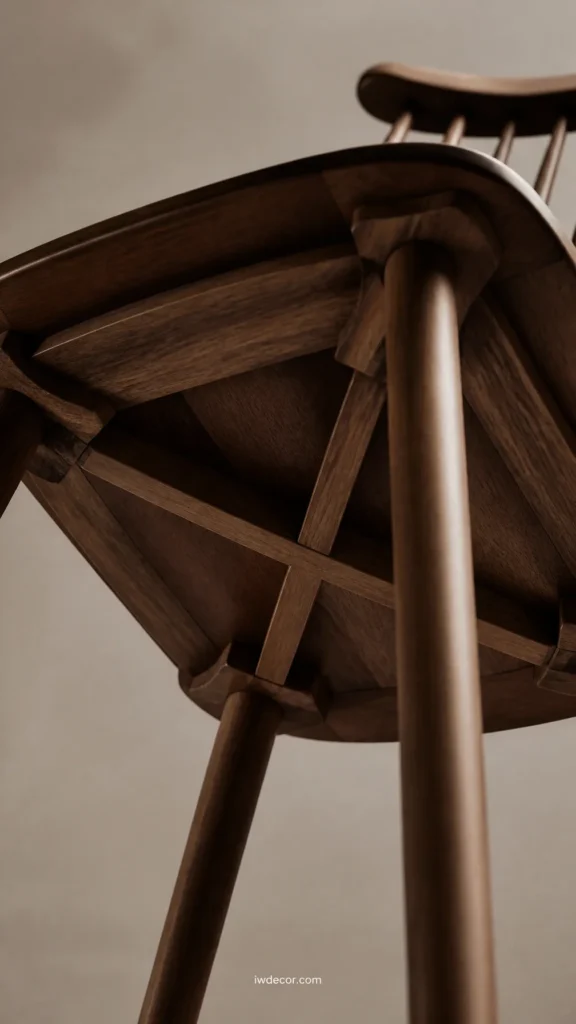
Instead of judging a chair mostly by how the wood looks, flip it over and look at how the legs meet the seat frame; real mortise-and-tenon or dowel joints reinforced with corner blocks will outlast decades of daily use, while chairs held together mostly with screws into end grain tend to loosen within a couple of years no matter how nice the wood on top looks. This is the single detail that separates a chair built to be sat in for a lifetime from one built to look good in a product photo. A chair with visible, well-fitted joinery and a plain finish will almost always outlast a heavily finished chair with hidden, weaker joints. Pro-tip: gently rock a floor-model chair side to side with your hand on the seat; any looseness at the leg joints will show up immediately, even in a chair that’s only been in the showroom a few months.
Letting the wood show wear on purpose
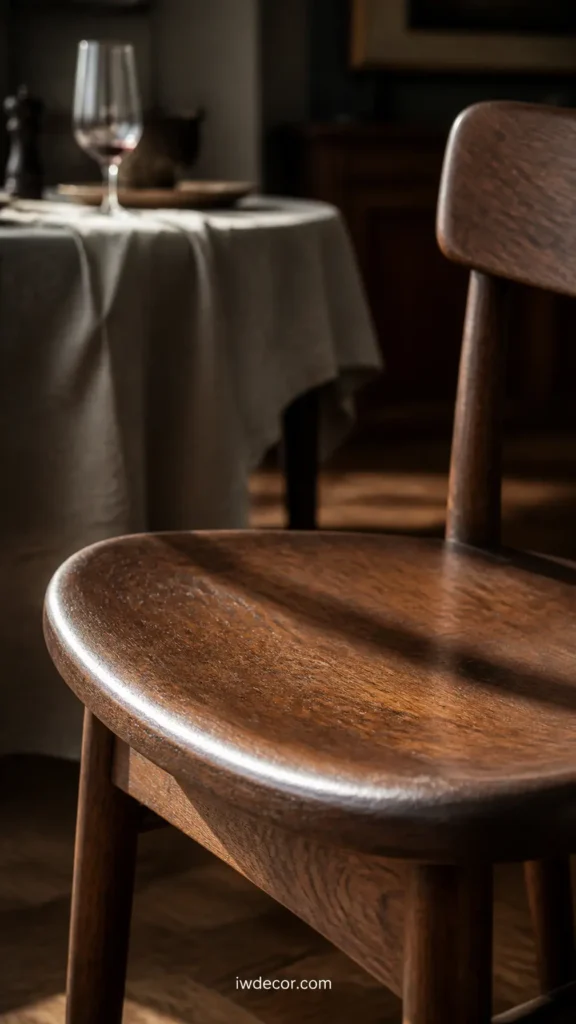
Instead of treating every scuff or water mark as damage to fix immediately, solid wood chairs are meant to pick up a bit of a story over the years, and a light patina of small marks around the seat edges usually looks more at home than a chair kept in showroom condition inside a lived-in dining room. That said, there’s a difference between character and neglect: deep scratches that break the finish should still get treated so moisture doesn’t get into the bare wood underneath. The goal isn’t a museum piece, it’s a chair that looks better after a few years of actual dinners than it did on delivery day. Pro-tip: address deep scratches within the same week you notice them; shallow surface marks can wait for your next scheduled oiling.
Comparing the common wood choices
| Wood | Best for | Trade-off |
|---|---|---|
| Oak | Households that want visible grain and long-term durability | Heavier chairs, higher price point |
| Beech | Steam-bent shapes like spindle-backs and wishbone chairs | Softer than oak, dents more easily over time |
| Ash | A lighter, more casual look with strong bend resistance | Grain can look busy next to very plain tables |
| Pine | Budget-friendly options and more casual dining rooms | Prone to dents and scratches from daily use |
My take: if I had to pick one wood for a chair that’s going to see a decade of actual family dinners, I’d take beech over oak even though oak gets more of the design attention. Oak looks the part in photos, but beech is what most of the classic bentwood and spindle chairs are actually made from, because it bends and holds under stress in a way oak resists. The grain is quieter, which some people read as less impressive, but it’s also less likely to fight with whatever table you eventually pair it with.
None of this has to be complicated. Pick a shape that fits your room, check the joinery before the finish, and let the wood tone guide the rest of the table setup rather than chasing a matching set. If you’re furnishing a whole dining area from scratch, start with the chairs before the table; it’s easier to find a plain table to match a chair you love than the other way around.
Frequently asked questions
Do Scandinavian wood dining chairs need armrests?
Not usually, and many of the classic designs skip them entirely so chairs can sit closer together and tuck fully under the table. Armrests are more common on the one or two end chairs at a table rather than on every seat.
Can I mix different wood chair styles at one table?
Yes, as long as the wood tones agree with each other, mixing a spindle-back and a wishbone-style chair in the same warm wood tone usually looks more curated than matchy, not less coordinated.
How do I stop wood dining chairs from wobbling on my floor?
Check the joinery first, since a wobble often means a loosened leg joint rather than an uneven floor. If the joints are solid, felt or rubber floor glides on each leg usually fix the rest.
Are wood dining chairs comfortable without a cushion?
Well-shaped ones are, since the seat and back curves are designed to support you without padding. A separate tie-on seat cushion is still a common and easy addition if you want extra comfort for long dinners.