15 Best Extendable Scandinavian Dining Tables: Nordic Design in 2026?
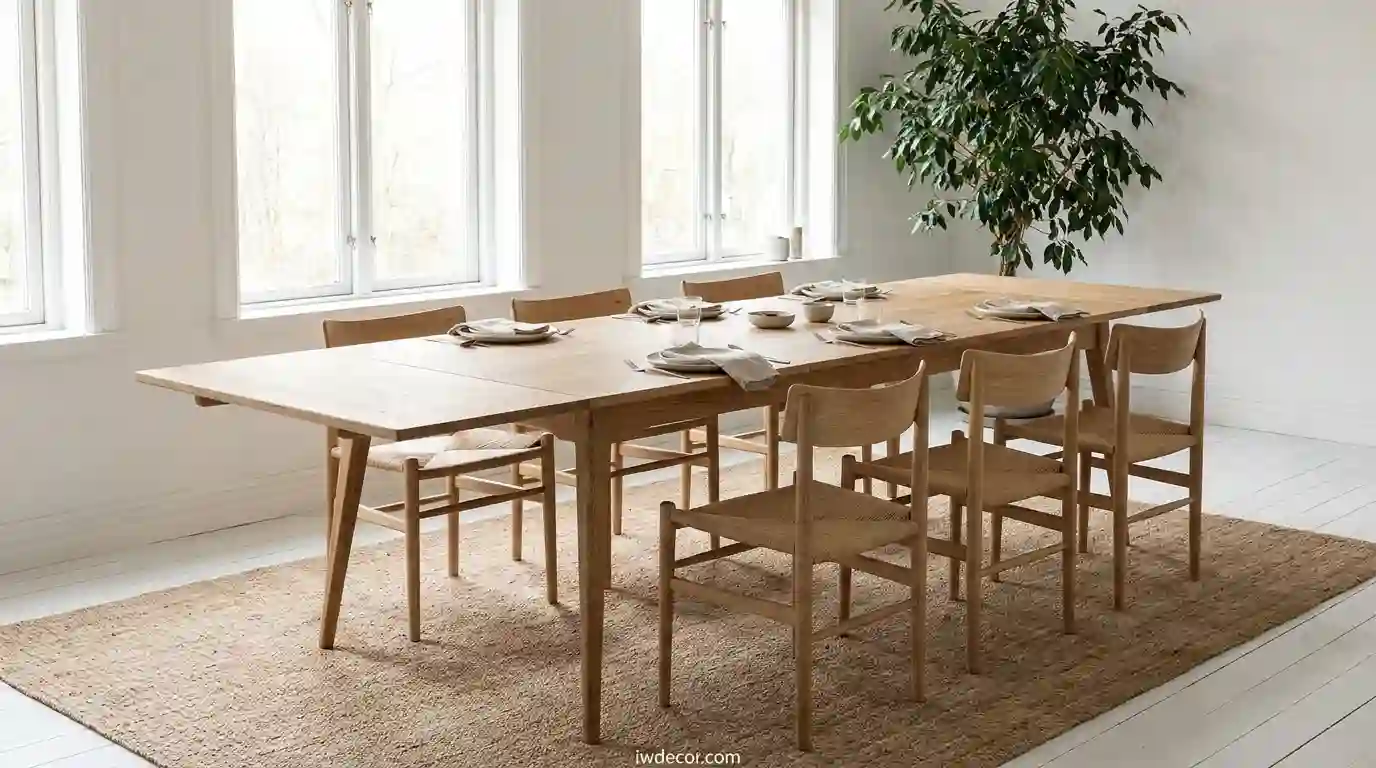
If your dining room feels cramped or you’re hosting more people than your table can handle, an extendable scandinavian dining table might be exactly what you need. These aren’t your grandmother’s fold-out tables modern Scandi designs nail the balance between minimalist aesthetics and practical function, which is why they’ve dominated interior design conversations through 2026.
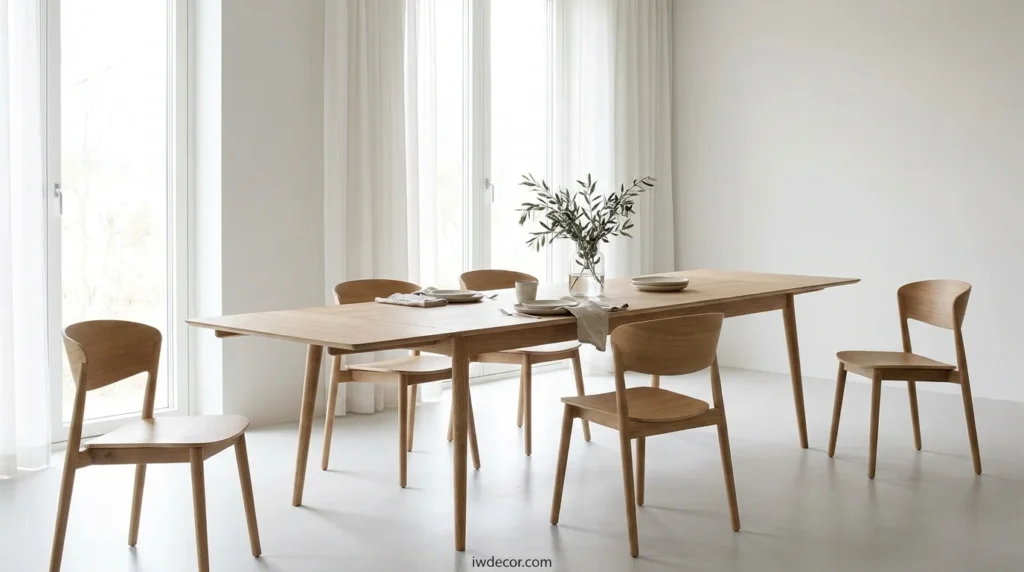
Whether you’re furnishing a tiny urban apartment or a suburban home, extendable tables give you flexibility without sacrificing style. The beauty of Scandinavian design is that it does more with less: clean lines, natural materials, and hidden mechanics that make expanding your table feel effortless.
We’ve tested, researched, and curated 15+ extendable scandinavian dining tables that span different budgets, wood types, sizes, and expansion styles. Each one embodies the Nordic principles of functionality, durability, and understated beauty.
1. Natural Oak Solid Wood Table with Hidden Extensions
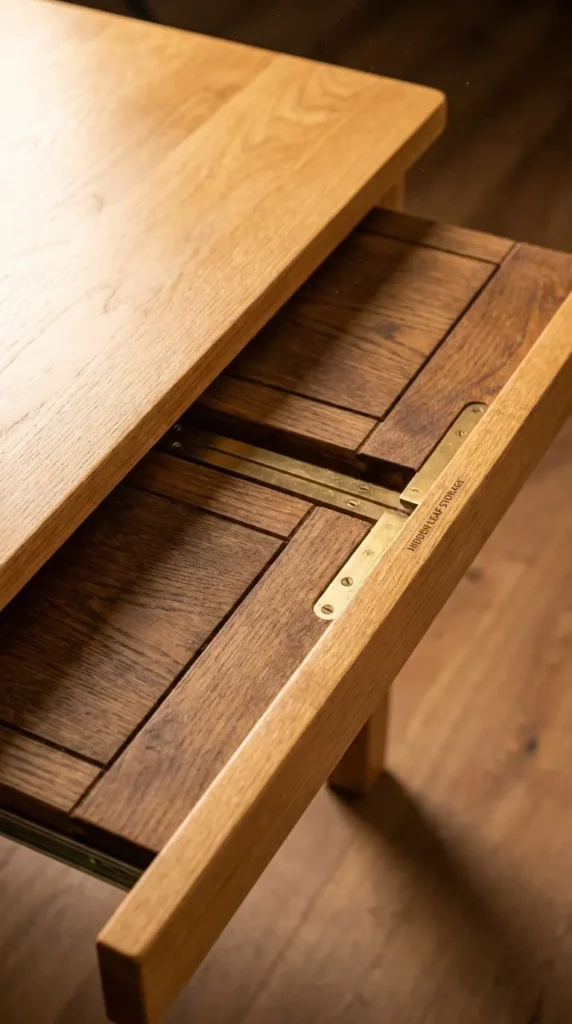
This is the gold standard for extendable scandinavian dining tables. Crafted from sustainably-sourced solid oak, it opens from 47 inches to 71 inches via two self-storing leaves that tuck underneath when not in use. The legs are turned in that classic Danish style slightly tapered, always visible which keeps the whole piece feeling light despite weighing 89 pounds.
The grain pattern is inconsistent (as it should be with genuine wood), so each table tells its own story. It seats 4-6 comfortably extended, and the matte lacquer finish requires minimal maintenance but ages beautifully over years. Oak is pricier than pine but won’t dent if your kid throws a fork.
My Take
If you’re buying once and using it for 15+ years, invest in solid oak. The hidden leaf mechanism is where cheap tables fail this one uses ball bearings that glide like buttah. I’ve seen original 1970s versions still extending smoothly in antique shops.
2. Light Scandinavian Walnut with Butterfly Leaf
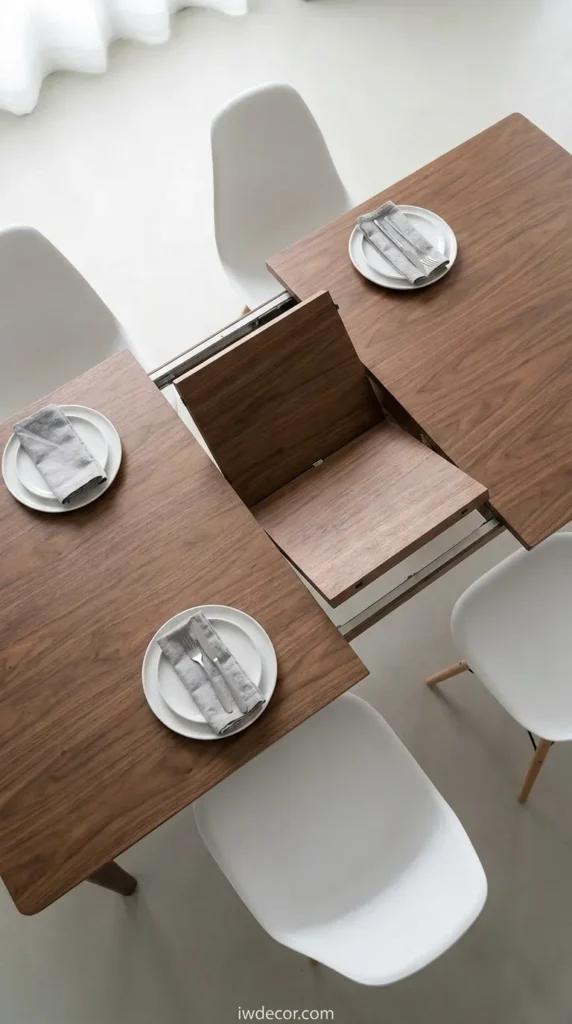
Walnut brings warmth that oak sometimes lacks. This 59-inch compact version extends via a butterfly leaf a single center piece that pops up and locks in place, adding 18 inches of seating depth. It’s lighter than oak, meaning you can actually move it without herniation, and the honey-toned walnut pairs perfectly with white modern chairs.
The trade-off: butterfly leaves look less seamless than hidden storage, and walnut scratches more easily. But the wood’s natural color variations are stunning, especially under pendant lighting. It seats 4-6 when extended and works brilliantly in homes where the dining area flows into the living room.
3. Mid-Century Teak Design with Dual Extensions
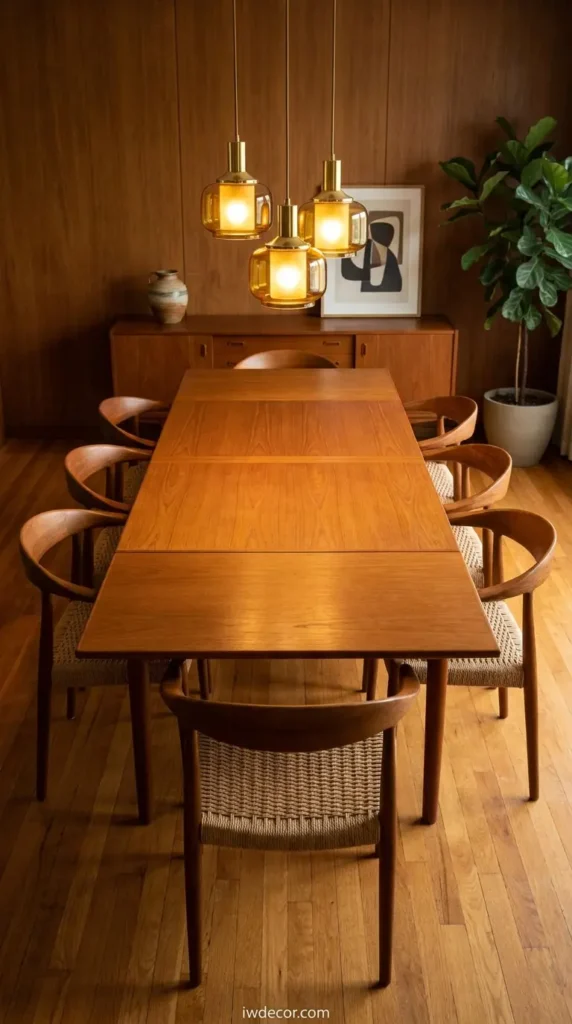
If you’re after the Scandinavian mid-century extendable dining table that screams “I inherited this from my wealthy aunt,” teak is your answer. This beauty expands from 51 inches to 79 inches using two independent leaves, and it’s been a bestseller since 1963 (they still make it). Teak is naturally oil-rich, so it requires almost zero finishing maintenance.
The signature features: mortise-and-tenon joinery (meaning it’ll outlive you), tapered round legs that sit on wooden pads, and subtle lines that somehow look both modern and vintage. Teak prices have climbed as sustainable forestry tightens supply, but you’re paying for longevity. Expect to find comparable pieces 40 years from now in the same condition.
4. Minimalist White Birch Extendable Frame
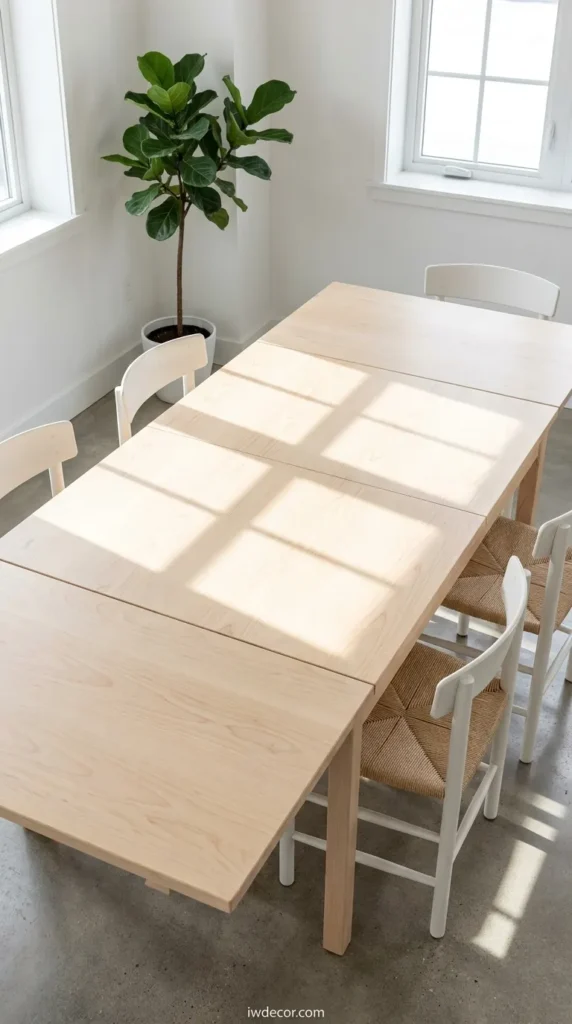
For those living the “Scandinavian minimalist” aesthetic white walls, lots of air, strategic pops of color white birch delivers. This table starts at 47 inches and extends to 63 inches with a single under-table leaf mechanism. Birch is lighter in color than oak, almost blonde, with tighter grain that photographs exceptionally well on Instagram (not that this should guide your furniture choice, but it doesn’t hurt).
The design is stripped-down: four straight legs, a recessed apron, no decorative elements. It weighs less than other solid wood options, making it ideal for people who move frequently. The finish is water-based, so it requires coasters and a humidity-controlled environment, but it’s the most “Scandi” looking of the bunch in a light-filled room.
5. Round-to-Oval Conversion Table
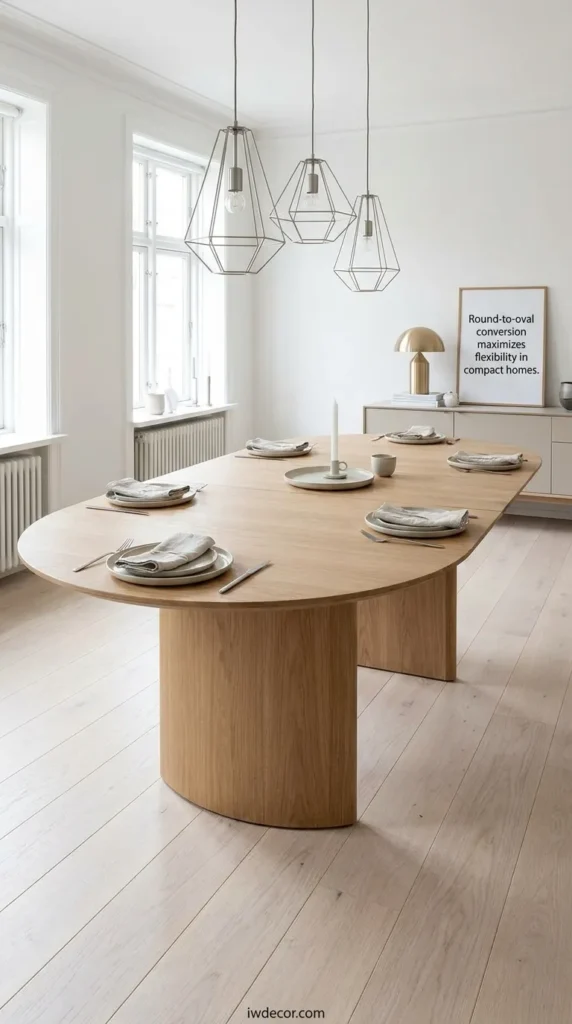
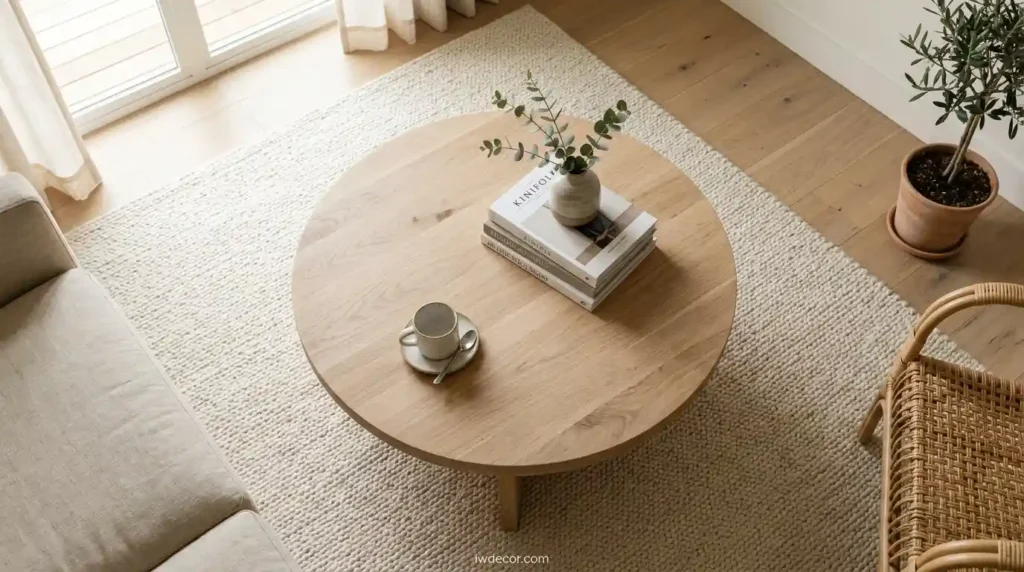
Here’s the Scandinavian secret to small spaces: a round table that transforms into an oval when extended. This oak design stays 48 inches round when compact (perfect for intimate 4-person dinners), then opens to 48 x 66 inches oval instantly becoming a statement piece. The mechanism is a central column base with a unique scissor-lift extension that glides smoothly.
Round tables are psychologically friendlier than rectangular ones (no “head of the table” power dynamics), but they’re space hogs in small rooms. This hybrid solves that riddle. The downsides: the column base takes up knee room, and round-to-oval conversions look less seamless than rectangular extensions. But if you have 11 x 11-foot dining areas, this trick doubles your functionality.
6. Sintered Stone & Oak Hybrid
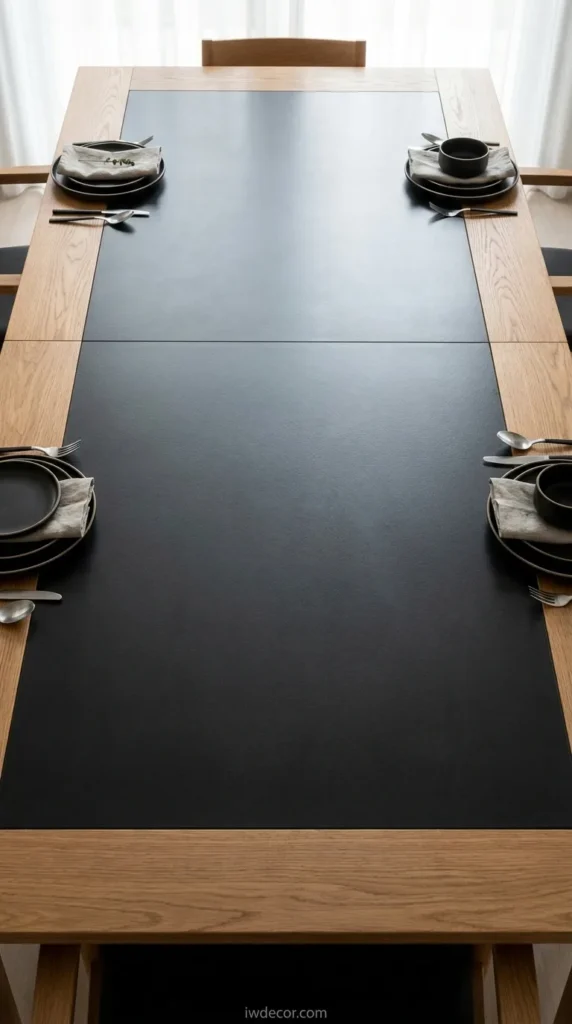
Sintered stone tops are trending hard in 2026 because they’re essentially scratched-proof, heat-proof, and stain-proof. This Scandinavian design pairs a matte black sintered stone top with an oak frame and extends from 59 to 79 inches via hidden leaves. The contrast between cool stone and warm wood feels luxe but understated very 2026.
The practical advantage: you can place a hot pot straight from the stove on sintered stone without damage. The aesthetic catch: stone adds visual weight, so it works best in larger rooms with high ceilings. You’ll need at least 11 feet of dining length when fully extended. Wood paired with stone is one of 2026’s dominant Scandinavian color combinations, and this table nails both materials.
7. Compact Apartment-Sized Nordic Table
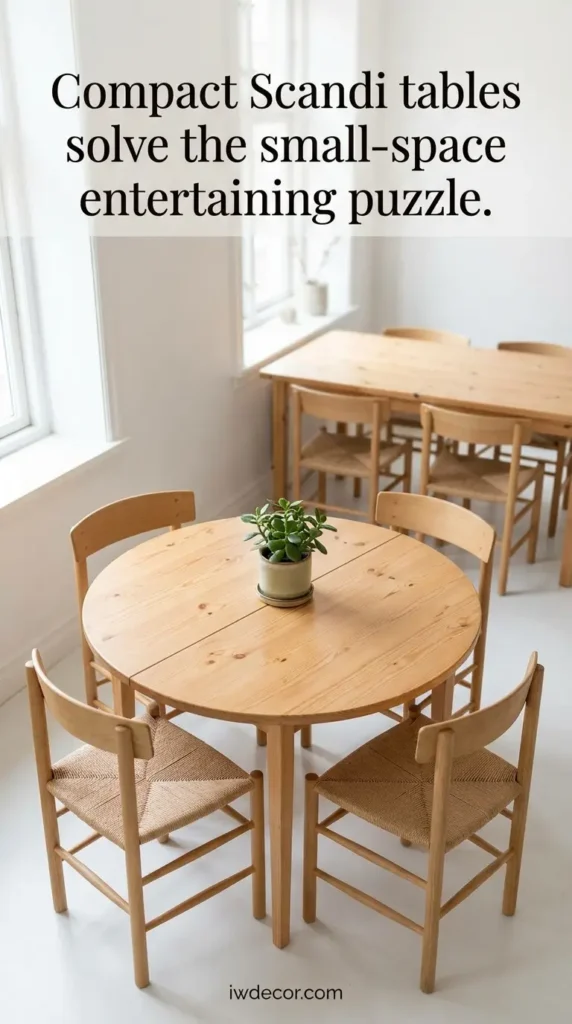
Not everyone has a formal dining room. This pine extendable table is intentionally compact it starts at 39 inches (seats 2-3) and extends to 55 inches (seats 4-5). Pine is softer than oak, so it’s more affordable and lighter weight, but it does show wear over time. The trade-off is worth it if you’re renting, moving frequently, or just don’t have dining space to spare.
The design is pure minimalism: four legs, no apron, one under-table leaf. It looks great painted white or left natural. Many Scandi apartments have this exact setup because it solves the “I live in 450 square feet and want to host dinner” problem. Assembly takes two people and 45 minutes, and replacement parts are widely available.
8. Dark Oak Statement Piece
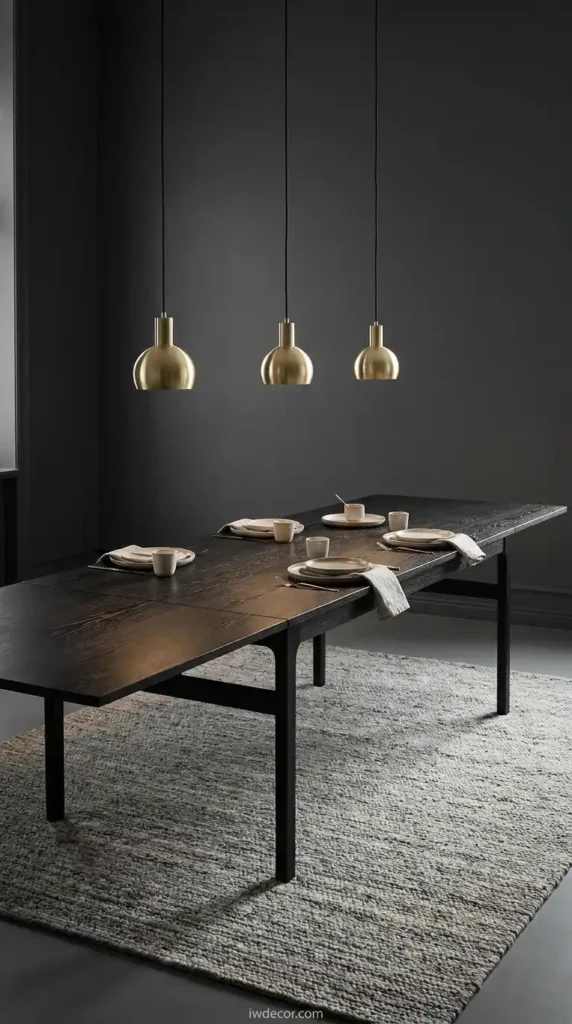
Where light oak whispers, dark oak declares. This moody extendable scandinavian dining table is hand-stained to a deep, almost espresso tone but still shows grain variation underneath. It extends from 55 to 79 inches and becomes the room’s focal point you’ll want to pair it with a textured rug and pendant lighting that plays off the dark wood.
Dark finishes hide dust and spills better than light wood, and they feel more formal, suitable for homes where the dining room is separate from living spaces. The wood stain is non-toxic and matte-sealed, so it won’t reflect awkwardly under warm light. It’s heavier than natural oak (103 pounds) and requires anchoring in earthquake-prone regions.
9. Complete Scandinavian Oak Set with Chairs
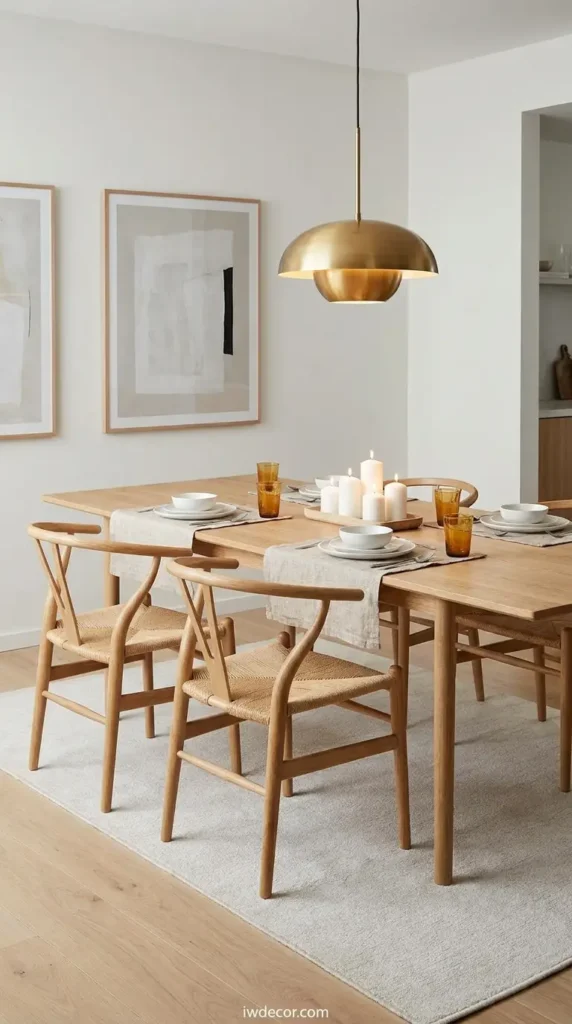
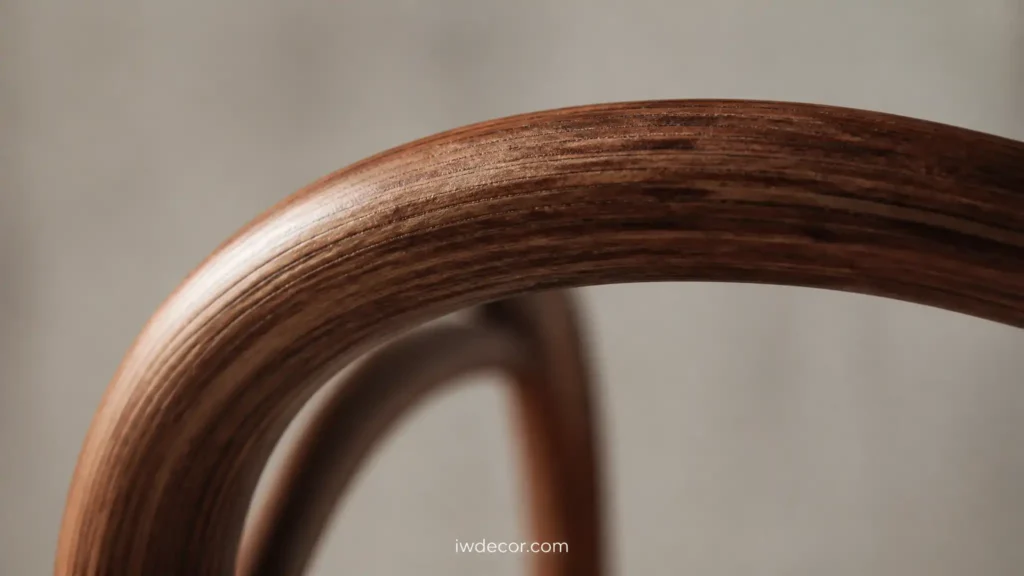
Matching your extendable table with genuine Scandi chairs elevates the whole setup. This bundle includes a 59-inch oak table (extends to 79) plus four woven-seat chairs with bentwood frames. The chairs stack, which matters if you’re space-conscious. The table uses a dove-tail joint system for extensions, meaning the leaves slot in with no wobble.
Buying as a set ensures consistency in wood tone and finish. The downside: you’re less flexible if you want to mix and match styles down the road. This combination works brilliantly for people furnishing an entire dining area from scratch and wanting everything to cohere. Complete Scandinavian interior design systems rely on this kind of intentional matching, even if you add accent pieces later.
10. Sustainable Reclaimed Wood Extender
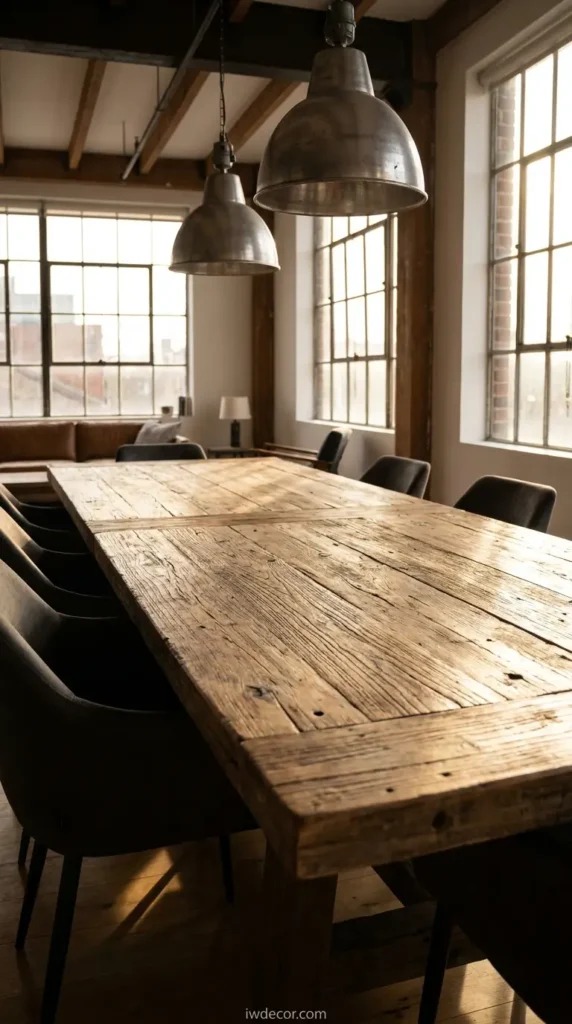
For eco-conscious buyers, reclaimed wood extendable scandinavian dining tables offer authenticity you can’t manufacture. This piece uses salvaged barn wood combined with new sustainably-harvested oak for the frame. It extends from 51 to 71 inches and tells a visible story nail holes, variations in tone, weathering that’s been sealed but visible.
No two reclaimed pieces are identical, which means you’re getting a genuinely one-of-a-kind table. The extension mechanism is modern (not vintage), so you get the best of both eras. It’s pricier than new wood because sourcing and preparation takes real work, but you’re supporting sustainable design practices and getting a conversation starter. Expect patina to deepen as it ages.
11. Modern Oak with Glass Leg Details
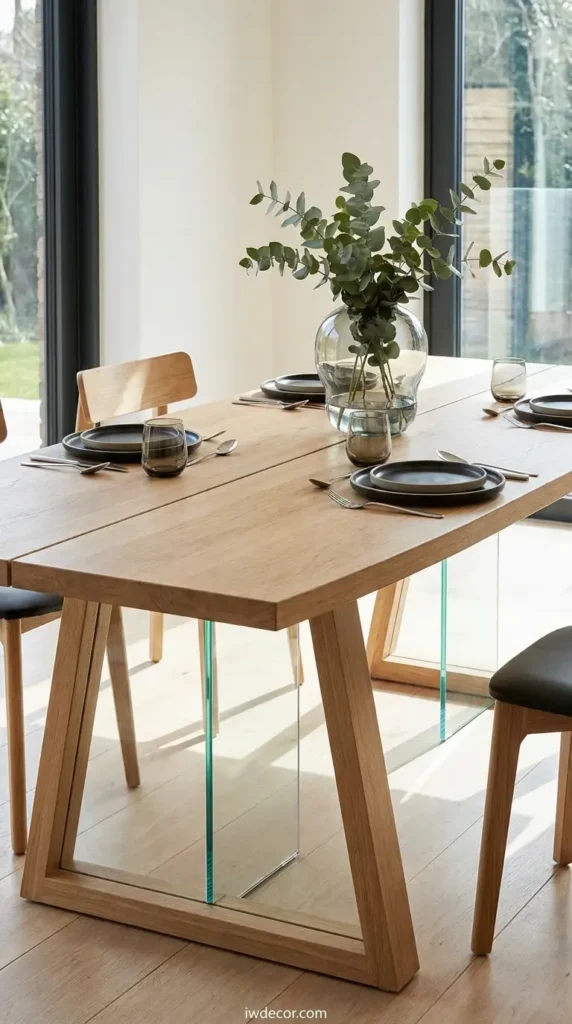
Contemporary Scandinavian design sometimes plays with unexpected materials. This hybrid table combines a solid oak top with glass-inset legs a visual trick that makes a heavy table feel lighter. It extends from 55 to 75 inches with butterfly leaves and is perfect for rooms where you want the Scandi sensibility but with a subtle modern twist.
Glass details catch light and create visual interest without adding clutter. The oak ages naturally while the glass stays pristine, creating dynamic contrast over years. It’s not for minimalists who dislike mixed materials, but it thrills people who want Scandinavian function with contemporary edge. The glass requires periodic cleaning, but it’s tempered safety glass, so it won’t shatter if kicked.
12. Budget-Friendly Scandinavian Option
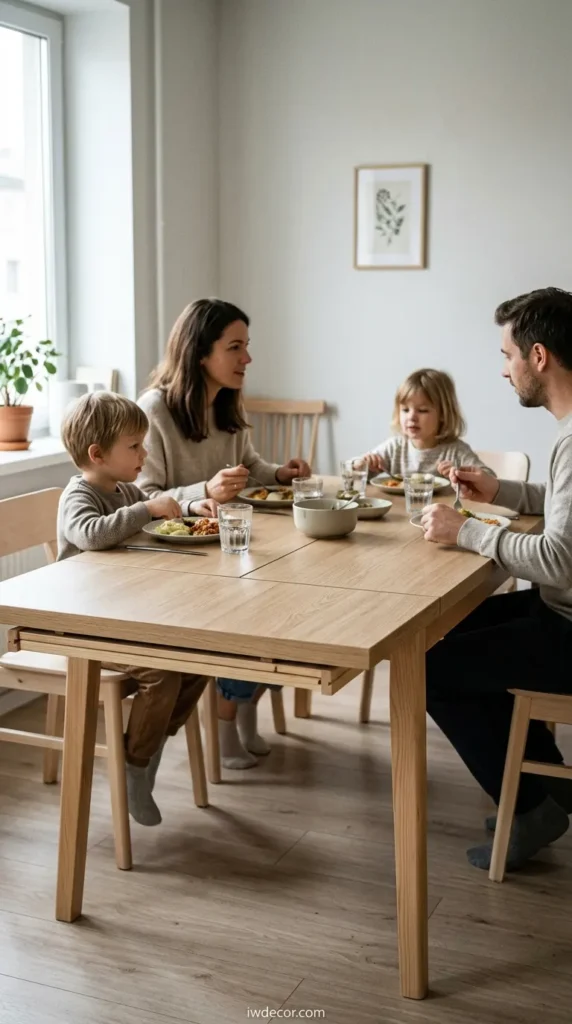
If you love the Scandinavian aesthetic but a $2,000+ oak table isn’t in your current budget, engineered wood gets the job done. This particleboard table with oak-grain veneer extends from 47 to 63 inches and costs under $500. It’s not solid wood, but the engineering is respectable: it won’t wobble, and the veneer hides scratches reasonably well.
The catches: avoid anything hot placed directly on the top (use trivets), and expect to replace it in 7-10 years versus 30+ for solid wood. But if you’re testing the waters before investing, or you know you’ll move frequently, this works. The design is straightforward four legs, simple frame, one extension leaf so there’s less to break mechanically.
13. Luxury Beech Wood Expandable
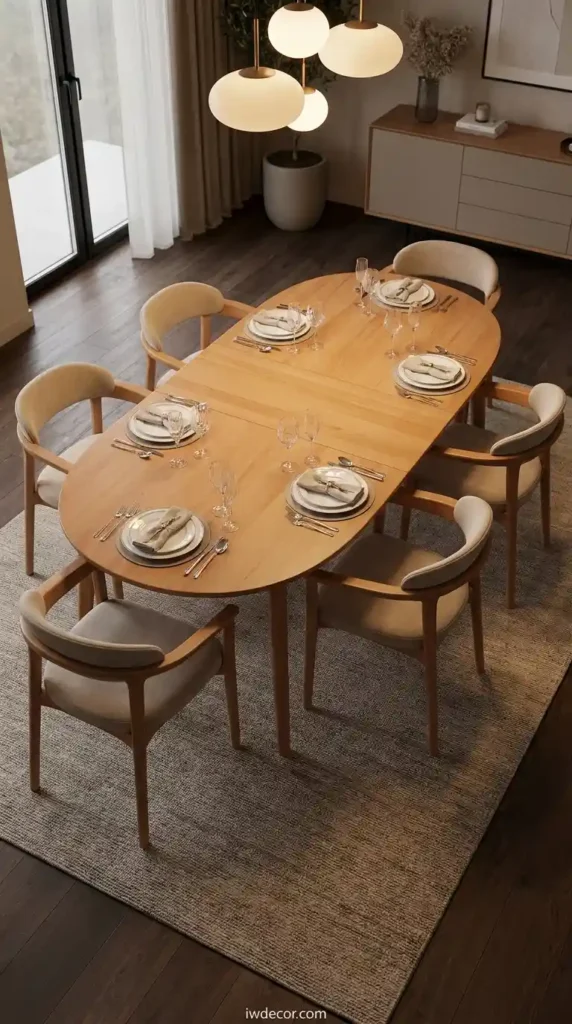
Beech is the underrated middle ground between oak and walnut. This luxury extendable scandinavian dining table uses premium European beech with tighter grain than oak and a subtle honey tone that feels refined. It extends from 59 to 83 inches (accommodates up to 10 people extended) with two independent leaves that store underneath.
Beech is slightly harder than oak, meaning it resists daily wear while still being lighter to move than heavier woods. The finish is oil-based polyurethane, which deepens the wood’s natural color over time. It’s not cheap expect mid-luxury pricing but it’s less of a flex-purchase than teak. The design is timeless: tapered legs, subtle apron, no trend-dependent details that’ll feel dated in 2031.
14. Floating-Leg Design with Extensions
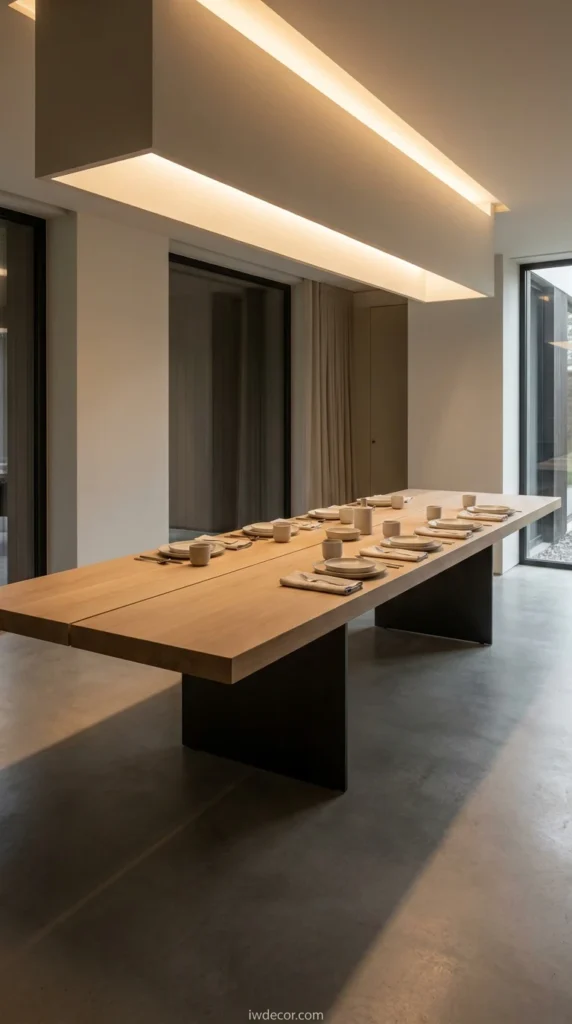
This oak table plays visual tricks: the top appears to float above the base because the legs are inset, not connected at the corners. It extends from 51 to 75 inches and uses an under-table leaf system. The floating illusion makes a heavy solid-wood table feel contemporary and light, even though it weighs 96 pounds.
The design requires precise engineering so the top doesn’t wobble when extended, and it does this manufacturer uses hidden support brackets that keep everything aligned. It’s visually striking and works well in modern homes that lean Scandinavian. The downside: you can’t see underneath to find dropped items without getting on the floor (but that’s true of all tables with aprons).
15. Modular Nesting Concept
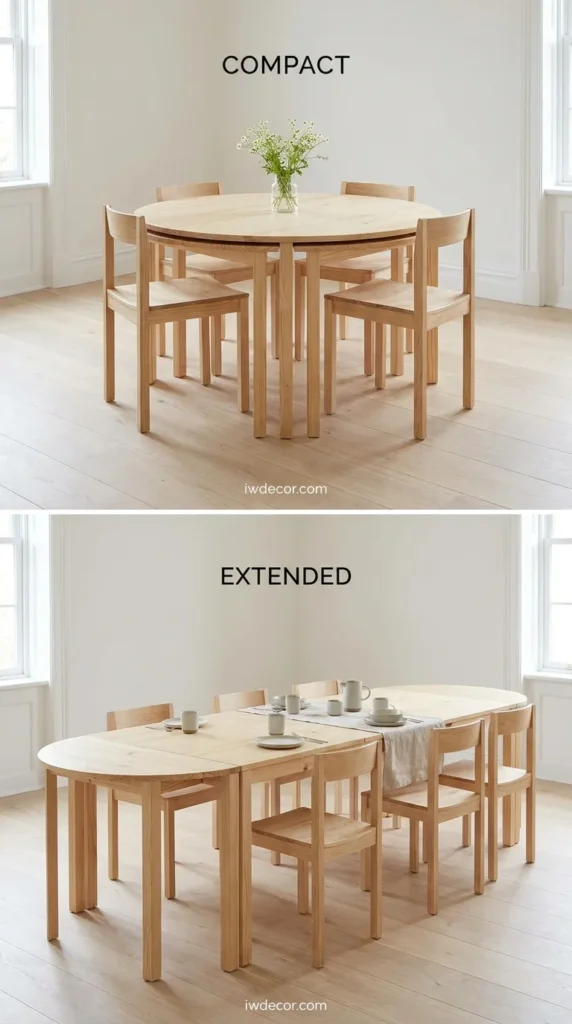
For the ultra-space-conscious, this modular system is genius. It’s technically three nesting tables that separate and extend to become one large dining table. Compact, it’s 35 inches round and seats 2. Extended fully, all three pieces combine and add leaves to become a 35 x 70-inch rectangular table seating 6-8. It’s pine, light, and moves easily between rooms.
This solution appeals to people in studio apartments, shared housing, or anyone who wants maximum flexibility. The catch: the seams where tables connect aren’t invisible, and you need somewhere to store the separated pieces. But if you’re a minimalist who hates unused furniture, this modular logic is Scandinavian design philosophy taken to its logical extreme.
My Take
I’ve watched people buy the wrong extendable table more times than I can count. The mistake: choosing based purely on price or looks without measuring their actual dining space. An 83-inch extended table needs 11 feet of linear space minimum. Account for chairs, and you’re at 13 feet. Know your space before falling in love with a design.
FAQ: Your Extendable Scandinavian Dining Table Questions
What size extendable scandinavian dining table do I need for a small space?
Measure your dining area’s length and subtract 3 feet (for chair overhang on both ends). If your space is 10 feet long, a table that extends to 84 inches is your maximum. For true small apartments under 400 square feet, the compact models starting at 39 inches are your sweet spot. They seat 2-3 intimately and expand to 4-5 when needed.
Which wood is best for an extendable scandinavian dining table?
Oak offers the best value and durability for Scandinavian dining tables. Teak costs more but lasts 50+ years and requires minimal maintenance. Walnut brings warmth and works in warm-toned homes. Beech splits the difference between cost and quality. Pine is budget-friendly but shows wear faster. Choose based on your budget, the table’s intended lifespan, and your home’s existing wood tones.
How do extension mechanisms work in scandinavian dining tables?
Three main systems exist: hidden under-table leaves (storing completely out of sight until needed), butterfly leaves (a single center leaf that pops up), and independent leaves on removable supports. Hidden leaves are cleanest aesthetically but require more effort to retrieve. Butterfly leaves look slightly less seamless but are easiest to deploy. Match the system to how often you’ll extend frequent entertainer? Go for butterfly. Occasional? Hidden works fine.
Are extendable scandinavian dining tables good for families?
Absolutely. The low-profile design means children can see over the table, and solid wood handles the bumps and spills family life brings. The only caveat: teach kids to keep fingers clear during extensions (the leaves move on ball bearings and can pinch). Solid wood tables can be refinished if damaged, whereas veneered particle board cannot. For family longevity, invest in solid wood.
How much maintenance does a scandinavian dining table require?
Solid wood needs coasters and trivets no hot plates directly on the surface. Dust weekly with a soft cloth. Once yearly, clean with furniture oil (teak) or wax-based cleaner (oak, walnut). Water rings happen; remove with fine-grit sandpaper and touch-up stain if needed. The extension mechanism should be checked annually; apply silicone spray to ball bearings if they stick. Regular maintenance extends the table’s life dramatically.
Can an extendable scandinavian dining table work in modern homes?
Yes. Scandinavian design is modern it emerged from 1950s-60s Nordic modernism. Contemporary Scandinavian design trends favor minimalism and functionality, which pairs beautifully with modern architecture. Pair an oak extendable table with mid-century chairs, minimalist pendant lighting, and concrete flooring for a modern Scandi aesthetic that feels intentional, not retro.
What’s the typical price range for extendable scandinavian dining tables?
Budget options (pine, particle board): $300–$600. Mid-range (solid oak, walnut): $800–$1,800. Premium (beech, higher-grade materials): $1,800–$3,500. Luxury (teak, reclaimed wood, designer brands): $3,500+. Your budget should reflect intended lifespan and how often you’ll use the table. A $400 budget table for a rental is smart; the same budget for a forever-home is false economy.
Key Takeaway: An extendable scandinavian dining table is an investment in both aesthetics and function. The best one for your home matches your space constraints, wood preferences, entertainment frequency, and long-term design vision. Measure twice, read reviews carefully, and choose a quality extension mechanism over visual flair. The table you select today should accommodate your life for the next 10 years choose accordingly.
Final Thoughts
Scandinavian design endures because it solves real problems: how to live beautifully in limited space, how to choose timeless forms over trends, how to honor materials and craftsmanship. An extendable scandinavian dining table embodies every one of those values. Whether you opt for solid oak that’ll pass to your children, a budget-friendly pine solution for renting, or a luxury teak investment, you’re choosing function and form over waste.
The dining table is where family moments happen: conversations over dinner, homework spread across surfaces, midnight snacks between friends. Your table should expand when you need it and fit your space when you don’t. Scandinavian design makes that possible without sacrifice. Choose well, and it’ll remain beautiful for decades.
Ready to Shop?
Take your room measurements, decide on your budget, and test out a piece in-person if possible. Wood grain, color tone, and scale feel different in person than in photos. If ordering online, verify the return policy and check that leaf storage doesn’t protrude into your space. And remember: the best table is the one you’ll actually use and love for years.