15 Ways a Scandinavian Round Coffee Table Wood Transforms Rooms
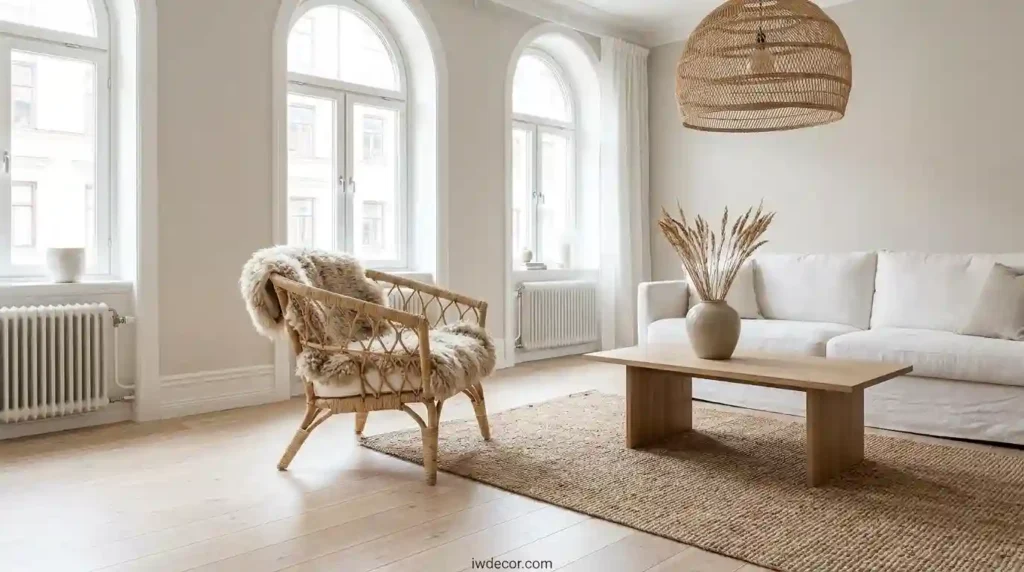
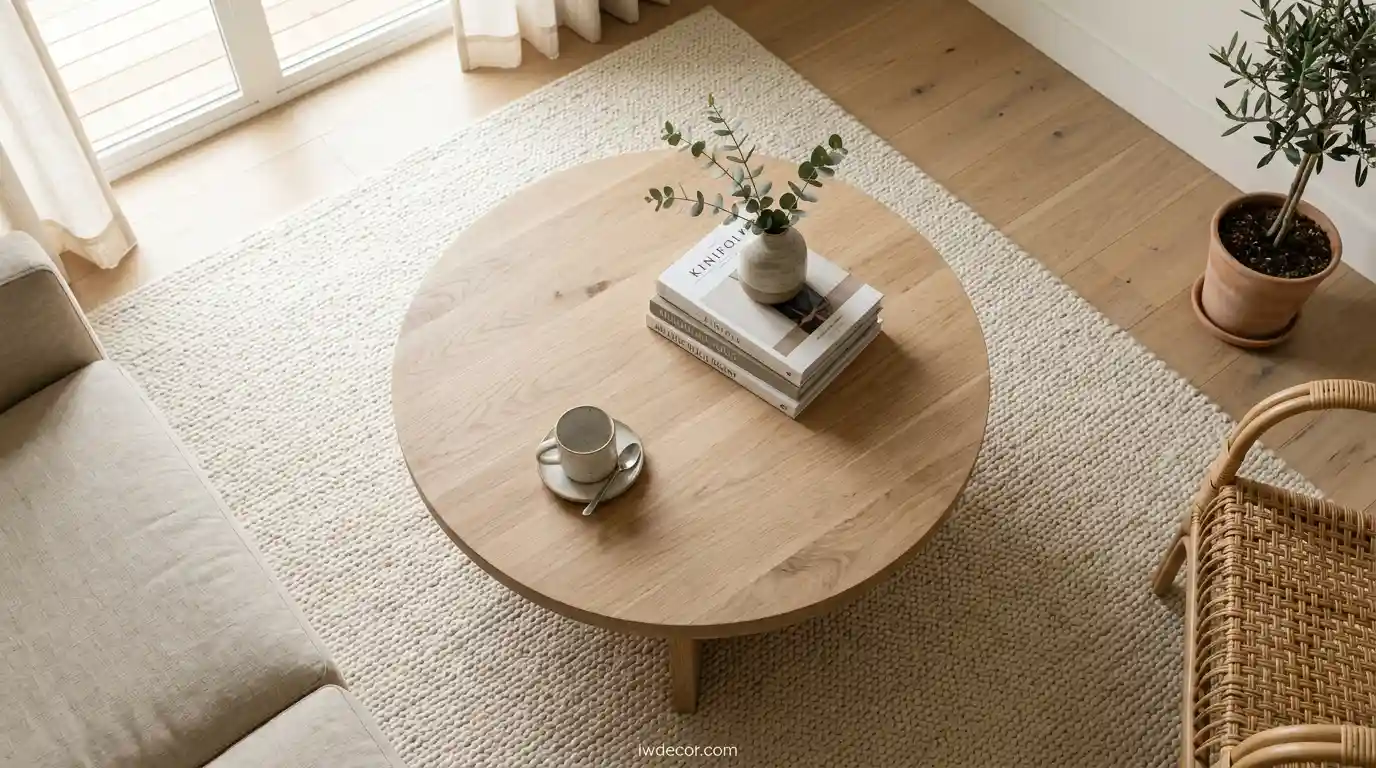
Most people buy a rectangular table by default and spend the next five years bruising their shins against hard angles. A scandinavian round coffee table wood changes the geometry of a room completely. It forces flow. When you drop a circular oak or ash piece into a boxy living room, it breaks the rigid grid of sofas and rugs. You do not need another sharp edge in your house. You need warmth, visible grain, and a shape that lets people walk around it without overthinking their path. Circular forms encourage conversation because they have no head or foot, naturally drawing people toward the center of the seating arrangement.
Core Structural Principles
White Oak and Low Profiles
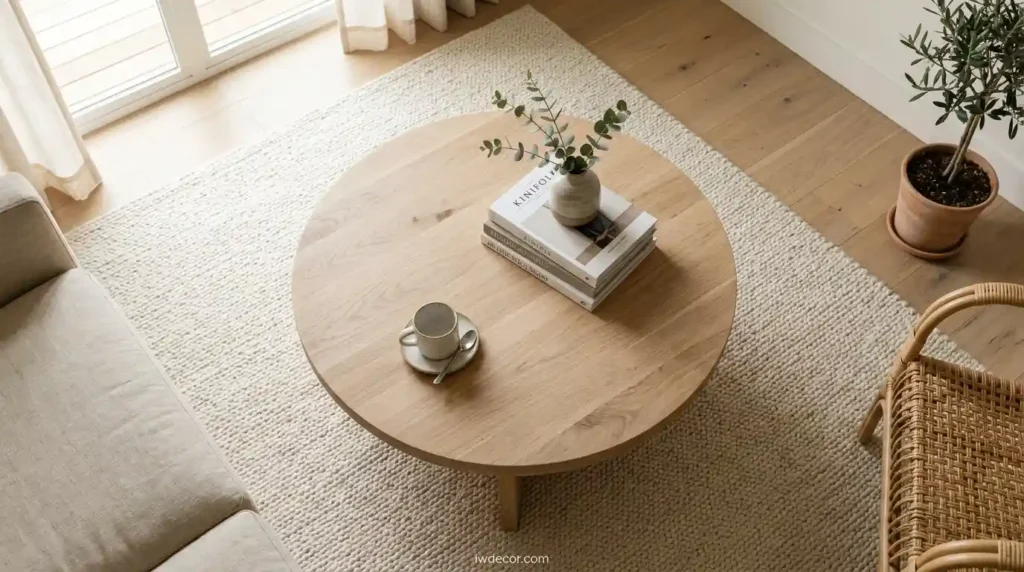
A solid white oak table grounds the room without heavy visual weight. The structural design principle here relies on negative space. A thin top paired with recessed legs makes the piece feel lighter than it is. Pair this with a high pile wool rug and raw linen sofa covers to soften the hard timber. Unconventional pro-tip: leave the wood untreated and use a white pigmented soap finish. This stops the natural yellowing process and keeps the raw timber look intact. For deeper insights into this approach, review these core design strategies.
The Pedestal Base Illusion
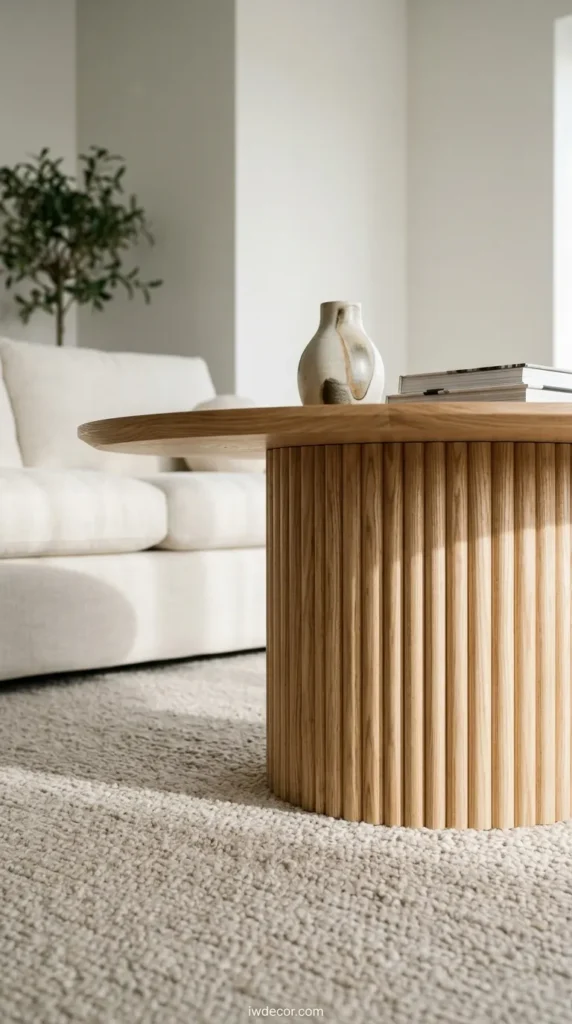
A central pedestal base solves the problem of cramped legroom. When you sit on the sofa, four traditional legs dictate exactly where your feet must go. A single thick cylinder or fluted wood base frees up the floor space. Pair a fluted ash base with a flat woven cotton rug for high textural contrast. Unconventional pro-tip: position the table slightly off center if your sofa has a chaise lounge attached. This redirects the walking path naturally around the seating area. Find out more about optimizing tight layouts.
Ash Wood and Natural Light
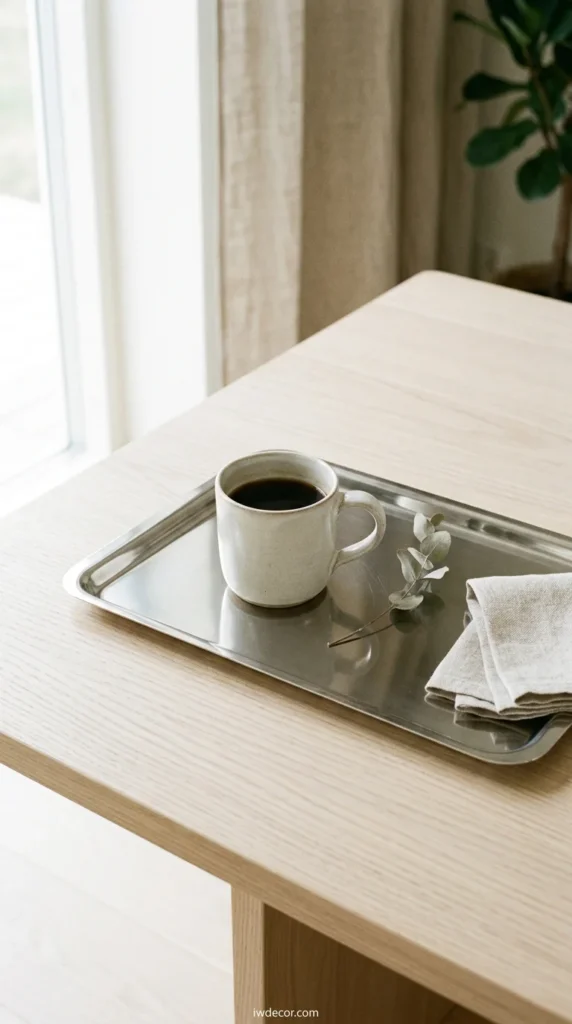
Ash has a wide, open grain that catches ambient light better than tight grained woods like maple. The structural design principle uses light refraction to brighten dark corners. You can pair an ash top with matte black steel accents to ground the lightness and prevent the room from floating away visually. Unconventional pro-tip: place a polished steel tray directly on the ash surface. The reflection bounces light up, highlighting the pale wood tones perfectly. This approach aligns with the light wood textures detailed .
Nesting Tables for Modular Flow
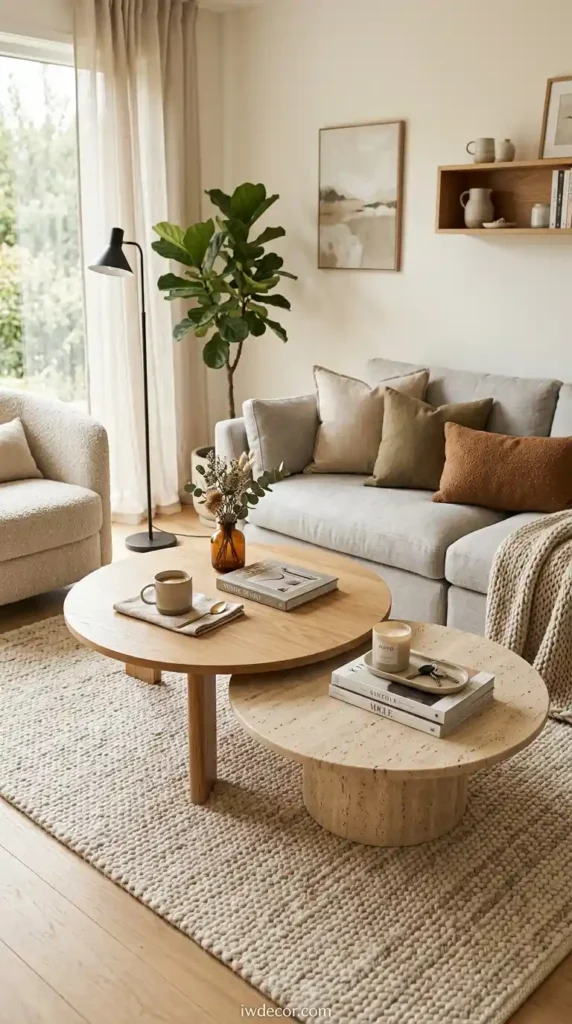
Two round tables of different heights offer flexibility. The structural design principle is modular adaptability. You can expand the surface area when guests arrive and tuck them away when you need floor space. Pair a solid wood large table with a smaller stone topped nested piece. Unconventional pro-tip: buy two separate round tables from different makers instead of a matching set. This makes the room look collected over time rather than purchased directly from a catalog in one afternoon.
Visible Wood Grain as Texture
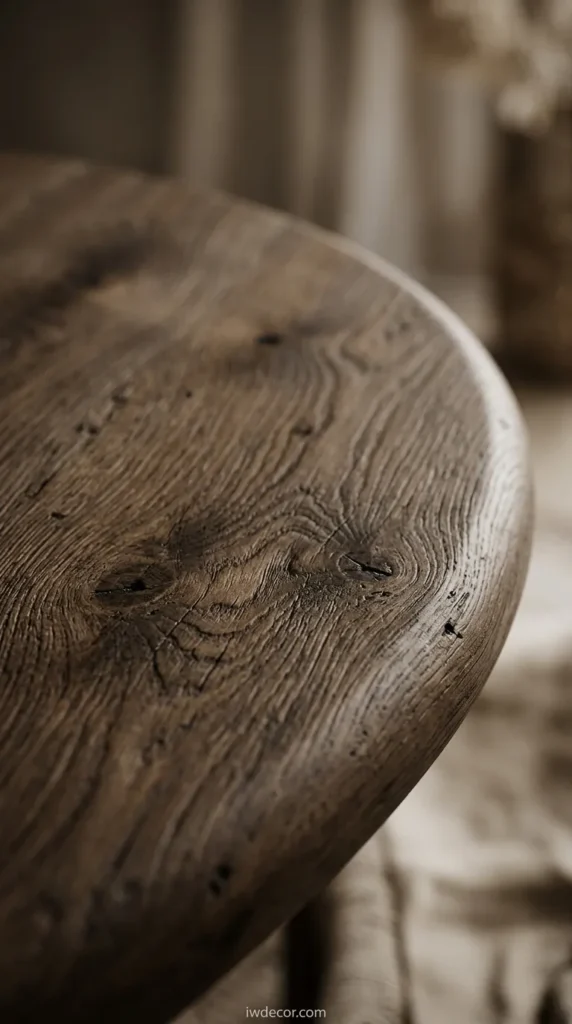
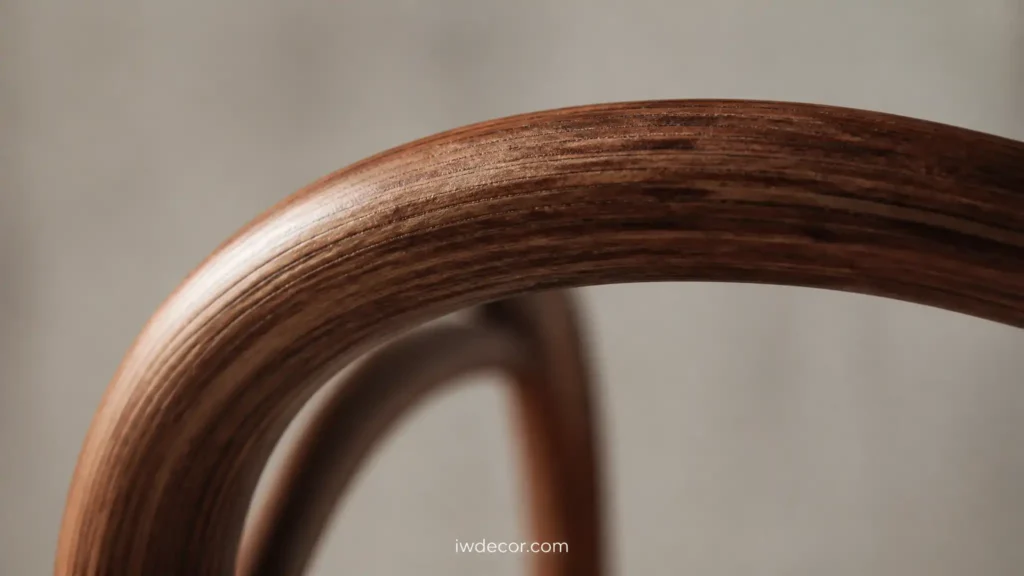
Smooth surfaces look cheap. The structural design principle relies on tactile engagement through heavy wood grain. When the eye registers texture, the brain perceives quality. Pair heavily grained elm or rustic oak with smooth velvet upholstery to create friction between the materials. Unconventional pro-tip: rub a small amount of dark wax into the grain lines before applying the final clear seal. This exaggerates the natural pattern without darkening the entire piece of furniture.
Material Pairings and Contrast
Slatted Bases and Acoustic Dampening
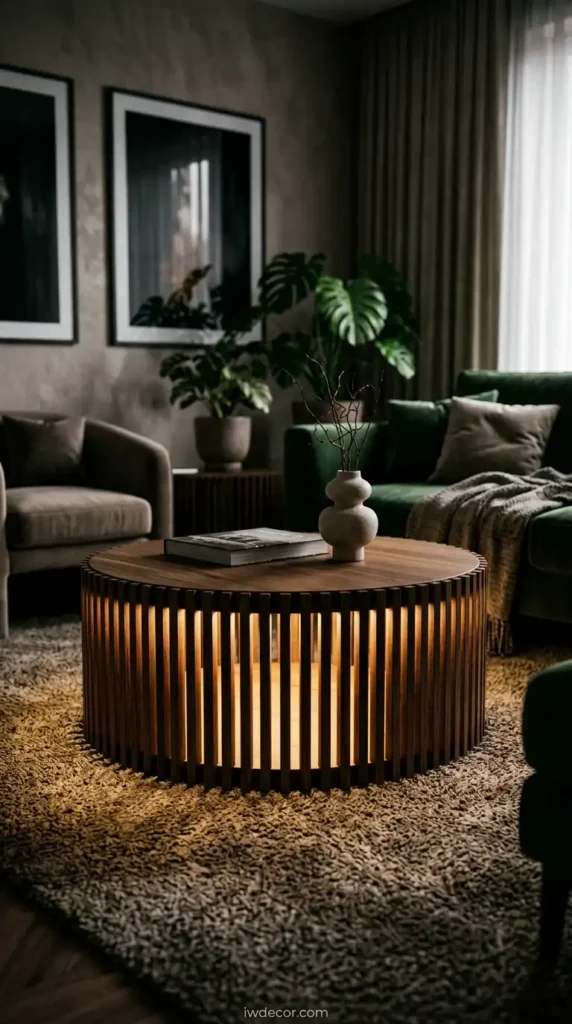
Solid bases block sound waves, making minimalist rooms echo. A slatted round base allows sound to pass through and scatter. The structural design principle is acoustic management disguised as aesthetics. Pair this with thick bouclé fabric on your armchairs to absorb the scattered sound. Unconventional pro-tip: hide a small LED strip light inside the slatted base. At night, it casts radial shadows across the floor, acting as low level ambient lighting for the entire room.
The Floating Top Detail
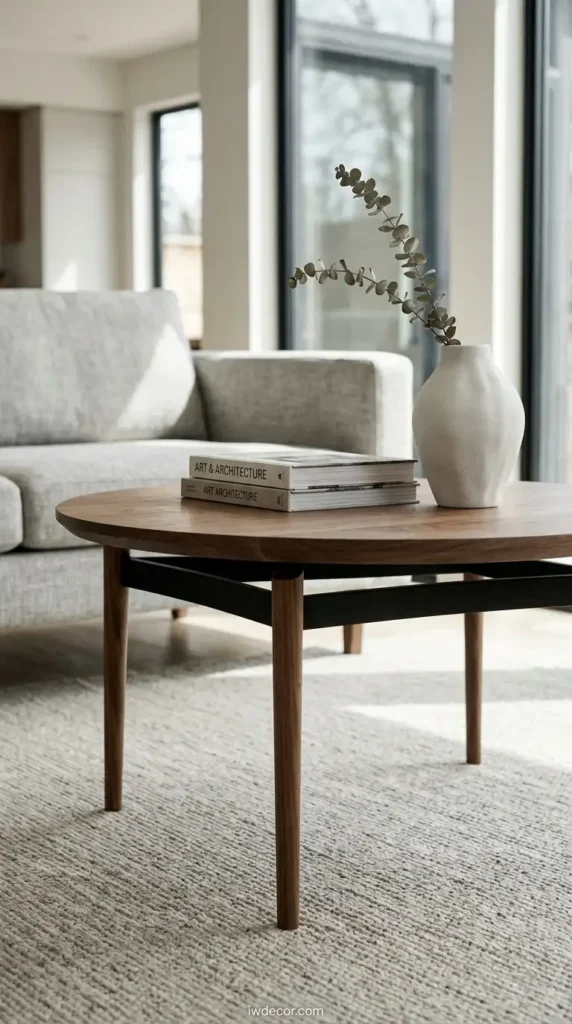
A table top that hovers slightly above its legs tricks the eye. The structural design principle uses shadows to separate the horizontal plane from the vertical supports. Pair a floating top design with a very low profile sofa to maintain horizontal sightlines across the room. Unconventional pro-tip: paint the small connector pieces between the legs and the top in a matte black. This deepens the shadow line and makes the floating effect much more convincing. See more minimalist choices.
Matte Finishes Over Gloss
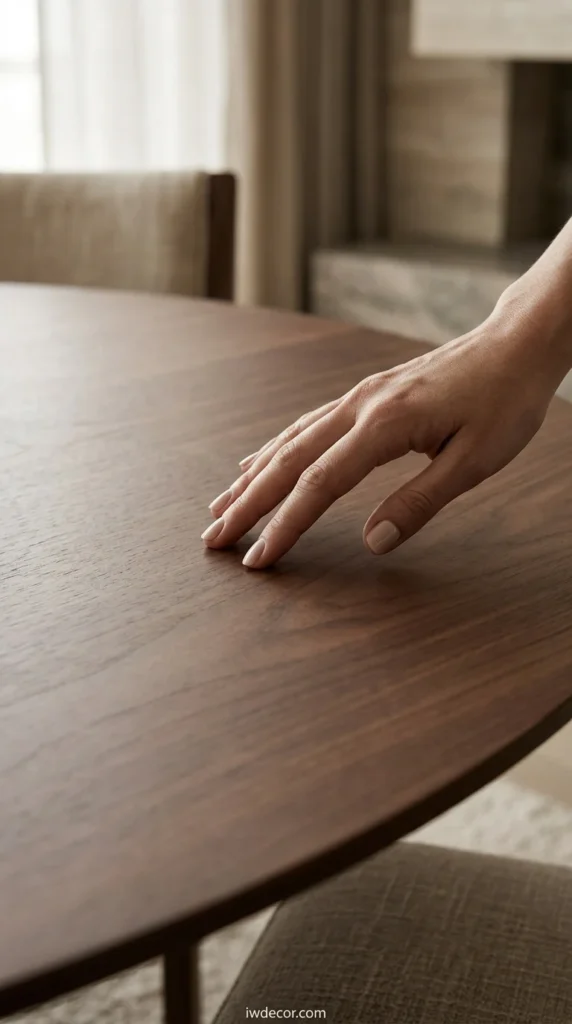
Glossy polyurethane ruins the tactile nature of wood. The structural design principle favors light absorption over reflection. A matte finish feels soft and hides dust better than a shiny surface. Pair matte wood with polished brass hardware on surrounding cabinets to create a deliberate contrast. Unconventional pro-tip: use a hardwax oil instead of traditional varnish. It sinks into the fibers rather than sitting on top, meaning you can easily sand and spot-repair water rings yourself.
Contrast with Geometric Rugs
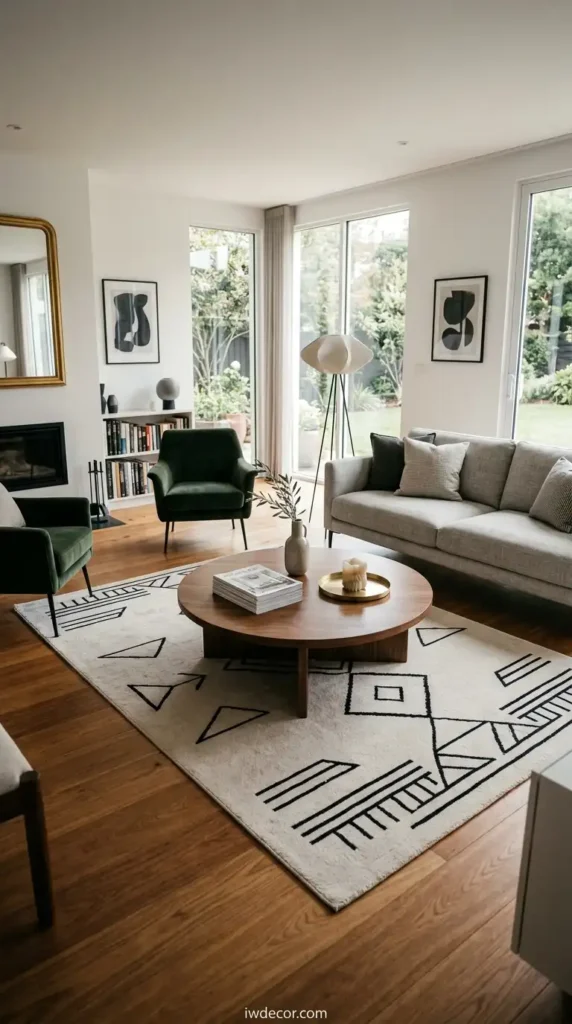
Placing a round table on a round rug often looks contrived. The structural design principle requires geometric tension to keep the room interesting. Place the circular wood table onto a rectangular rug with sharp, linear patterns. Pair this setup with curved armchairs to echo the table shape. Unconventional pro-tip: offset the table so it does not sit exactly in the center of the rug pattern. Asymmetry feels much more relaxed and natural than perfect alignment.
Mixing Wood Tones Safely
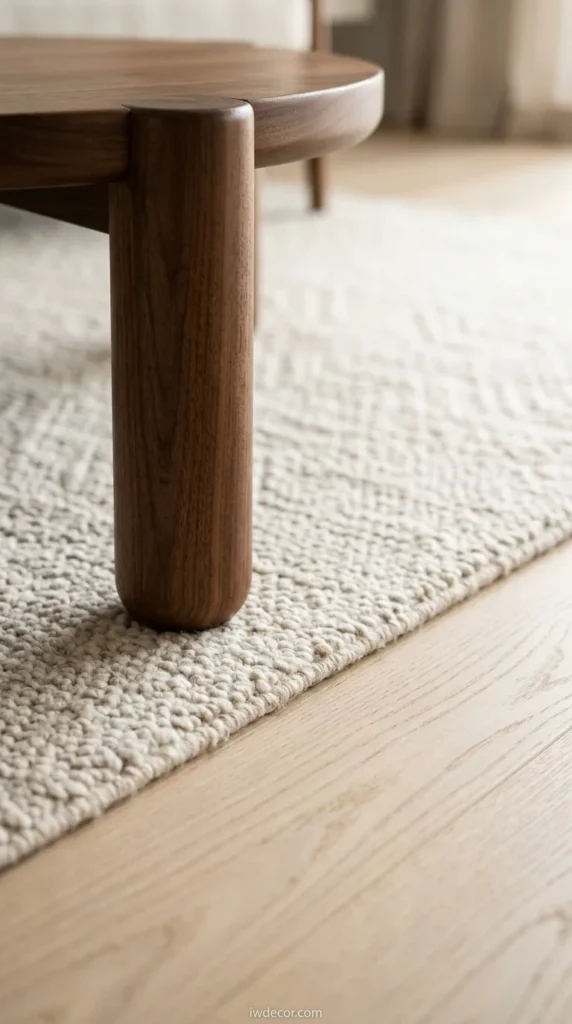
Matching all the wood in a room makes it look like a showroom display. The structural design principle relies on undertone matching rather than color matching. If your oak floors have a warm yellow undertone, pick a walnut table with warm red undertones, not a cool gray ash. Pair mixed woods with stark white walls to give the eye a resting place. Unconventional pro-tip: use a neutral fabric rug as a visual buffer between the wood floor and the wood table to stop them clashing directly.
Advanced Styling and Proportions
Smoked Oak for Moody Spaces
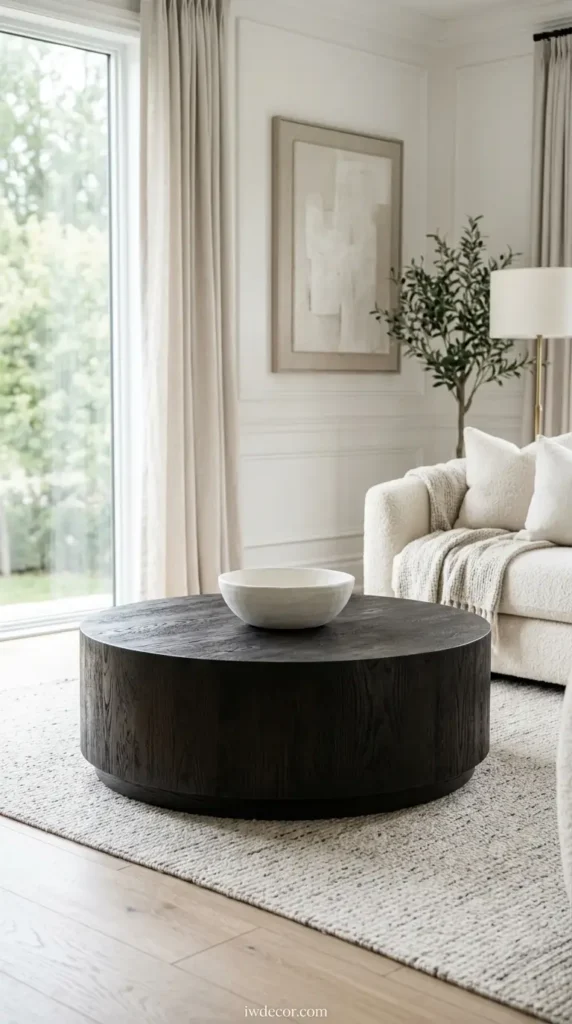
Scandinavian design does not always mean pale and bright. The structural design principle here uses dark anchors in light rooms to create depth. Smoked oak undergoes an ammonia treatment that darkens the wood all the way through. Pair a dark smoked oak round table with walls painted in a very light, warm greige. Unconventional pro-tip: skip colorful coffee table books on dark wood. Use only monochromatic white or black styling objects to emphasize the rich darkness of the timber.
The Tripod Leg Stance
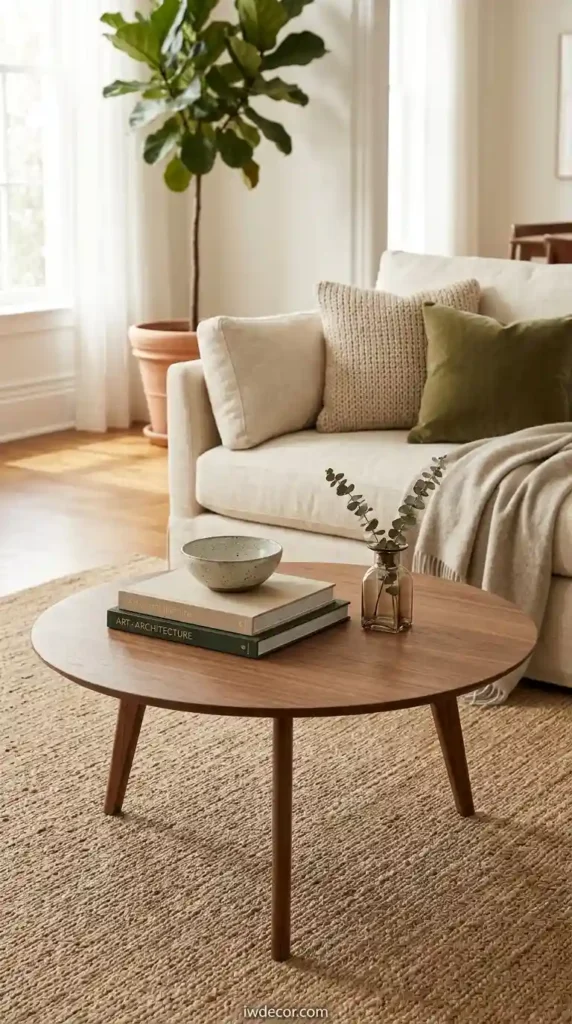
Four legs on a round table often look clumsy. The structural design principle uses three legs to guarantee stability on uneven floors; a tripod can never wobble. Pair three tapered wooden legs with a heavy stone fireplace nearby to balance the visual weight of the room. Unconventional pro-tip: align one of the three legs directly toward the primary seating position. This leaves the space underneath open for your legs when leaning forward to pick up a drink.
Edge Detailing and Bevels
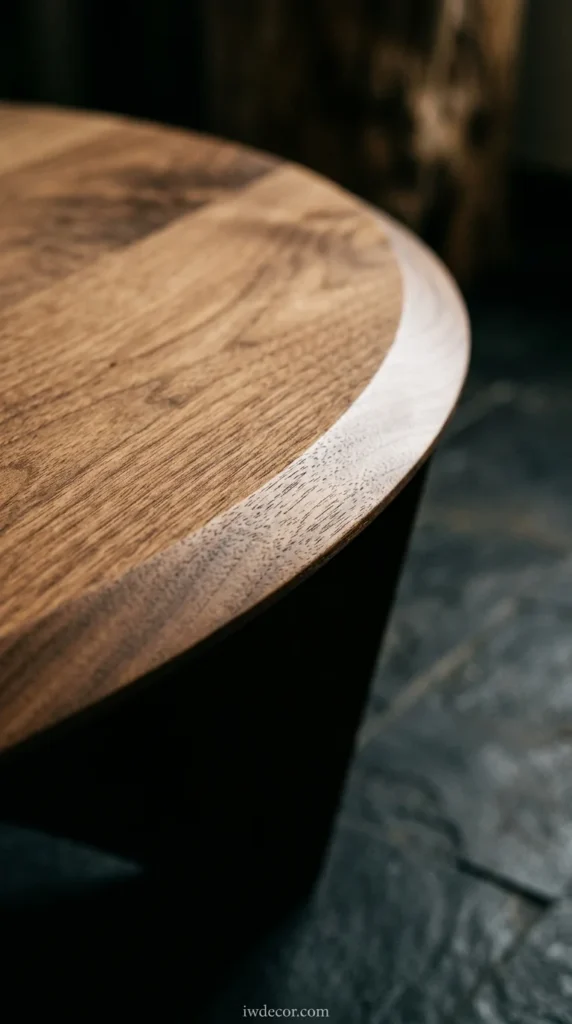
A hard 90-degree edge feels hostile. The structural design principle employs an under-bevel to make the table top look impossibly thin from a standing angle, while maintaining enough thickness for structural integrity. Pair a severely beveled edge with chunky, oversized seating to play with proportion. Unconventional pro-tip: ask your carpenter for a ‘knife edge’ profile. This slopes back drastically underneath, creating a sharp shadow line that defines the table boundary. Explore other furniture essentials.
Proportion to Sofa Seat Height
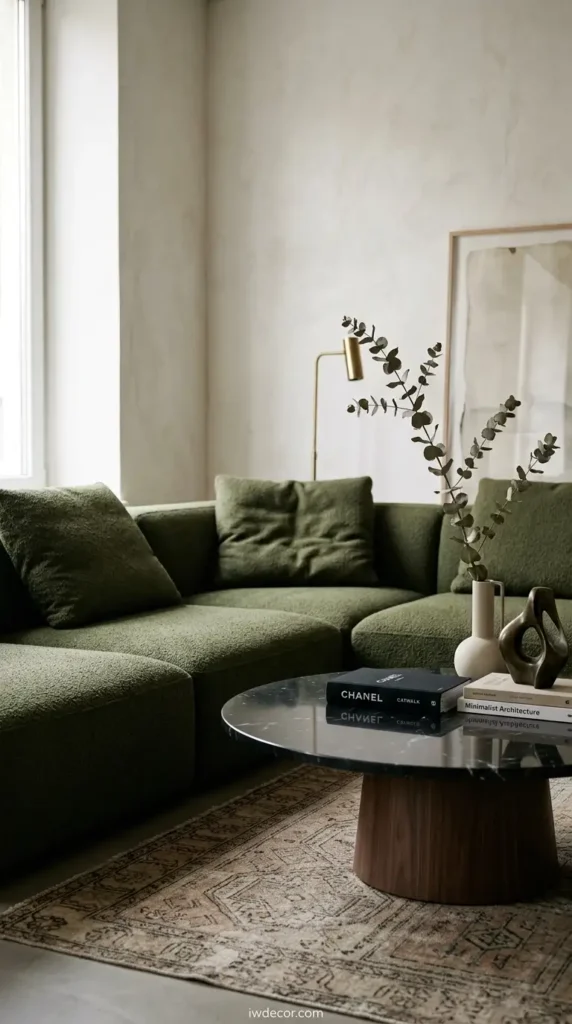
A table that sits higher than your sofa cushions ruins the room’s sightlines. The structural design principle dictates the table surface must sit exactly level with, or one inch below, the sofa seat height. Pair a low 14-inch table with relaxed, slouchy floor cushions or a low-slung modular sofa. Unconventional pro-tip: measure your sofa seat when someone is actually sitting on it, not when it is empty. Foam compresses, and your table might feel too high once you sink into the cushions.
Styling the Circular Surface
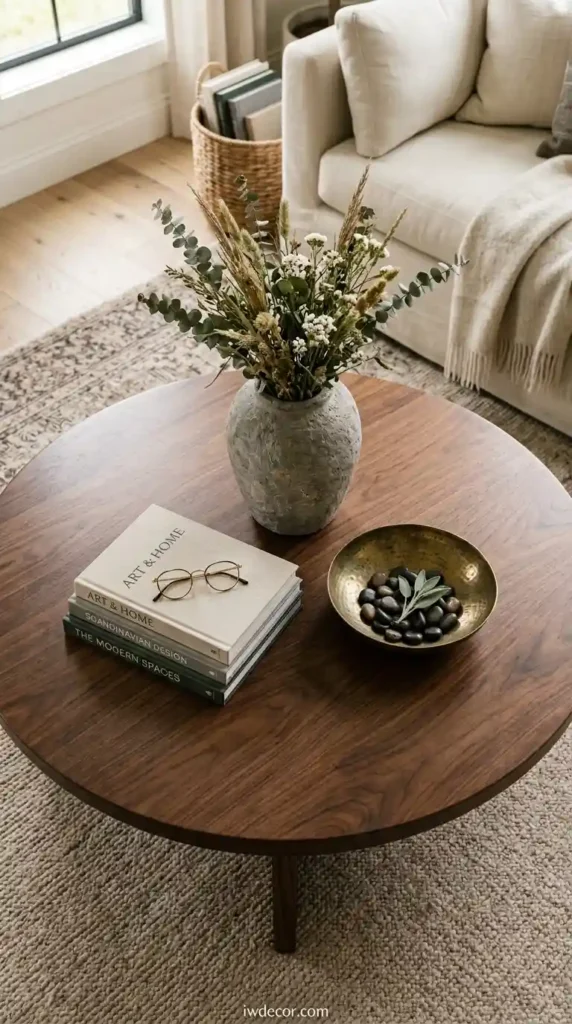
Styling a round table requires grouping objects to anchor the center. The structural design principle groups items into a single, cohesive mass rather than scattering them near the edges. Pair the wood surface with a rough stone vase and a stack of matte paper books. Unconventional pro-tip: use a triangular layout within the circle. Place the tallest object off-center, and cluster two lower items nearby to create a visual pyramid that grounds the styling. For hygge styling ideas, look .
| Design Element | Best Option | Key Value / Benefit |
|---|---|---|
| Wood Grain | White Oak (Soap Finish) | Prevents yellowing and keeps a raw, matte texture. |
| Table Base | Central Fluted Pedestal | Frees up legroom and breaks rigid linear patterns. |
| Edge Profile | Knife-Edge Under-bevel | Creates a thin visual profile without sacrificing strength. |
A round wooden table solves traffic flow problems and softens hard rooms immediately. Measure your sofa height, pick a matte finish, and let the wood grain do the heavy lifting in your space.
Frequently Asked Questions
How big should a round coffee table be relative to the sofa?
The table diameter should be roughly half to two-thirds the length of your sofa. This leaves enough room to walk around it while keeping drinks within arm’s reach.
Does a round coffee table work with an L-shaped sectional?
Yes. A circular table fits perfectly into the right angle of an L-shaped sofa. It softens the hard inner corner and makes maneuvering into the corner seat much easier.
How do I protect a raw Scandinavian wood table?
Use a clear hardwax oil or a white-pigmented wood soap. These sink into the timber instead of coating the top, letting you feel the grain while repelling water.