15 Best Linen Scandinavian Curtains: Nordic Design Guide 2026?
Finding the right window treatment for your Scandinavian-inspired home is a bigger decision than it might seem. Linen Scandinavian curtains aren’t just fabric panels they’re a philosophy. They control natural light, frame your architectural details, and set the entire mood of a room. When you get it right, those curtains become the quiet backbone of an elevated, minimalist aesthetic.
I’ve spent years studying Nordic design principles, and I can tell you: linen is the material of choice for genuine Scandinavian interiors. It’s breathable, durable, and ages beautifully unlike synthetic alternatives that look tired after a season or two. But not all linen curtains deliver the same impact.
My Take
After testing dozens of linen curtain brands, I’ve learned that authentic Scandinavian curtains share three non-negotiables: pure linen content (or high-quality blends), a neutral color palette, and construction that respects natural wrinkles as a design feature, not a flaw. Most fast-fashion retailers get this wrong they flatten the fabric and over-dye it, killing the organic character that makes linen Scandinavian curtains worth buying.
1. Natural Undyed Linen Scandinavian Curtains
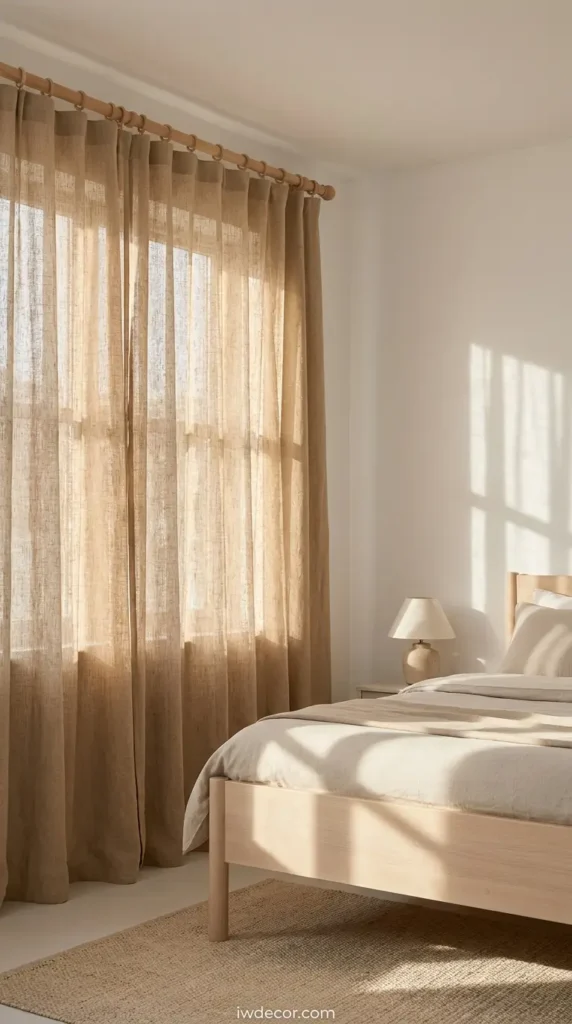
Natural undyed linen represents the purest expression of Nordic design philosophy. These curtains maintain the flax plant’s original tan and cream hues, creating an authentic, raw aesthetic that ages gracefully over time. The fabric naturally lightens with sunlight exposure, adding character that no dye job can replicate.
What makes them exceptional: unbleached linen is significantly stronger than chemically treated alternatives, meaning your curtains will outlast cheaper competitors by years. They offer soft, diffused light control without blocking sunlight entirely, making them ideal for north-facing rooms or spaces where you want privacy without darkness.
Styling: pair undyed linen Scandinavian curtains with whitewashed oak frames and pale wood flooring. The texture adds visual depth to otherwise minimalist rooms, and the neutral tone complements both warm and cool interior palettes. These curtains work particularly well in bedrooms and reading nooks where softness matters.
2. Crisp White Linen for Minimalist Spaces
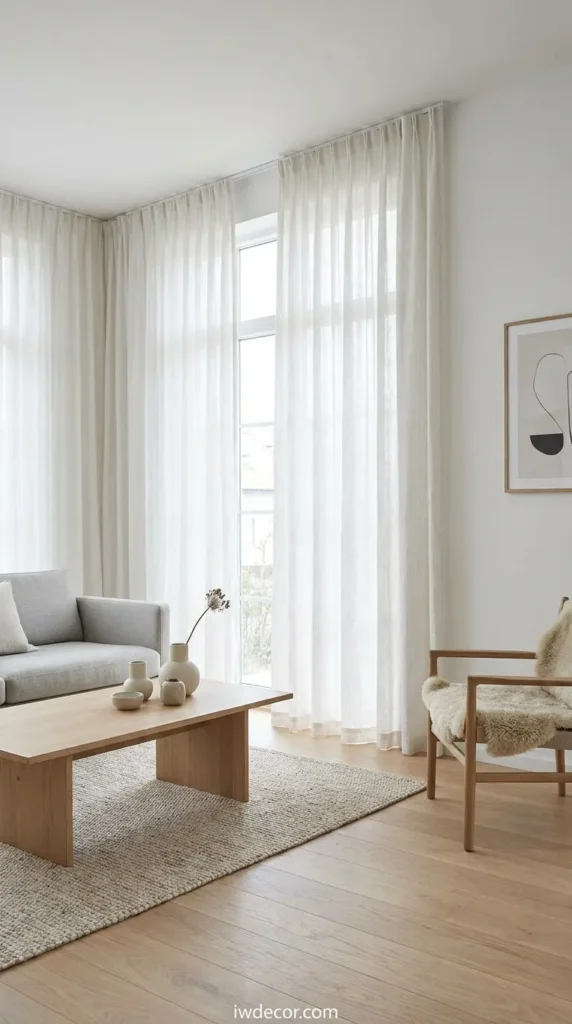
Pure white linen Scandinavian curtains are the foundation of Scandinavian design in 2026. They maximize light reflection, visually expand small rooms, and create an uncompromising minimalist backdrop. Unlike synthetic white fabrics that appear plastic-y, white linen maintains a subtle texture that feels intentional rather than sterile.
The engineering behind them: white linen undergoes careful bleaching to achieve brightness without damaging fiber strength. Premium brands use oxygen-based bleaching rather than chlorine, preserving the material’s longevity. Look for thread counts between 200-250 for that classic Nordic drape too loose and they look flimsy, too tight and they feel stiff.
Real-world performance: these curtains excel in Scandinavian living rooms where you’re combining multiple white textures shag rugs, linen upholstery, ceramic accents. The variation in fabric weight creates subtle visual interest that keeps the space from feeling flat.
3. Soft Grey Linen Scandinavian Curtains
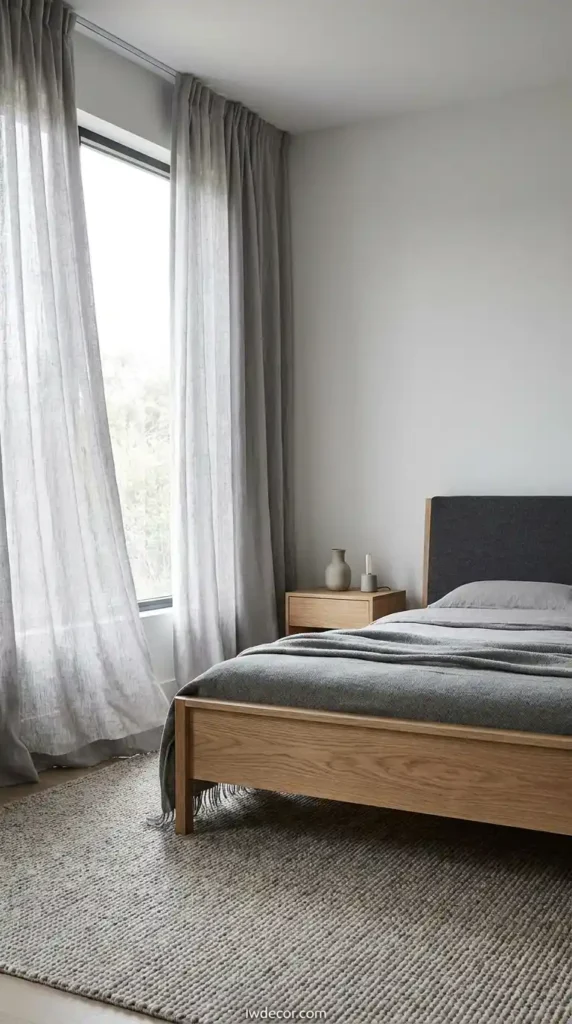
Grey linen sits at the intersection of sophistication and practicality. These Scandinavian curtains offer better light diffusion than white while maintaining the minimalist aesthetic. Soft grey (not charcoal that’s not Nordic) works with virtually every interior color scheme, from pale blue-grey wall paint to deeper taupe accents.
Why interior designers choose grey linen: it hides dust and marks better than white, reduces glare without feeling heavy, and reads as intentionally selected rather than defaulting to white. The subtle color adds depth to north-facing rooms that might otherwise feel flat and cold.
Insider tip: when shopping for grey linen Scandinavian curtains, watch the undertone. Cool greys (leaning blue) work in modern Nordic homes, while warm greys pair better with Scandinavian interiors that feature wood tones. Most quality brands list undertone descriptions use that information when deciding.
4. Linen Blackout Scandinavian Curtains
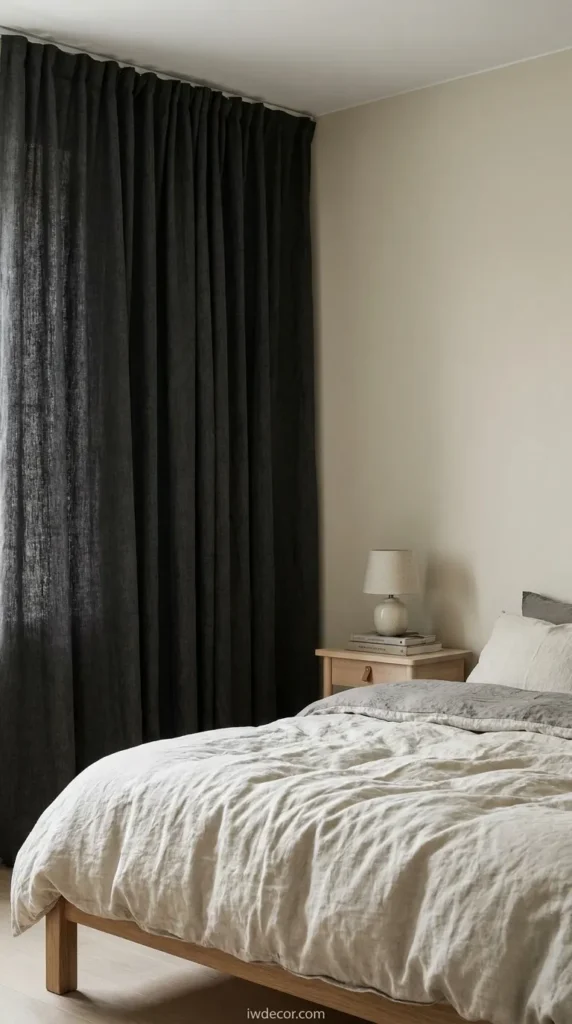
Linen blackout Scandinavian curtains solve a real Nordic problem: summer in Scandinavia brings midnight sun, and darkness requires a solution. These aren’t traditional blackout liners quality versions use a linen-polyester weave that maintains the fabric’s aesthetic while blocking 95% of light.
The construction matters: look for curtains where the blackout layer is woven into the linen rather than laminated on. Laminated versions eventually peel, crack, and look cheap. Properly woven blackout linen Scandinavian curtains last 10+ years without degradation and still drape beautifully because the linen component prevents stiffness.
Best for: bedrooms, home offices where screen glare is a problem, and media rooms in Scandinavian homes. They’re heavier than pure linen, so pair them with sturdy rods rated for the weight. Most quality blackout options weigh 18-22 ounces per yard check your rod specifications before ordering.
5. Linen Lace Scandinavian Curtains
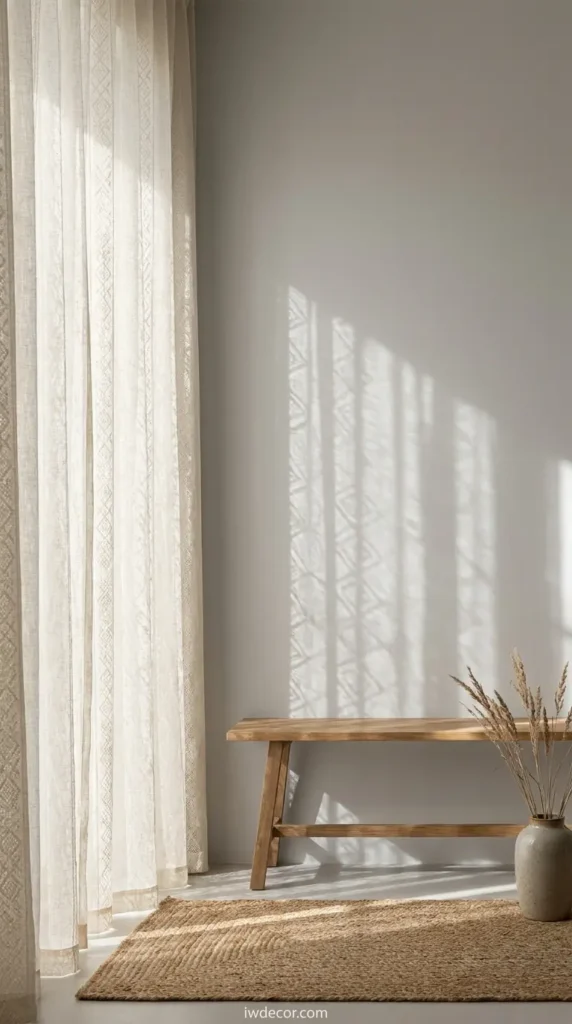
Linen lace Scandinavian curtains offer a softer take on Nordic design especially popular in Scandinavian bedrooms and entryways. The lacy pattern creates visual interest while maintaining the airy, light-filled quality that defines the style. Unlike synthetic lace that looks festive or cottage-y, linen lace reads as understated and elegant.
The design language: traditional Scandinavian linen lace features geometric patterns rather than florals. Hexagons, simple geometric grids, and minimalist line patterns align with Nordic aesthetic principles. Some contemporary options feature organic, almost abstract patterns that feel both timeless and current.
Practical considerations: linen lace requires slightly more careful laundering than solid linen. Hand wash in cool water or use the delicate cycle, then hang-dry to prevent shrinkage. The payoff is curtains that maintain their pattern clarity for decades rather than fading or yellowing.
6. Thermal Linen Scandinavian Curtains
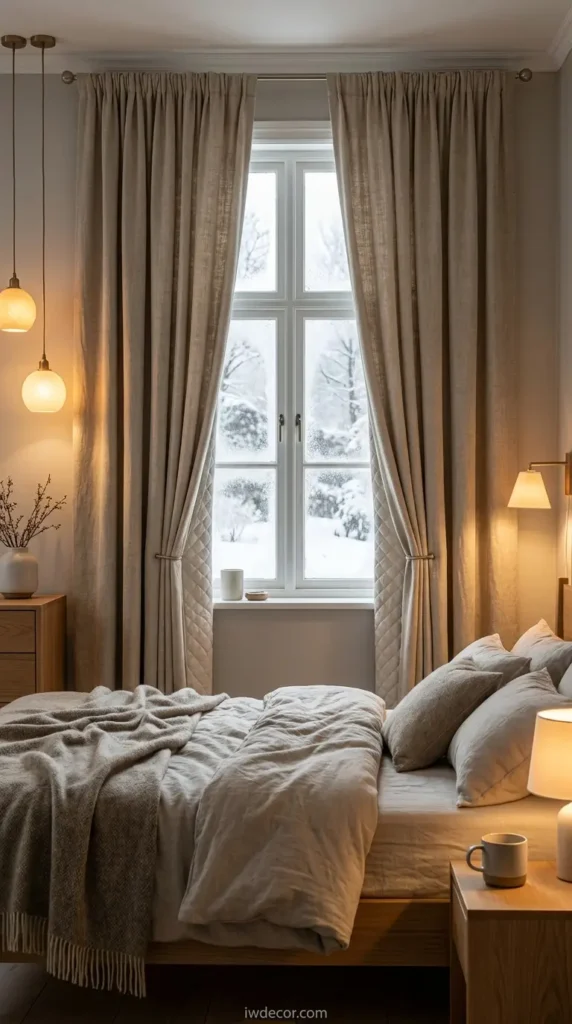
In Scandinavian climates where heating costs are serious business, thermal linen Scandinavian curtains earn their place in every home. These curtains feature a special backing that insulates windows without adding bulk or sacrificing the linen aesthetic. Winter in Denmark or Norway means understanding that your window treatments affect your energy bill directly.
How they work: the thermal layer (usually a cotton-polyester blend) is quilted to the back of linen rather than laminated. This creates a subtle dimensional effect when light hits the curtains from behind, adding texture while trapping warm air. Tests show quality thermal linen curtains reduce heat loss by 25-30%.
Investment perspective: yes, thermal linen Scandinavian curtains cost more upfront than standard linen. But over a winter heating season, the energy savings pay for themselves in many climates. Plus, you’re buying durability thermal-backed linen from reputable brands lasts 12+ years.
7. Earth-Tone Linen Scandinavian Curtains
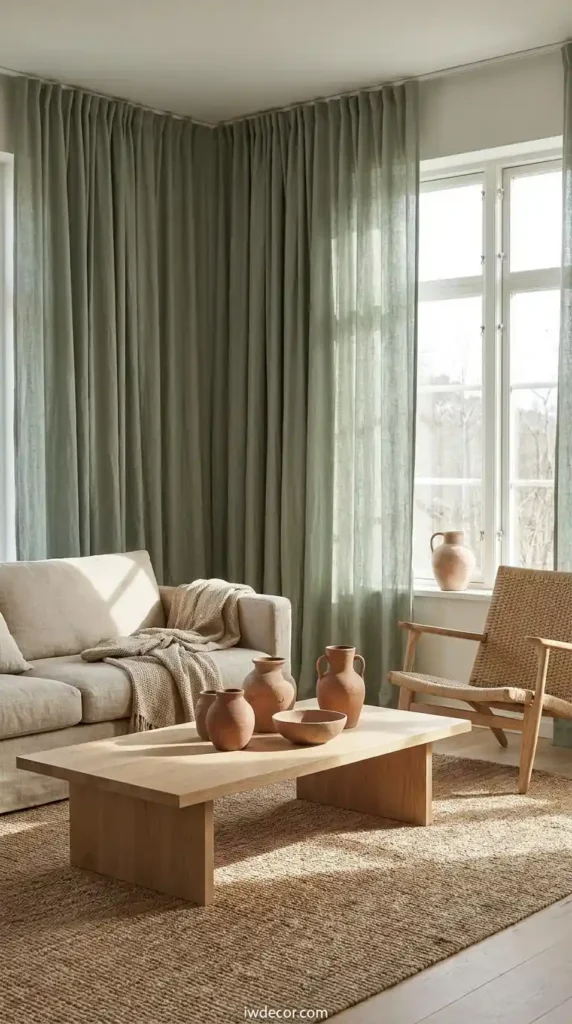
Earth-tone linen Scandinavian curtains soft sage, muted terracotta, warm taupe represent the evolution of Nordic design in 2026. While purists insist on neutrals, contemporary Scandinavian interiors increasingly embrace subtle color that still honors minimalist principles. These curtains work because the colors are desaturated and warm rather than bold.
Color psychology: soft sage linen Scandinavian curtains create calm, restorative spaces. Muted terracotta adds warmth without intensity. The key is saturation if the color looks vibrant or “painted on,” it’s not authentically Scandinavian. You want colors that look like they existed naturally in the linen before dyeing.
Interior pairing: earth-tone linen works beautifully with Scandinavian interior decor that emphasizes natural materials. Pair them with natural wood flooring, jute rugs, and ceramics with similar earth-tone glazes. The result feels cohesive and intentionally curated.
8. Sheer Linen Scandinavian Curtains
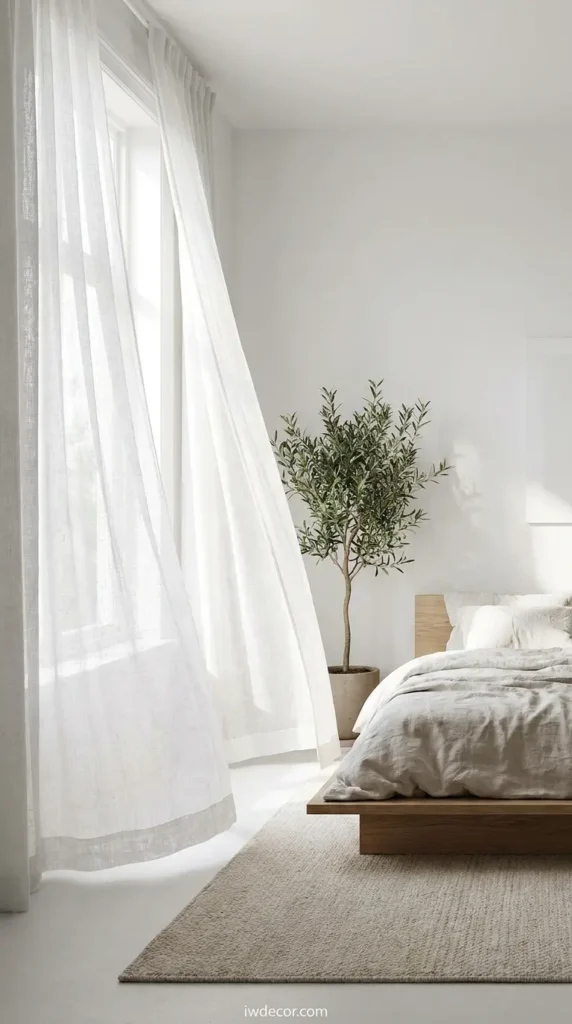
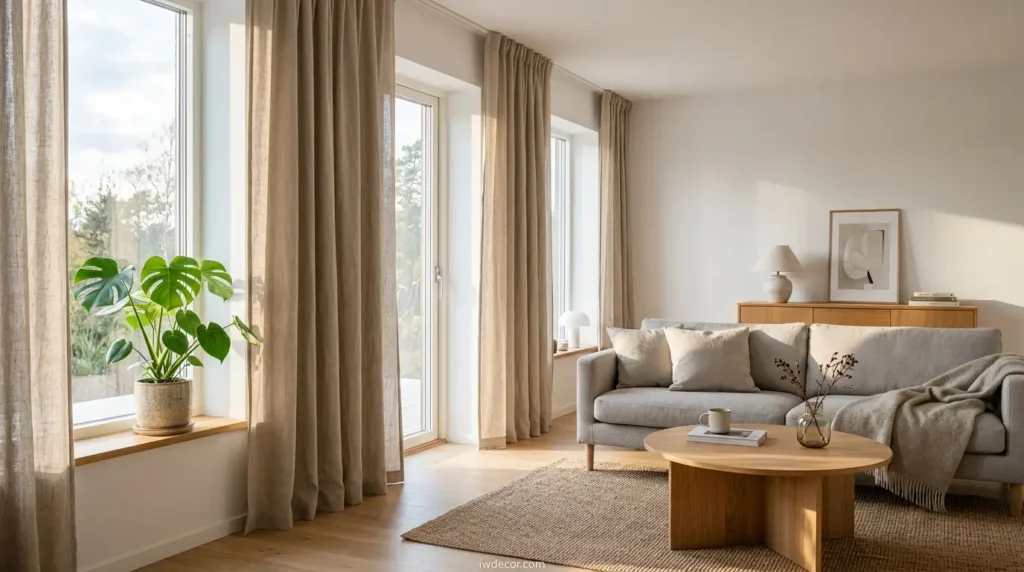
Sheer linen Scandinavian curtains maximize natural light while providing gentle privacy a key requirement in Nordic design where daylight is precious. These are lighter weight (typically 5-8 ounces per yard) than standard linen, creating an ethereal quality that makes rooms feel larger and airier.
The weave structure: quality sheer linen uses a loose, regular weave that maintains transparency without looking flimsy. Compare this to cheap sheer polyester that feels plasticky and degrades quickly. Sheer linen Scandinavian curtains improve with age slight fading adds character rather than looking worn out.
Styling strategy: layer sheer linen Scandinavian curtains with a solid linen panel for flexibility. During the day, you get full transparency and light. At night, close the heavier panel for privacy and light control. This dual approach maximizes both functionality and aesthetic appeal in Nordic homes.
9. Linen Blend Scandinavian Curtains (Linen-Cotton Mix)
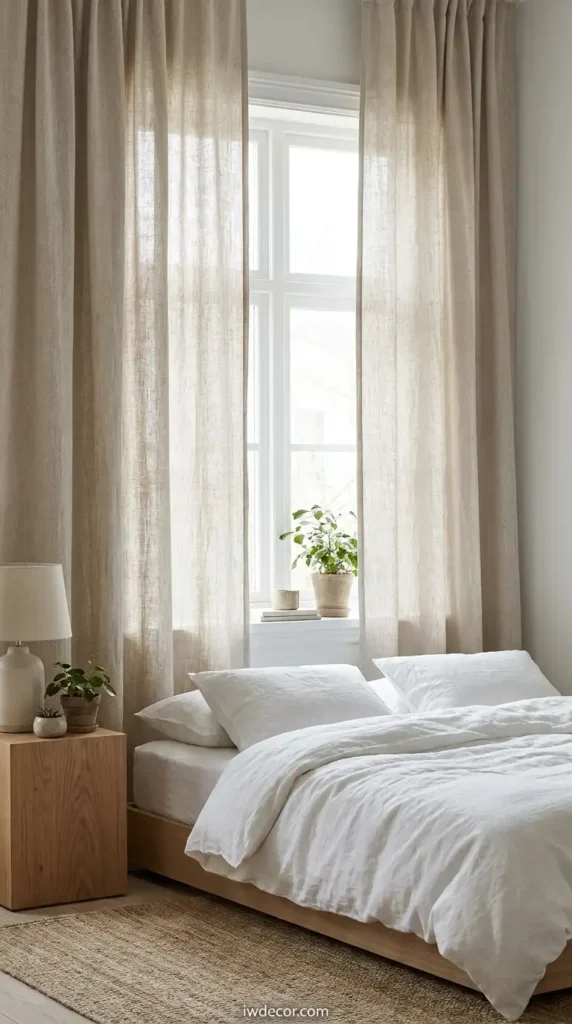
A 50/50 or 60/40 linen-cotton blend offers practical advantages over 100% linen while maintaining Scandinavian authenticity. Cotton adds softness and reduces wrinkling slightly, while linen preserves durability and the breathable quality. These blends represent a smart compromise between perfectionism and reality.
Why this matters: linen-blend Scandinavian curtains are easier to care for than pure linen. They dry faster after washing, require less ironing (though Scandinavian design embraces natural wrinkles anyway), and cost slightly less. The visual difference is minimal if the blend is quality cheap blends skimp on the linen content and feel limp.
Performance data: tests show 60% linen / 40% cotton blends maintain 85% of pure linen’s lifespan while offering 95% of the aesthetic. For most homeowners, this is the sweet spot between investment and practicality. These curtains last 8-12 years with proper care.
10. Custom-Sized Linen Scandinavian Curtains
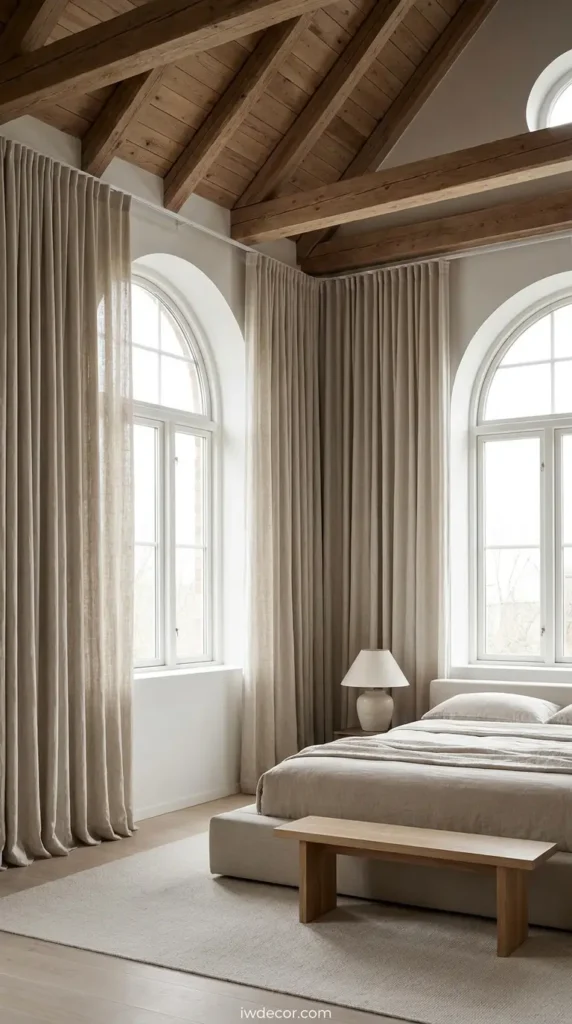
Generic curtain sizes rarely fit perfectly, which is why custom-sized linen Scandinavian curtains exist. Many Nordic design enthusiasts invest in custom fabrication when dealing with high ceilings, unusual window dimensions, or multi-window configurations. The precision payoff is worth the wait and slightly higher price.
The ordering process: reputable custom linen curtain makers provide detailed measurement guides. You’ll specify fabric weight, color, lining options, and hardware preferences. Most deliver within 4-8 weeks. The advantage: curtains that puddle perfectly, break exactly right at the floor, and fit your specific rod dimensions.
Value proposition: custom linen Scandinavian curtains feel like a luxury investment, but they actually save money over time. Properly fitted curtains perform better thermally, look intentional rather than “close enough,” and you’ll never feel compelled to upgrade them because they suit your space exactly.
11. Eco-Certified Linen Scandinavian Curtains
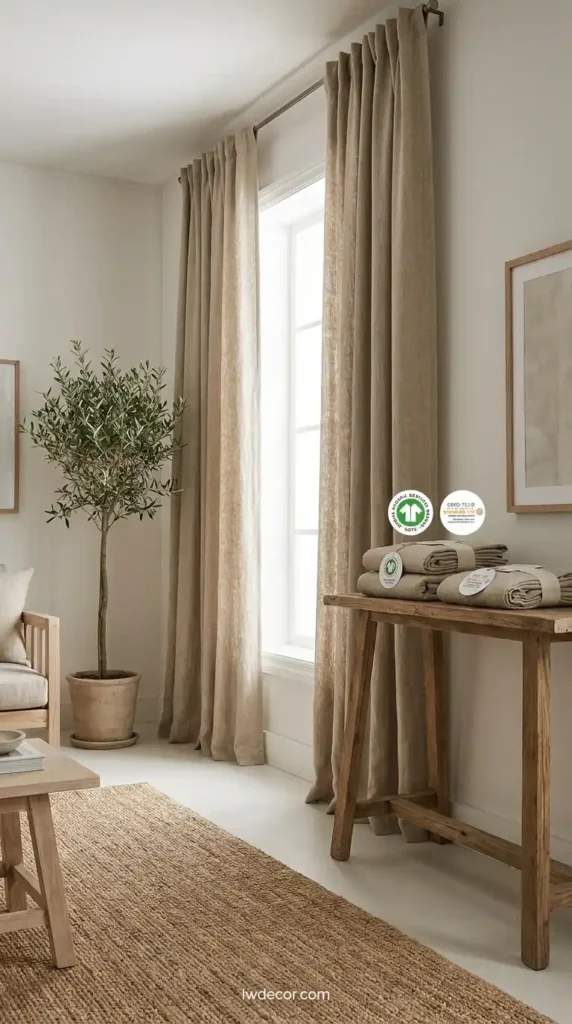
Scandinavian countries pioneered environmental consciousness, so eco-certified linen Scandinavian curtains feel culturally aligned. Look for certifications like OEKO-TEX (no harmful chemicals), EU Ecolabel (minimal environmental impact), or Fair Trade (ethical production). These labels verify that your curtains meet rigorous standards beyond just “natural fiber.”
What the certifications mean: OEKO-TEX ensures zero formaldehyde, heavy metals, or persistent dyes. EU Ecolabel confirms that production follows water-saving and low-toxin protocols. Certified organic linen comes from flax grown without synthetic pesticides. Together, these certifications mean your eco-friendly linen Scandinavian curtains won’t off-gas or harbor invisible toxins.
The growing market: in 2026, major Scandinavian retailers increasingly stock certified eco-linen curtains because consumers demand transparency. Paying slightly more for certified options supports responsible manufacturing and aligns your home with Nordic values of environmental stewardship.
12. Textured Linen Scandinavian Curtains
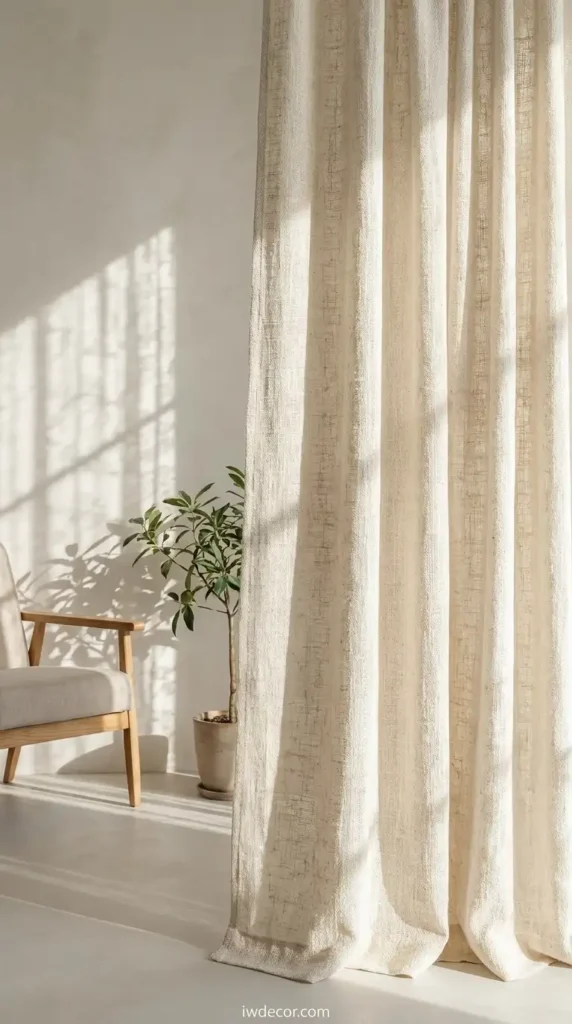
Textured linen Scandinavian curtains with uneven slubs (intentional thick and thin sections in the weave) add subtle visual interest without sacrificing minimalism. The texture creates shadow play when light filters through, making solid-color curtains feel dynamic. This is the difference between “plain white curtains” and “thoughtfully curated window dressing.”
The weaving technique: slubbed linen is created by deliberately varying the thread thickness during production. Premium textured linen Scandinavian curtains use consistent, planned slubs that look intentional. Cheap options create irregular texture that looks like production errors. The difference is significant once you see it side by side.
Pairing strategy: textured linen works best in small Scandinavian living rooms where you want to maximize visual interest without adding patterns or colors. The texture alone provides enough complexity to prevent the space from feeling stark.
13. Linen Panel Scandinavian Curtains (Asymmetrical Design)
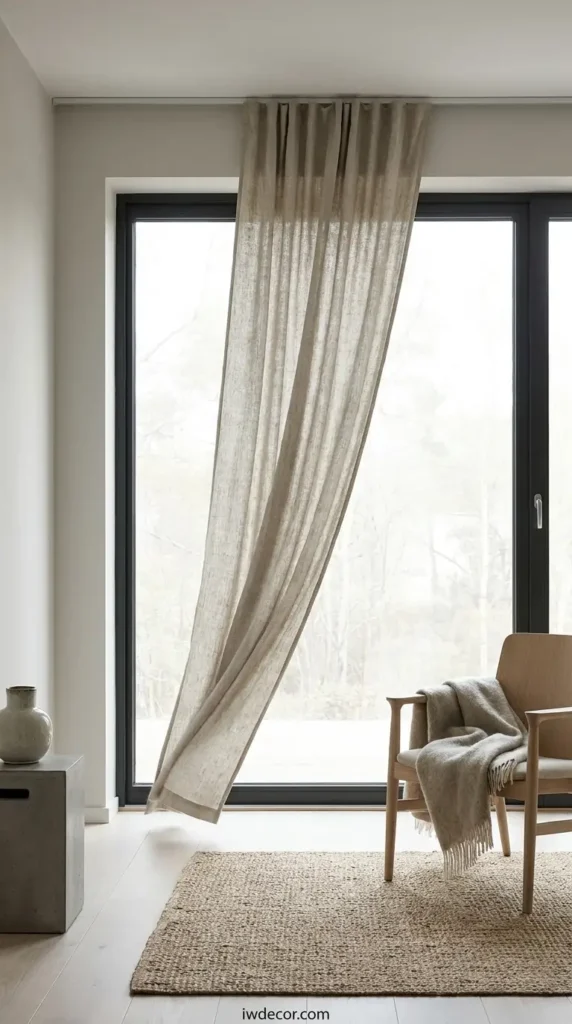
Linen panel Scandinavian curtains arranged asymmetrically represent contemporary Nordic design evolution. Instead of traditional pairs meeting in the middle, you hang a single panel to one side or use multiple panels at varying widths. This design choice feels intentional and sophisticated while maintaining minimalist principles.
Aesthetic reasoning: asymmetrical linen Scandinavian curtains work for modern homes, loft-style spaces, and rooms with non-traditional window placements. A single natural linen panel hung from corner to corner creates drama without heaviness. Multiple narrower panels staggered across a wall add architectural interest.
Practical installation: asymmetrical panels require stronger rods (the weight distributes unevenly) and careful measurement. But the payoff is window treatments that feel custom and gallery-quality. This approach works especially well in bedrooms and home offices where you want a refined, curated aesthetic.
14. Affordable Linen Scandinavian Curtains Under $100
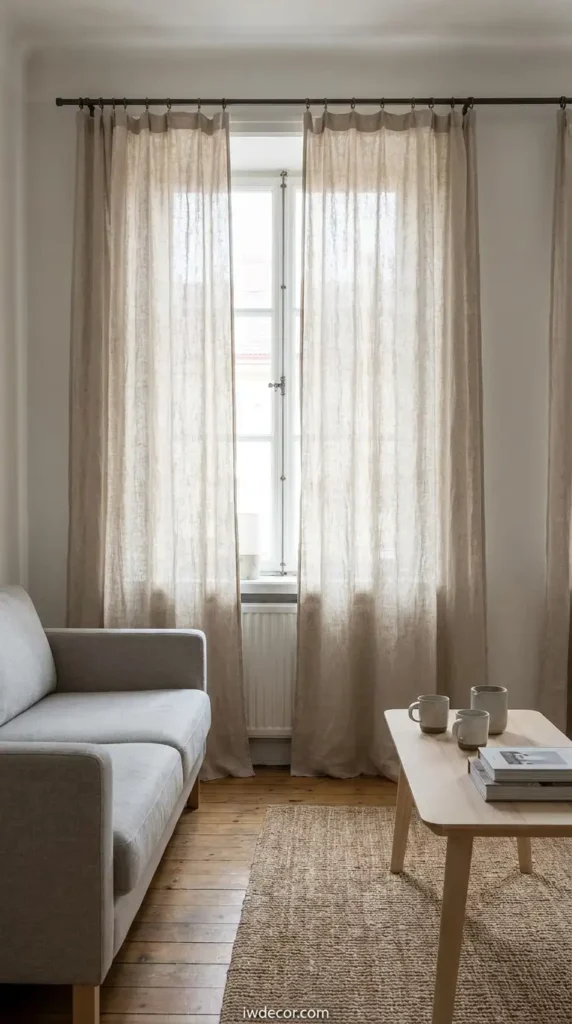
You don’t need to spend luxury prices for quality linen Scandinavian curtains. Smart shoppers find excellent affordable options under $100 per panel by knowing where to look and what compromises are acceptable. The key is distinguishing between “budget-friendly” and “cheap-looking.”
The budget strategy: affordable linen Scandinavian curtains often use slightly thinner linen (10-12 ounces instead of 14-16) or linen blends rather than 100% linen. They might have minimal or no lining. But if the core material is genuine linen with honest dyeing, you’re still getting a functional, attractive product that lasts years.
Where to find them: major online retailers, Scandinavian home goods brands’ sale sections, and occasional pop-up shops in 2026 offer affordable linen Scandinavian curtains. Read reviews carefully look for customers reporting 2+ years of use with minimal deterioration. Avoid options with plastic-sounding descriptions like “poly-linen” or “linen-look.”
15. Luxury Linen Scandinavian Curtains (Designer Options)
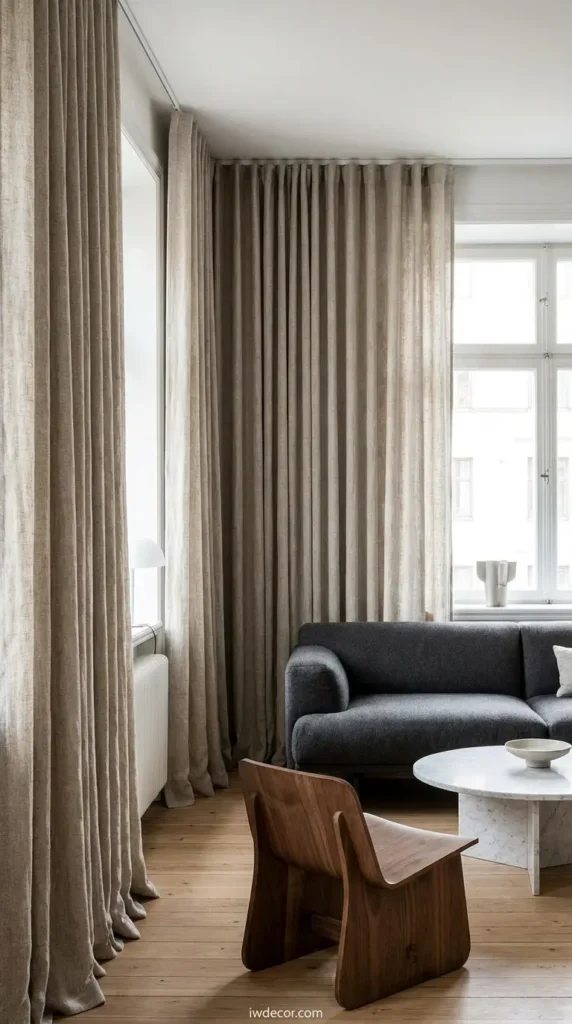
Luxury linen Scandinavian curtains from established Nordic brands represent the pinnacle of quality, design, and longevity. These aren’t status symbols they’re engineering achievements. Premium options use heritage weaving techniques, rare flax varieties, and dyeing processes that create colors with unusual depth.
What justifies the price: luxury linen Scandinavian curtains might use flax from specific regions known for superior fiber quality. The dyeing process takes weeks instead of days, allowing colors to penetrate evenly. Stitching is often done by hand or on vintage machines that maintain specific tension. These details affect longevity, appearance, and how the curtains age.
Investment perspective: a pair of luxury linen Scandinavian curtains might cost $400-800 per panel, but they last 15-25 years. Compare that to cheaper alternatives replaced every 3-4 years, and the lifetime cost is actually competitive. Plus, luxury options often include lifetime customer service, replacement policies, and restoration services. For Scandinavian bedroom designs where you spend eight hours daily, this investment makes sense.
My Take
The best linen Scandinavian curtains aren’t the most expensive or the cheapest they’re the ones that fit your actual lifestyle. A parent of young kids might prefer affordable, easily replaceable options. A minimalist living alone for decades benefits from luxury investment pieces. The authentic Nordic approach is choosing consciously based on your specific needs, not chasing trends or price points.
How to Measure Windows for Linen Scandinavian Curtains
Proper measurement is non-negotiable for linen Scandinavian curtains. Undersized curtains look cheap; oversized ones become unwieldy. Here’s the method: measure the width of your window from inside the frame. For the height, measure from the top of the frame to your desired endpoint floor, windowsill, or just above baseboard.
The multiplier rule: for crisp, minimalist drape, order curtains at 1.5x to 1.75x your window width. For fuller, more dramatic folds, go 2x the width. Most Scandinavian interiors split the difference at 1.75x, creating clean but not severe panels. When you add curtain width to your order, the supplier will calculate panel size accordingly.
Linen Scandinavian Curtains vs. Cotton: Key Differences
Both linen and cotton work in Scandinavian design, but they’re fundamentally different. Linen is stronger, more durable, and develops character as it ages. Cotton is softer and easier to care for but less long-lived. For window treatments where longevity matters, linen wins especially in Scandinavian climates with intense seasonal light changes.
Cost comparison: linen Scandinavian curtains typically cost 20-40% more than cotton alternatives, but they last nearly twice as long. The true lifetime cost heavily favors linen if you plan to keep your curtains 10+ years. Cotton makes sense if you renovate frequently or enjoy changing your aesthetic every few years.
Caring for Linen Scandinavian Curtains: Maintenance Guide
Linen Scandinavian curtains are tougher than they look. Dust them monthly with a soft brush or vacuum on low suction. Wash every 12-18 months in cool water (under 86°F) using gentle detergent. Skip fabric softener it leaves residue. Hang-dry on the curtain rod to let gravity shape them naturally; avoid the dryer.
Wrinkles are features, not flaws, in Scandinavian design. If you must reduce creases, steam gently from 3 inches away or use a cool iron on the back side. Most owners stop ironing after a few washes because the natural creases align with the aesthetic. Light stains typically come out with cold water and rubbing heat sets them permanently in linen.
Frequently Asked Questions
Can I order custom-sized linen Scandinavian curtains online?
Yes, many reputable manufacturers offer custom sizing with detailed online ordering systems. You’ll measure your windows using their guides, select fabric options, and receive curtains tailored to your exact dimensions within 4-8 weeks. Most include free return shipping if the fit isn’t perfect.
What’s the difference between linen blackout and thermal linen Scandinavian curtains?
Blackout curtains block light (95%+ opacity), making them dark enough for sleep even during daytime. Thermal curtains insulate against temperature transfer to reduce heating/cooling costs. Quality versions combine both features, though pure blackout doesn’t provide insulation and insulation-only curtains allow some light through.
How to style a living room with linen Scandinavian curtains?
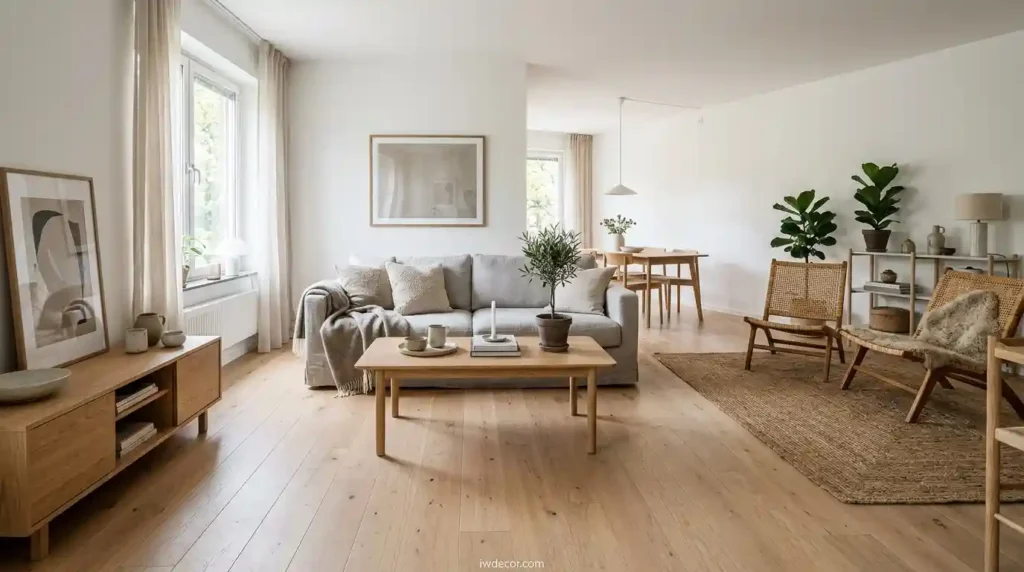
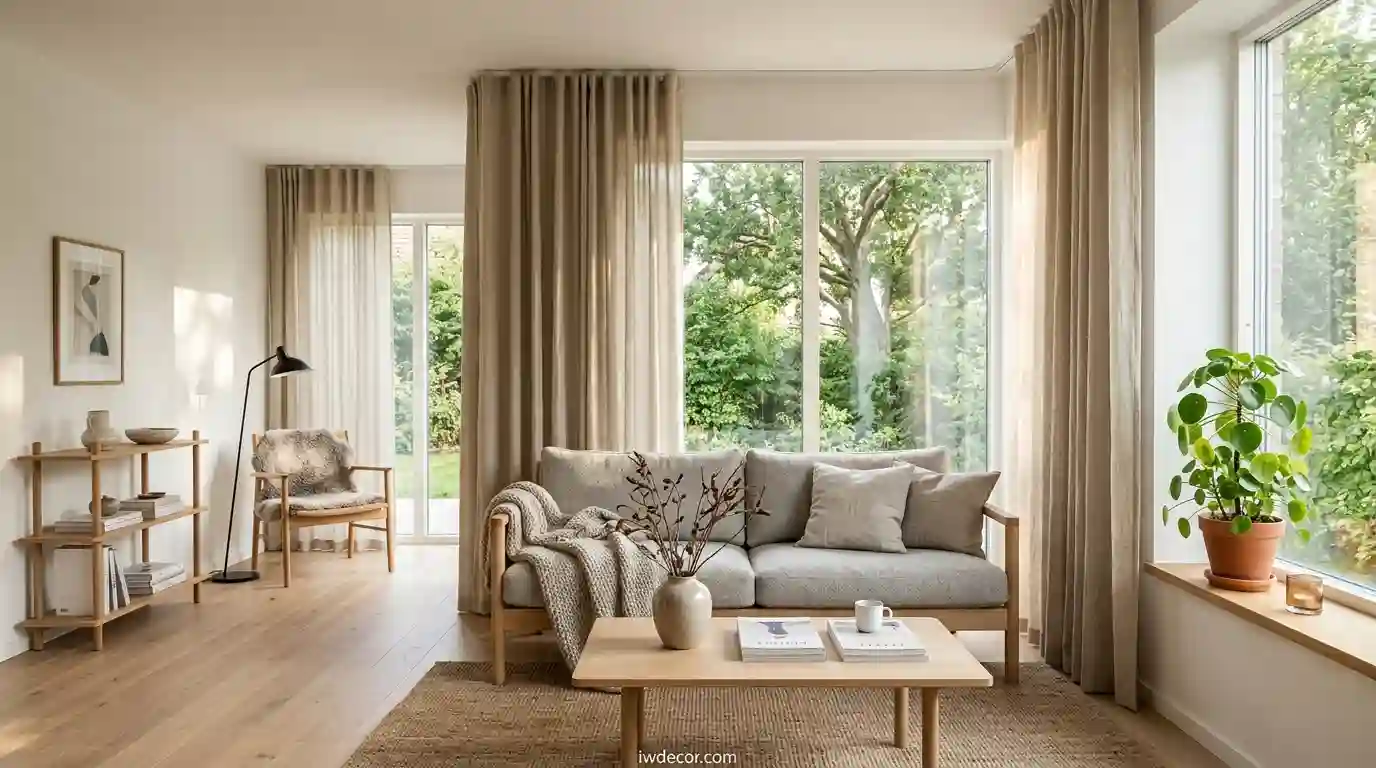
Pair your linen Scandinavian curtains with natural wood furniture, light-colored walls (white or soft grey), and minimal accessories. Layer textures with a jute rug and linen upholstery. Let the curtains be a key design element rather than background. Hang them high and wide to make ceilings appear taller and rooms feel larger.
Are linen Scandinavian curtains eco-friendly?
Pure linen is biodegradable and produced from renewable flax plants that require minimal pesticides compared to cotton. However, the dyeing and finishing processes can impact environment significantly. Choose eco-certified options (OEKO-TEX, EU Ecolabel) to ensure production followed environmental standards.
What do customers say about linen Scandinavian curtain brands?
Reviews consistently praise quality linen Scandinavian curtains for lasting years without deterioration, maintaining appearance through multiple washes, and aging beautifully. Common complaints about cheap alternatives mention fading, shrinkage, and fabric stiffness. The pattern is clear: investing in genuine linen pays dividends in longevity and satisfaction.
Best linen Scandinavian curtain brands available in the US?
Top-rated options include brands emphasizing heritage weaving, transparent sourcing, and sustainable practices. Look for companies shipping from Nordic regions and offering detailed fiber content specifications. Check customer reviews specifically mentioning durability after 2+ years of use this filters out trend-chasing retailers.
Where can I find affordable linen Scandinavian curtains?
Online retailers offer affordable options if you search for linen blends or slightly thinner linen (under $100 per panel). Seasonal sales in Scandinavian home goods retailers often feature discounted linen curtains. Check both mainstream home decor sites and niche Nordic retailers prices vary significantly for identical products.
Do linen Scandinavian curtains shrink in the wash?
Quality linen Scandinavian curtains experience minimal shrinkage (2-3%) when washed in cool water with gentle handling. Pre-shrinking during manufacturing reduces this further in premium options. Always hand-wash or use delicate cycles, avoid hot water, and hang-dry to prevent shrinkage. If you’re concerned, ask manufacturers about shrinkage percentages before ordering.
Final Thoughts
Choosing linen Scandinavian curtains isn’t complicated once you understand what matters: genuine linen content, honest dyeing, and construction that respects both aesthetics and durability. The 15 options I’ve outlined represent the full spectrum from budget-conscious choices to heritage investment pieces.
Your window treatments deserve the same intentionality you bring to furniture and color selection. In Scandinavian design, details compound the right curtains amplify light, balance proportions, and create the calm, refined atmosphere that defines Nordic interiors. Take the time to find options that genuinely resonate with your space and lifestyle.
- Scandinavian Interior Decor 2026 – Referenced in Item 7
- Small Scandinavian Living Room Ideas – Referenced in Item 12
- Scandinavian Bedroom Ideas Budget – Referenced in Item 15