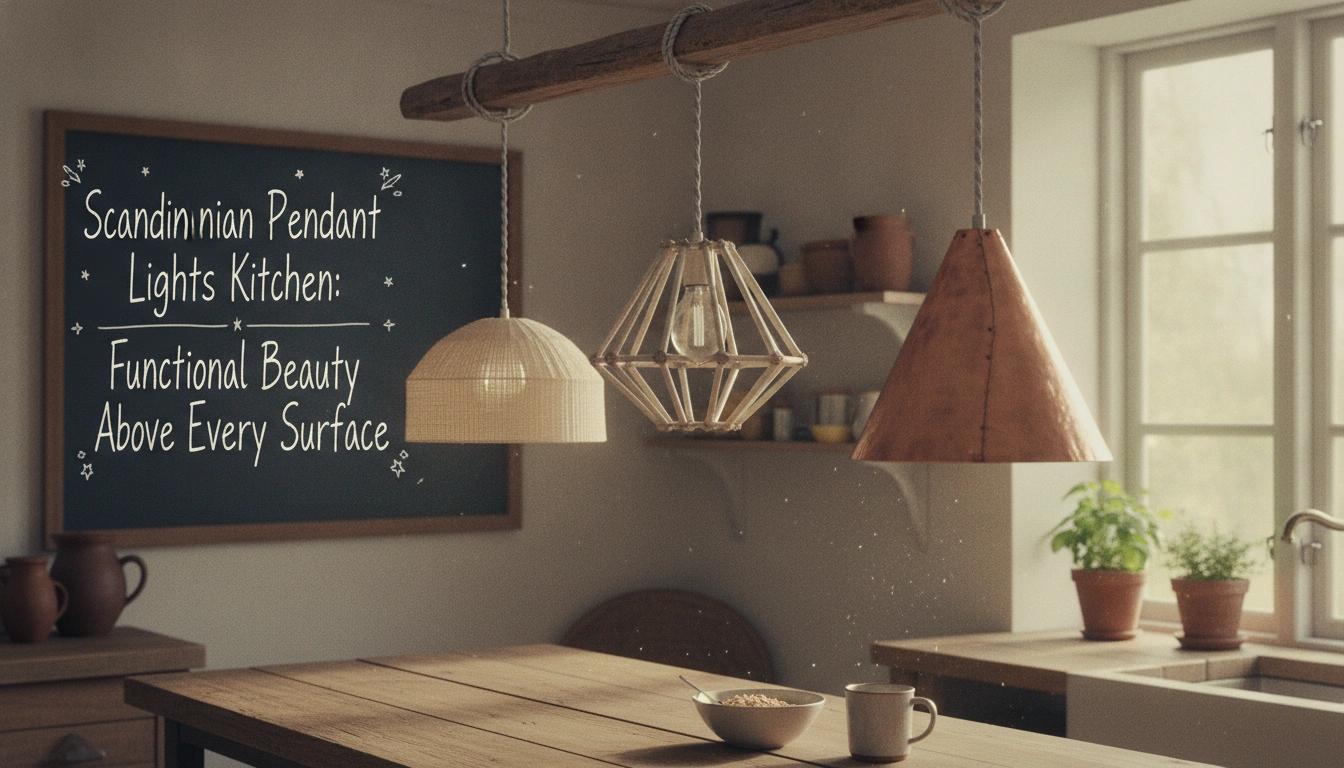
Scandinavian Pendant Lights Kitchen: Functional Beauty Above Every Surface
Bad lighting above an island ruins literally every single dinner party. I was over at Peter Rogers’ place on Parker Rd in Aubrey last week and his bare overhead light was blinding me the whole night, absolute nightmare. You can’t slice bread properly in a shadow and you definitely don’t want a harsh bare bulb burning your eyes while trying to eat dinner. People constantly buy pretty fixtures that throw terrible light and it drives me crazy.
This is where scandinavian pendant lights kitchen configurations fix everything. They throw soft light right where you need it down on the counter without turning your kitchen into a harsh operating room. Good design isn’t about filling empty air with fancy chrome shapes. It’s about light quality, proportion, and buying pieces that actually earn their keep.
When you set up a kitchen space, illumination must balance visual charm with practical utility. Nordic style gets this right because it never compromises on function just to look pretty.
What is Scandinavian Pendant Lighting?
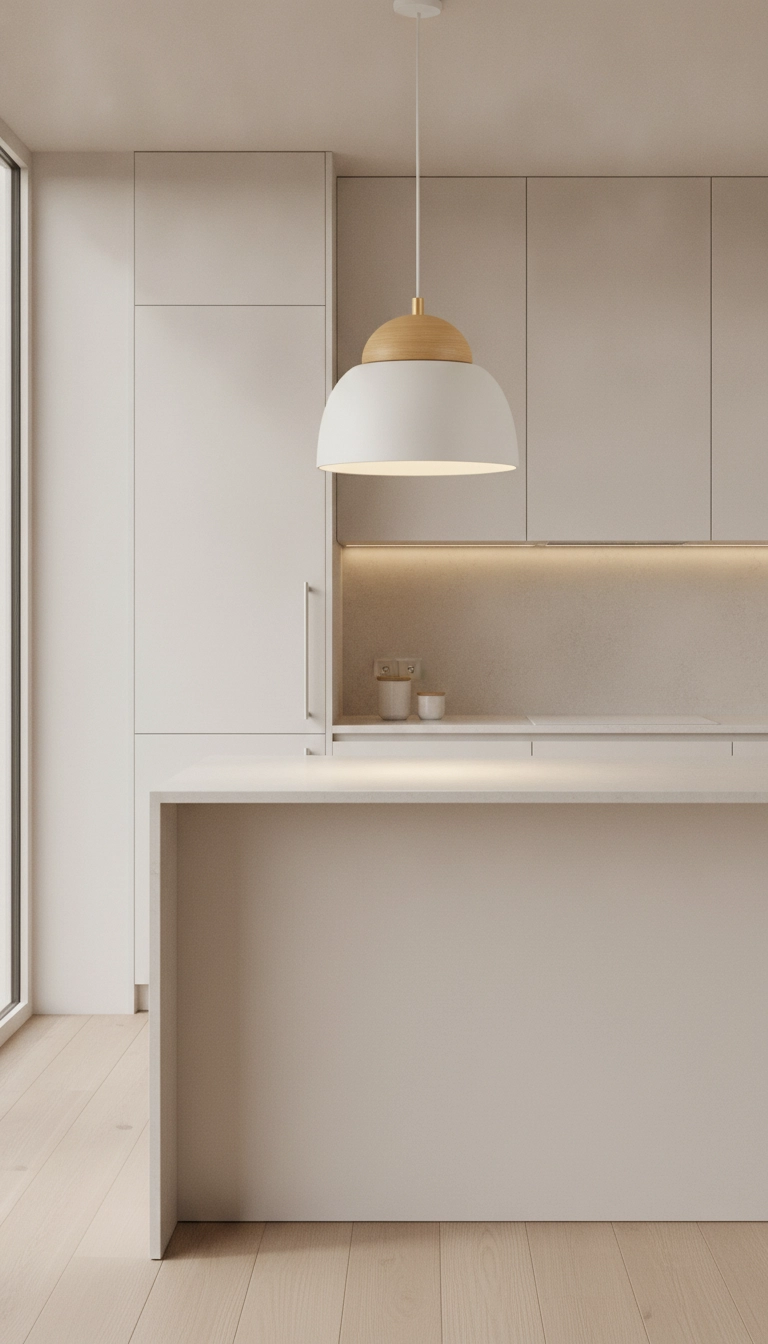
Nordic kitchen pendants are clean, ceiling-slung fixtures rooted in northern European design principles. They skip dramatic swirly details and heavy ironwork in favor of simple geometric silhouettes, soft diffuse illumination, and genuine natural accents.
These fixtures focus downward task light onto counter surfaces while casting a muted, indirect glow out into the room. You end up with useful illumination that feels inviting instead of clinical or aggressive.
When I talk to homeowners about island layouts, I always tell them to hide the bulb. Open bulbs belong in a garage workbench, not over your dining counter. Spun metal shades or frosted opal glass globes diffuse light evenly so nobody sitting at the bar gets blinded. Simple as that.
What Makes Scandinavian Pendant Lights Kitchen Designs Stand Out
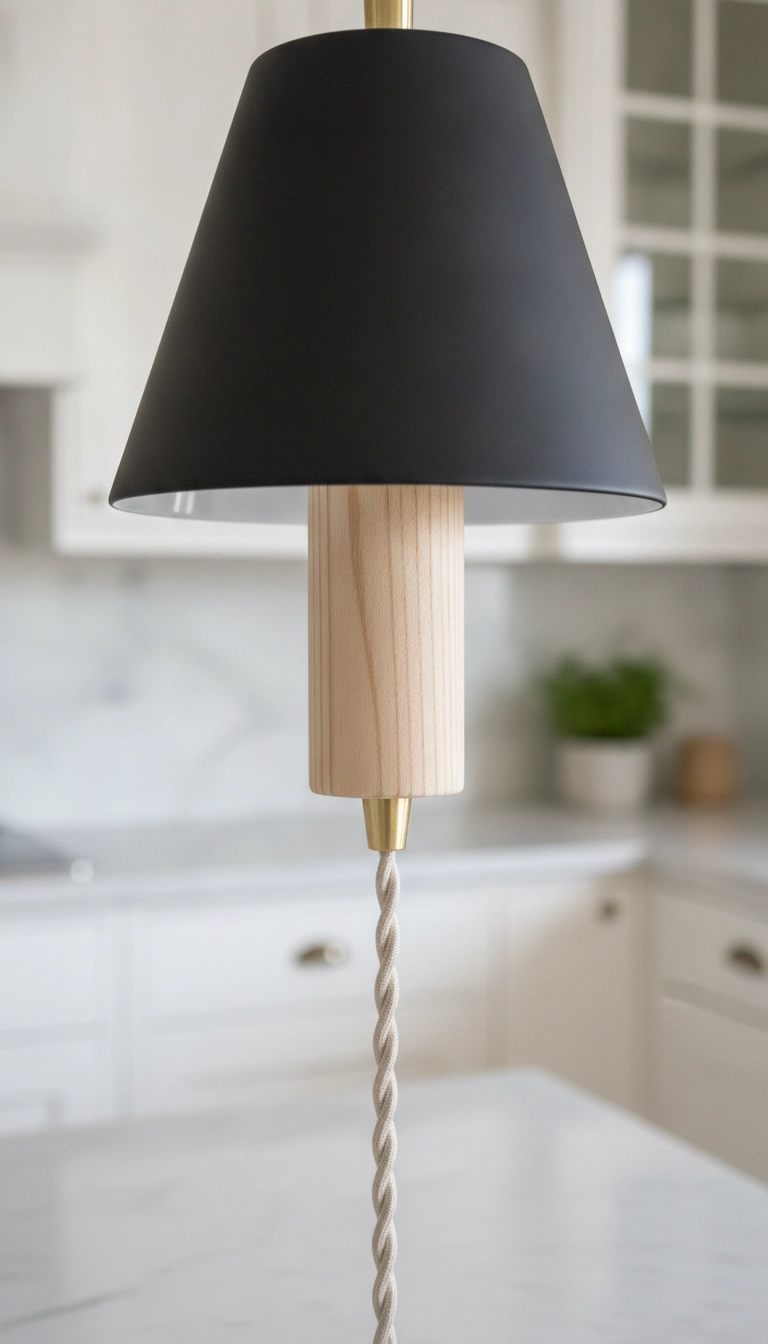
True Nordic design rests on quiet simplicity, subtle utility, and tactile warmth. That balance between rich texture and simple function is everything.
Look at these collections and you’ll see soft matte black or white powder coatings, brushed brass joints, and pale solid wood details like oak or ash. These natural elements soften cold quartz counters and flat cabinet doors. They bring real character into modern spaces.
Form always serves function here. Deep cones and wide domes direct light straight down onto your prep stations and sink basins. Semi-translucent glass globes scatter ambient light sideways to soften open-plan living zones.
Pick a metal shade that has a painted white interior reflector. It bounces every single lumen downward so you don’t have to screw in high-wattage bulbs. It’s smart design that keeps light soft on human eyes.
Let us break down these core materials so you can see how each one performs over your counter.
My Take
I always tell people to lean toward matte white metal with wood accents if they want maximum light output without losing that cozy Scandinavian warmth.
Pendant Light Placement: Height, Spacing, and Scale Guide
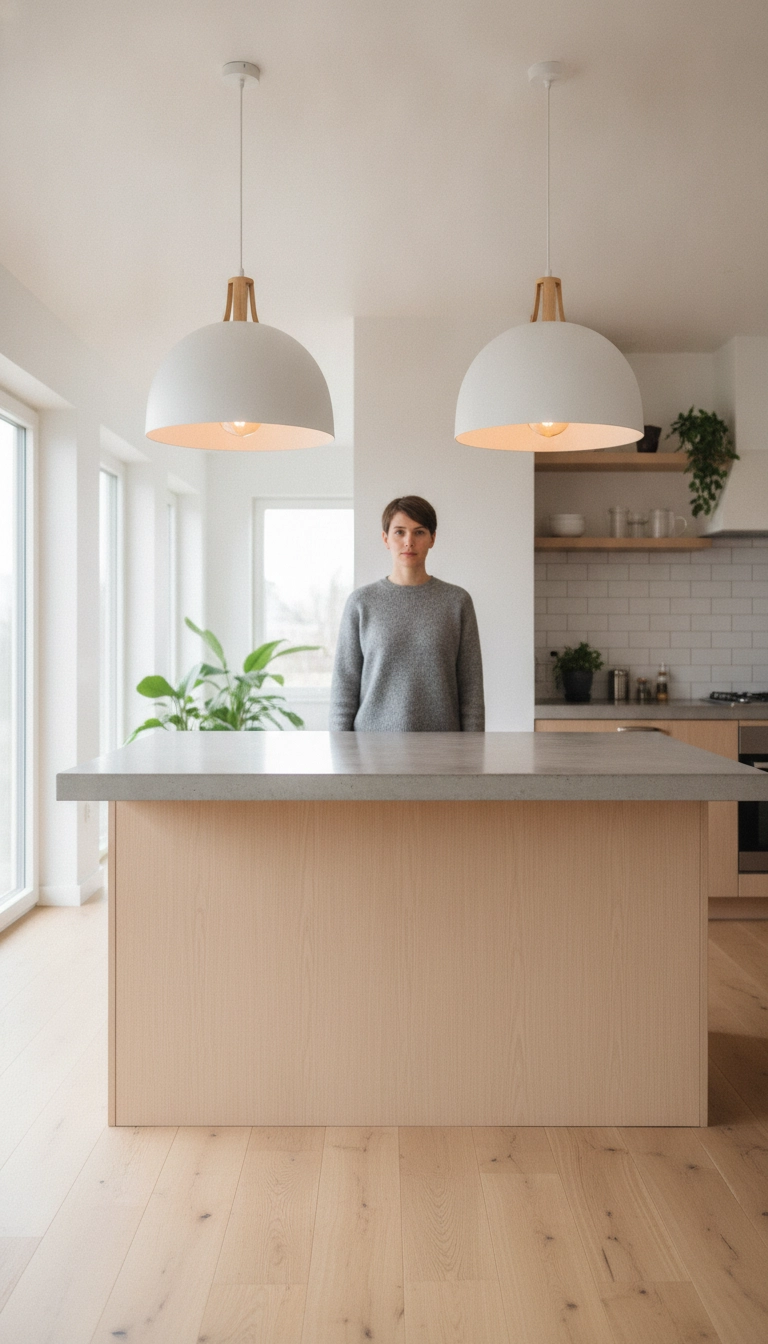
Getting your heights and distances wrong makes an entire kitchen feel off-kilter. Standard baseline: suspend the bottom of your pendants roughly thirty to thirty-six inches above the countertop surface.
That specific height preserves your sightlines across the room. You can actually see the person standing across the island from you. Plus, taller family members won’t smash their foreheads into metal shades when reaching for a platter.
Spacing needs real attention too. Position your pendants roughly thirty inches apart, measured center to center. Always leave at least twelve inches of clear space between the outer edge of the shade and the end of the counter.
Got a shorter island or a tight prep station? Don’t crowd it with three small fixtures. One well-scaled dome makes a far bolder, cleaner statement than a chaotic cluster of tiny shades. Scale must match the room’s actual volume.
Calculated Spacing
To calculate ideal spacing, measure your island length in inches, subtract the combined width of all pendants, and divide the remaining number by the total number of pendants plus one.
To make your planning painless, here is my quick proportions guide based on counter length.
My Take
When in doubt, choose two larger pendants over three tiny ones. Fewer larger pieces create a cleaner visual line that feels far more intentional.
Budget to Premium Price Guide for Kitchen Pendants
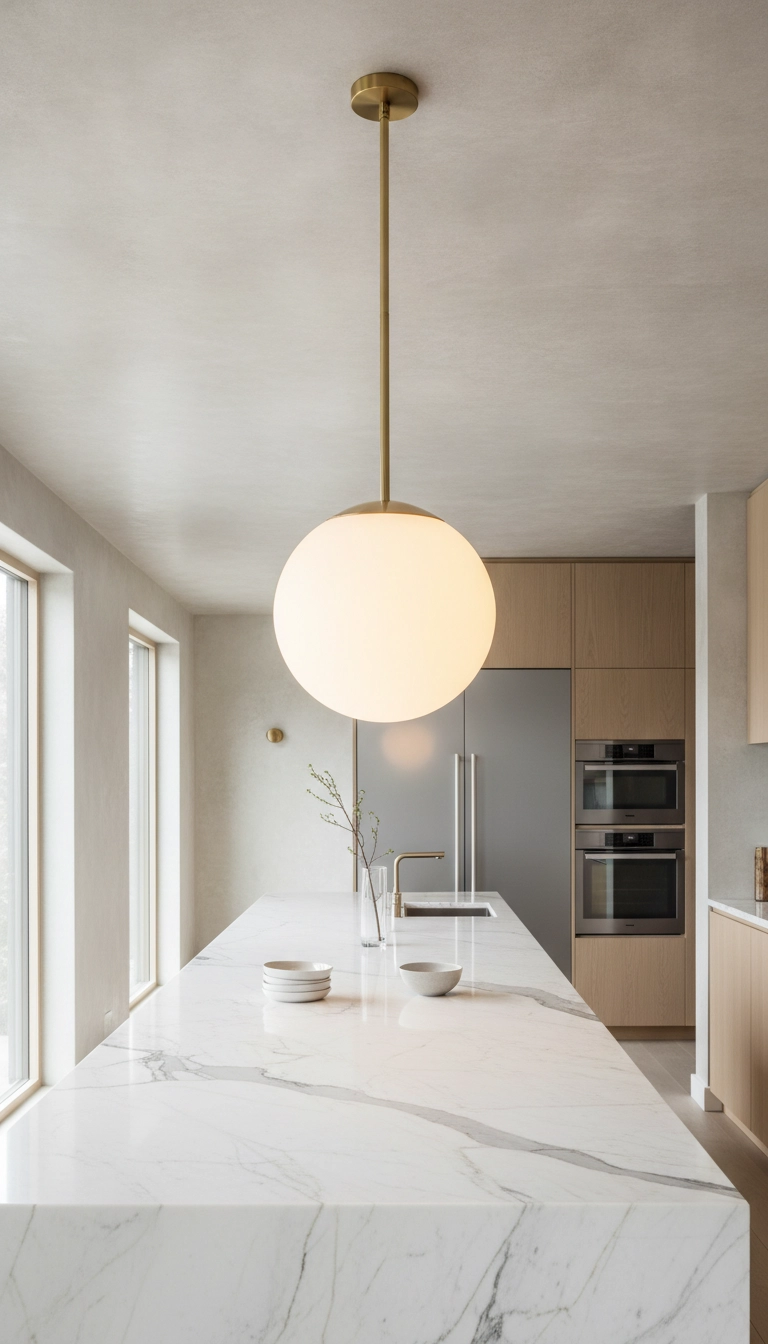
You don’t need to spend a fortune to get good lighting, but cheap fixtures look cheap fast. Knowing what your money buys helps avoid buyer’s remorse.
Entry-level lights usually feature stamped steel and basic plastic cords. Mid-range and high-end options use mouth-blown frosted glass, heavy solid brass hardware, built-in dimming drivers, and real sustainably sourced timber elements.
Investing in solid materials means your fixtures won’t wobble every time someone opens a window or shut down after a year. Quality metal and glass clean up easily and stay timeless through decades of daily cooking.
I put together a quick cost overview so you can see where different materials usually land on price.
My Take
Invest your money where hands touch and eyes focus daily. Premium shades over the island make even stock cabinets look twice as expensive.
Bulb Temperature Mistake
Avoid cool daylight bulbs above dining or prep spaces. Stick to warm white bulbs between 2700K and 3000K to maintain a cozy hygge atmosphere without washing out food colors.
Layered Lighting in the Modern Nordic Kitchen
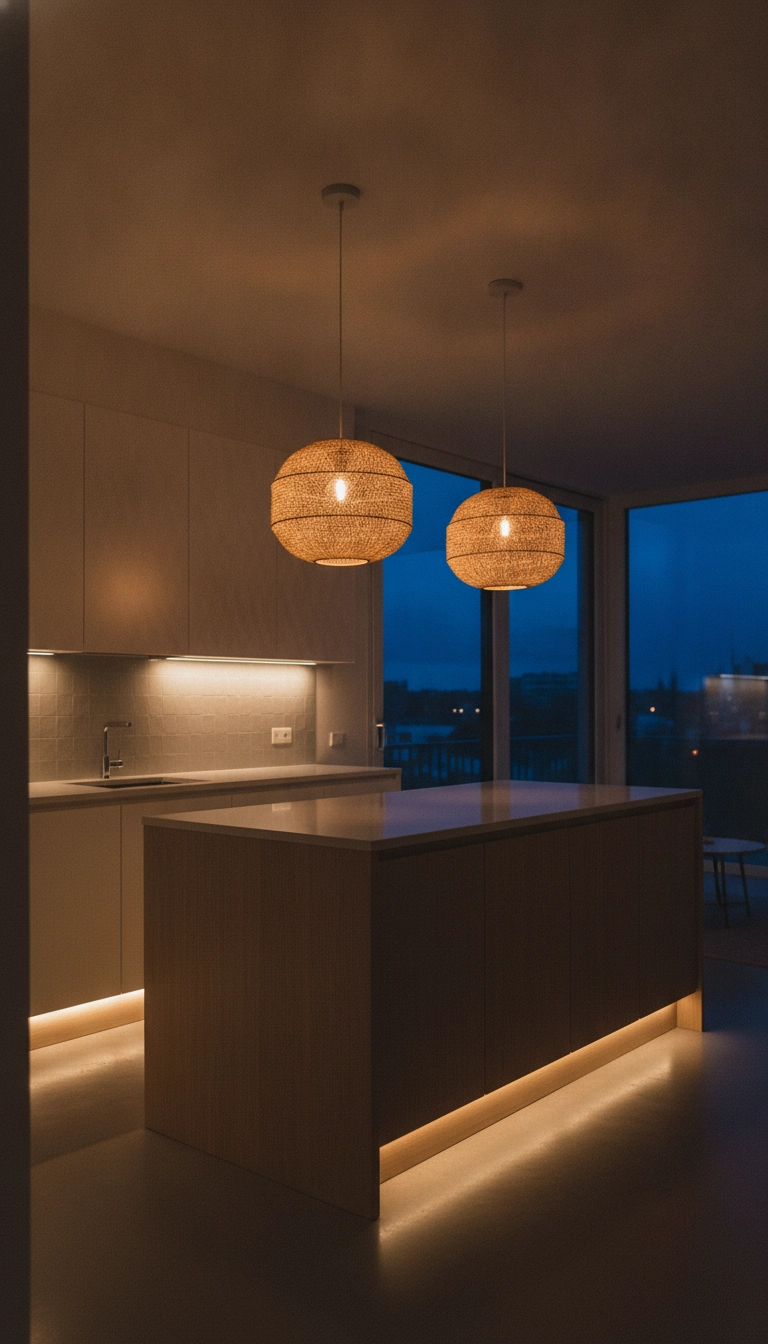
A single pair of pendants cannot carry the entire lighting burden of a busy home kitchen. That’s a mistake I see over and over.
You need layers. Combine your island pendants with hidden under-cabinet LED strips and dimmable ceiling spotlights. Put your pendants on dedicated dimmer switches so you can shift the mood instantly from bright meal prep to dim late-night drinks.
That flexibility keeps your kitchen from looking like an aggressive store late at night. Soft accent lighting paired with dimmed pendants creates an effortless backdrop for real conversation.
Maintenance and Care for Nordic Light Fixtures
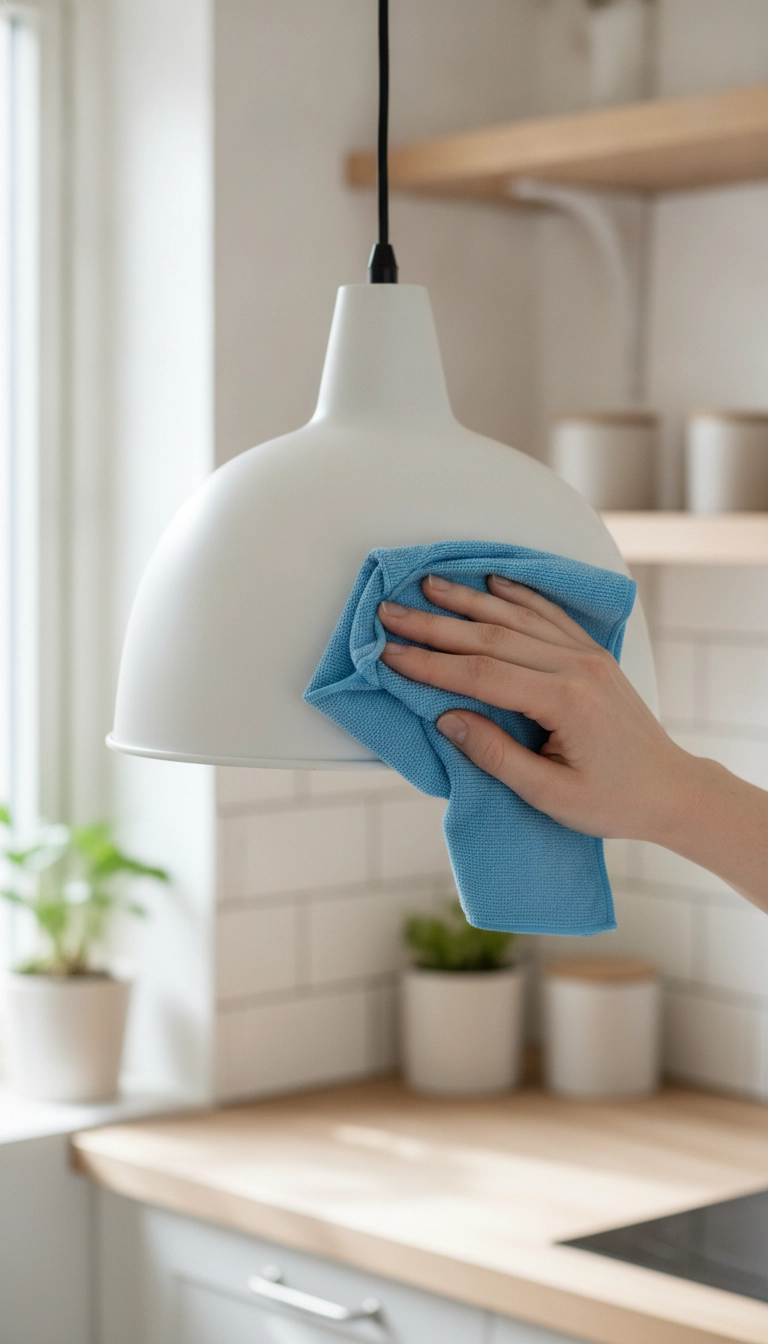
Dust and grease ruin good lighting fast. Regular, gentle upkeep is mandatory if you want your shades looking sharp.
Wipe down matte powder-coated metal shades once a week using a clean microfiber cloth. Never use harsh chemical sprays on matte finishes—they leave streaky stains that ruin the texture forever.
For glass globes, warm water with a tiny drop of dish soap cuts through airborne kitchen oil effortlessly. Always turn off the power and let the bulbs cool down fully before touching anything.
Here is my simple breakdown for keeping every material spotless and shining bright.
My Take
Keep a fresh microfiber cloth tucked away in your pantry. A quick five second wipe once a week keeps cooking grease from ever sticking.
Conclusion
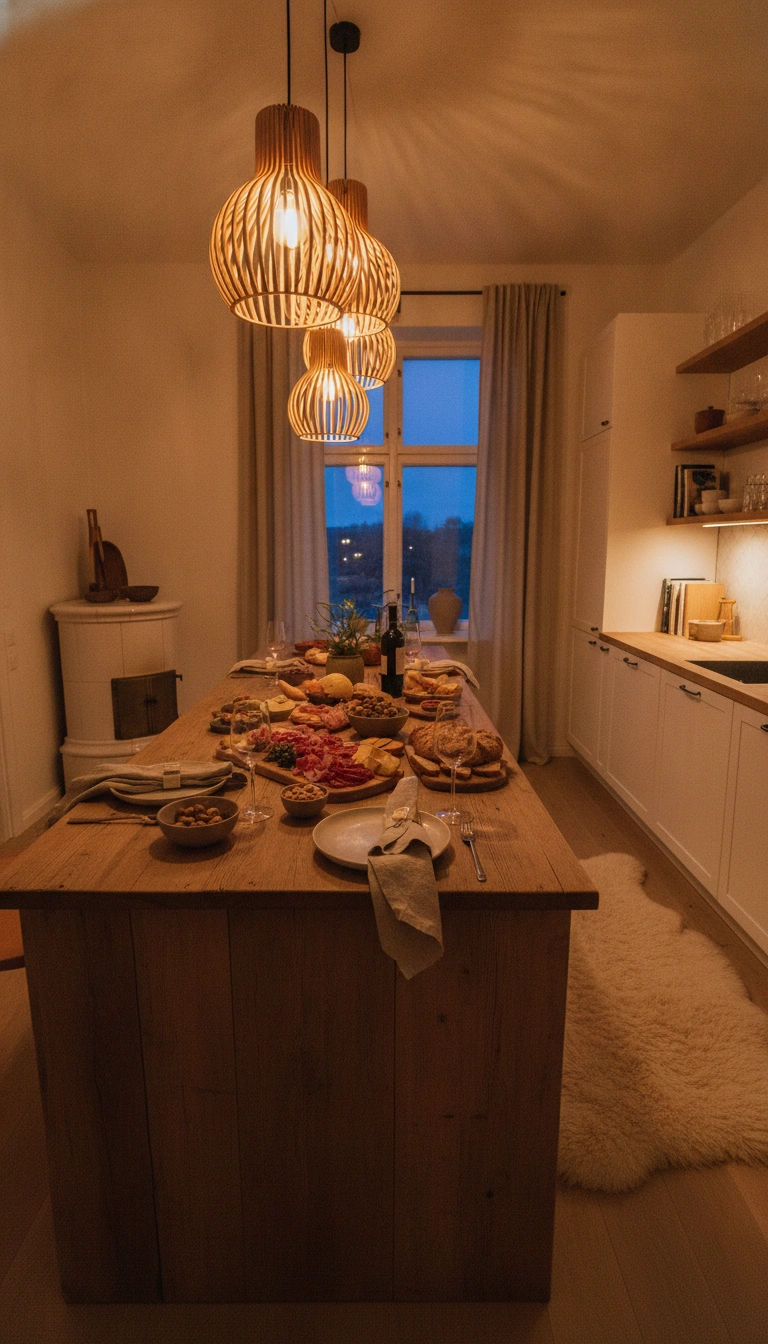
Picking lighting isn’t just decoration. It defines how your kitchen functions every single day. Incorporating scandinavian pendant lights kitchen setups blends practical downlight with clean, restrained beauty.
Stick to simple geometric shapes, watch your heights, and choose warm bulb temperatures. Timeless fixtures made from real glass, metal, and wood never go out of style.
What light fixtures are hanging over your island right now? Drop your questions or thoughts in the comments below.